 Official Government Website
Category: 116th
Leveling up: Female Soldiers, Airmen serve in leadership positions across the Idaho National Guard
Maj. Robert Taylor/Idaho Military Division Public Affairs
Betty Corn became the first female to serve in the Idaho Air National Guard when she joined as a nurse in 1959. Female members wouldn’t enlist into the National Guard until 1968.
Since then, female citizen-Soldiers and Airmen have continued to blaze their own paths in the Idaho National Guard, even before the Army integrated females into combat-arms in 2015. Over the past decade alone, Idaho National Guardsmen have transitioned into career fields that were not previously opened to them or reached new heights in their profession while continuing to ensure the organization remains “Always Ready, Always There” to respond to emergencies at home or in defense of our national interest throughout the world.
In 2012, then Cpt. Nicole Smith, now Lt. Col. Nicole Washington, led more than a 100 Company A, 1-168th General Support Aviation Battalion Soldiers to Afghanistan for a year-long deployment, becoming the first female officer to lead an Idaho National Guard unit to combat as its senior officer.
In 2013, Chief Master Sgt. Tammy S. Ladley became the first female to serve as the 124th Fighter Wing’s senior enlisted member. The next year, Col. Sherrie McCandless became the first female to command the wing. McCandless now serves as the commanding general of the D.C. National Guard.
Also in 2014, Maj. Kimberly Tschepen became the state’s first female Soldier to command a battalion when she took command of the 145th Brigade Support Battalion and Command Sgt. Maj. Linda Burkhart became the state’s first female command sergeant major in 2015.
In 2015, Idaho Guardsman 1st Sgt. Erin Smith became the nation’s first female enlisted Soldier to graduate from M1 Armor Crewman School. Following her, Staff Sgt. Kylene Huerta completed the same course and became the first female Soldier to be assigned to the 116th Cavalry Brigade Combat Team as a tank crew member. In 2017, Sgt. 1st Class Melanie Galletti graduated from the U.S. Army’s Infantryman Course as the Idaho National Guard’s first qualified female enlisted infantry Soldier.
In 2017, Col. Lora Rainey was appointed as the state’s first female staff judge advocate.
In 2019, 2nd Lt. Brooke Berard and 2nd Lt. Lauren Bolt graduated from the U.S. Army’s Armor Basic Officer Leaders Course as the state’s first two female armor officers and 2nd Lt. Jessica Pauley became the state’s first female infantry officer.
Today, female Soldiers and Airmen proudly serve in leadership positions at every level of the Idaho National Guard, from the team level in the Army Guard to the group level in the Air Guard. In honor of women’s history month, we celebrate not only their accomplishments, but the fact that many of them are still writing their own history within our organization.
Female Soldiers and Airmen are trusted to lead their fellow Guardsmen. Soldiers like Sgt. Kaylee Bloxham, a combat engineer in charge of a Bradley Fighting Vehicle and its crew; and Airman like Chef Master Sgt. Kelly Bongiovi, who now serves as the senior enlisted member of the Idaho Air National Guard after she replaced Ladley as the 124th Fighter Wing’s command chief master sergeant.
On the officer side, 2nd Lt. Jessica Pauley, will lead an infantry platoon of infantry on a deployment later this year and Col. Elizabeth Sumner, the highest-ranking female in the Idaho National Guard, leads more than 340 Airmen as the 124th Mission Support Group commander.
Sgt. Kaylee Bloxham
 Sgt. Kaylee Bloxham didn’t set out to be the Idaho Army National Guard’s first female 12B combat engineer. It’s a feat she didn’t realize she had accomplished until after she graduated from the required reclassification course.
She was only looking to serve her country and follow in her older sister’s footsteps when she enlisted into the Idaho Army National Guard in 2006 as a military police Soldier. She reclassed after the 116th Brigade Special Troops Battalion transitioned to the 116th Brigade Engineer Battalion in 2016 and the unit eliminated its MP platoon.
Bloxham chose to become a combat engineer after observing engineers train on C4 demolition during annual training. However, she’s been assigned to a Bradley Fighting Vehicle for the past six years and has yet to complete demolition training herself since reclassing.
“I didn’t like the Bradley at first,” she said. “I didn’t know how it functioned, but now that I’ve been on it for a while and know how it functions, I really like it.”
Bloxham is a vehicle commander in A Company, 116th Brigade Engineer Battalion.
“Not only am I responsible for myself, I’m responsible for two others,” she said.
As a vehicle commander, she is also responsible for a 30-ton armored vehicle equipped with three weapon systems and its gunner and driver. She’s responsible for helping the driver maintain situational awareness in a vehicle with large blind spots and identifying and confirming enemy targets before giving the gunner the command of execution to fire.
“It’s fun,” she said.
She said she loves being able to lead and train her crew as a part-time member of the Idaho National Guard. When she’s not training, she also works as a parts specialist for High Desert Bobcat in Twin Falls.
Staff Sgt. Antonia Lemos
 Staff Sgt. Antonia Lemos always knew she wanted to work in the medical profession when she was a kid. She never became a doctor because she didn’t finish college, but by enlisting into the Idaho Army National Guard, she was able to become a 68W combat medic and still have a career in the medical profession.
“I very much love being a medic,” she said. “As a medic, I am able to do a lot of the things I always wanted to do: help those who are hurt and see interesting wounds.”
Lemos enlisted into the Idaho Army National Guard in 2003. At the time, she was 20 and the single mother of two children. She said she was working fast food and retail and said she didn’t have a lot of direction or self-discipline to finish her education.
“As a single mom, it’s really hard,” she said. “Anything that would benefit my situation for my kids was a good thing and the National Guard looked like an avenue that would provide that, and in the end, it did.”
Lemos liked that she could join the military while raising her kids around her family. She was able to purchase a house by herself using a Veteran Affairs loan. She also found full-time employment as the Idaho Army National Guard’s drug testing coordinator, which interfered with plans to finish college, but she didn’t want to pass up the chance to be able to provide for her family.
Lemos is currently the emergency care sergeant for Headquarters and Headquarters Company, 2-116th Combined Arms Battalion. She was the first female Soldier organically assigned to the battalion when the Army started integrating females into combat-arms units in 2015.
She is a squad leader and assigned as the medic in charge of the battalion’s aid station. As a squad leader, she is in charge of eight Soldiers.
“At this point, I’ve been in long enough where I got to be that young Soldier and now, I’m mentoring young Soldiers,” she said. “Watching Soldiers grow is my favorite part of the job.”
Lemos said she tries to emulate good leadership for her Soldiers, which comes from good mentorship.
“Mentorship comes from above, below and side-to-side, it’s the full 360,” she said.
In addition to watching Soldiers grow, she enjoys being able to assist Soldiers who need additional resources in her role as the Idaho Army National Guard’s drug testing coordinator.
“My favorite part of being an NCO is finding someone who needs help and giving them the resources they need to hopefully be successful, not necessarily in the Guard, but in life,” Lemos said.
Lemos’s father, brother and uncle have also served National Guard.
Sgt. 1st Class Jessica Rice
 Sgt. 1st Class Jessica Rice has two jobs in the Idaho Army National Guard. During the week, she’s the accountable officer for the 116th Cavalry Brigade Combat Team’s Supply-Support Activity and during drill weekend, she’s a platoon sergeant for A Company, 145th Brigade Support Battalion.
“I love it,” she said. “I’m responsible for training Soldiers. I get to teach them all the things I’ve learned in my 18 years and hopefully make them better than I am.”
As the accountable officer, she supervises seven Soldiers in the epicenter of logistics. The SSA provides a critical link between the brigade’s supply echelons and the national supply chain to ensure rapid fielding of repair parts, which drastically cuts down on the amount of time the brigade’s vehicles are down for maintenance issues.
Rice has supervised the SSA since it was established last year, a position typically held by a warrant officer. Only 11 National Guard states have an SSA.
Rice joined the Idaho Army National Guard after her first semester of college to help pay for her education. She ended up finding full-time employment in the organization before she could finish her degree. She’s been assigned to units in Boise and Burley as well as Lewiston and Post Falls multiple times.
“Throughout my time in the Guard, I’ve had six moves in 10 years,” she said. “Every time I’ve gone to a new unit, I’m instantly family. It doesn’t matter what I’m going through in my life, I have a dozen Soldiers who I could call at they’d be at my doorstep, and it wouldn’t matter why.”
At drill, Rice’s platoon of 22 Soldiers is responsible for distributing the brigade’s Class I (food, rations and water), V (Ammunition) and IX (repair parts) supplies.
As a leader, Rice said communication with her Soldiers is important.
“Make sure what you’re saying is what they are hearing,” she said.
1st Sgt. Lisa Carlin
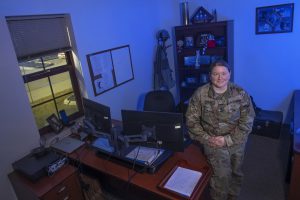 1st Sgt. Lisa Carlin remembers watching “Courage Under Fire” when she was 12 and knowing she wanted to join the military.
A few months after graduating high school, she enlisted into the Idaho Army National Guard in 2003 as a 15P aviation operations specialist. Unlike Meg Ryan’s character, she didn’t want to fly because she gets air sick. Aviation operation specialists support aviators from the ground and plan tactical missions.
Nearly two decades later, she is the first sergeant of 1-183rd Assault Helicopter Battalion’s Headquarters and Headquarters Company. As first sergeant, she is responsible for the health and welfare of more than 80 Soldiers.
“It’s all about taking care of Soldiers,” she said. “Regardless of what they have going on, they are the ones doing all the actual heavy lifting. If they aren’t getting taking care of, nothing else will get done.”
Carlin said she chose to join the Idaho Army National Guard over the U.S. Army because she wanted to remain close to home and pursue a college education.
“I already had friends and a support system here,” she said. “The idea of sticking around them seemed more appealing than uprooting every three years.”
Not only was Carlin able to remain close to her friends and family, but she has also made new friends over the years who feel like family.
“I like working with the same group of people throughout my career,” she said. “It builds a family mentality. You get to know them outside of work as well and become lifelong friends.”
The Idaho National Guard also gave Carlin the chance to serve with her actual family. Her sister is a security forces supervisor in the 124th Fighter Wing.
Carlin has been a member of the National Guard’s Active Guard/Reserve program since 2004. She’s served in multiple leadership positions in HHC before becoming its first sergeant. Currently, her readiness noncommissioned officer, Sgt. Kaitlyn Nicolosi, and training specialist, Spc. Jordyn Harris, are also female Soldiers entrusted with key company positions.
“Gender doesn’t play a role,” Carlin said. “It’s been my experience whoever does the job best gets the job.”
Chef Master Sgt. Kelly Bongiovi
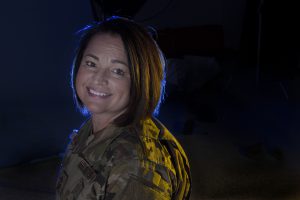 Chief Master Sgt. Kelly Bongiovi enlisted into the Idaho Air National Guard to provide a better life for her family. What she found was a career that has spanned more than three decades and led to her becoming the organization’s senior enlisted leader.
Bongiovi currently serves as the Idaho Air National Guard’s state command chief. By position, she is one of the Idaho National Guard’s most senior enlisted female members and she is the first female Airman to serve as the senior enlisted leader to the commander of the Idaho Air National Guard.
“I never planned on staying in the Air Guard this long,” she said. “I didn’t think they’d want met his long.”
Bongiovi enlisted in August 1991. She spent most of her career working nearly every logistic position in the 124th Fighter Wing before becoming the wing’s command chief in 2018. Over the years, the wing’s mission has changed from flying F-4s to flying A-10 Thunderbolt IIs and C-130s to only the A-10 mission. The logistics squadron’s name has also changed over that time, but Bongiovi’s work ethic has remained consistent.
“I was never in it to make a stripe,” she said. “I was always going to work my hardest and whatever came, came. I figured if I do good things, good things would happen. I just worked really hard and good things happened.”
Bongiovi decided to enlist shortly after tragically losing a child at birth. At the time, she was working in retail and the loss caused her to take a hard look at the life she would have been able to provide her child.
Several of her co-workers were members of the Idaho Air National Guard and told her about the many benefits they received as Guardsmen. Desert Storm was happening around the same time. Another co-worker’s husband deployed in support of the Gulf War but never made it home.
“I knew after I lost my kid, I needed to change my life,” she said. “I just had this passion of what I could do differently in the world to make a difference, not only for myself, but what I could do differently for my family. I also felt very passionate about what was going on in the world. I felt like I needed to join.”
Bongiovi said the biggest change she’s seen over the years is the seriousness of the National Guard’s mission and its increased operations tempo as the Guard became an operational reserve in the aftermath of 9/11. Bongiovi herself has deployed more than a half-dozen times in support of operations around the world.
Bongiovi has no question she was able to build a better life for her family since joining the Air Guard. She credits the support system she found through her fellow Guardsmen and the organization’s vast family resources as reasons why. In addition, she’s worked full time for the Idaho Air National Guard for the past 23 years and met her current husband through her military service.
Her husband, Hal, retired in 2020. He also served as the Idaho Air National Guard’s senior enlisted leader before advancing to the highest enlisted position in the Idaho National Guard as the state’s senior enlisted leader. Their oldest son is currently an A-10 Thunderbolt II crew chief in the 124th Fighter Wing and their youngest son is heavily involved in the organization’s family programs.
“You can pick yourself up when you have to and you can make yourself better,” she said, looking back on the path she’s taken since enlisting 31 years ago.
As the Idaho Air National Guard’s senior enlisted leader, she advises the commander of the Idaho Air National Guard, currently Brig. Gen. Tim Donnellan, on all enlisted matters. She said she doesn’t see the results of her work every single day like she could when she could physically watch A-10s take off and land on the flight line, but that the accomplishments feel much bigger when they do happen, however long they take.
She currently serves on the Air National Guard’s Enlisted Field Advisory Council. The committee works on proposed changes to policies and laws that impact Airmen across the force.
“When you see a policy go through that you’ve been working on for a year and it finally gets through the system and it’s going to make a change to thousands of Airmen, that’s a huge accomplishment,” she said. “It feels good knowing you’re going to help someone down the road.”
Bongiovi says she feels very privileged to serve in her current position but doesn’t dwell on being the first female Airmen to hold the position.
“I always try to help people,” she said. “I always tell Airmen to never miss an opportunity to learn no matter where they are in their careers. Look for something to work on and go work on it.”
In addition to looking for ways to improve, Bongiovi recommends having three people to confide in. She says have someone to tell the good, the bad and the ugly to, describing the good as the good things that happen; the bad things that happen; and someone who can help problem solve when necessary.
“The further you go up in the chain, the lonelier it gets,” she said. “You need people you can confide in when you start climbing the chain.”
Chief Warrant Officer 2 Kira Tank
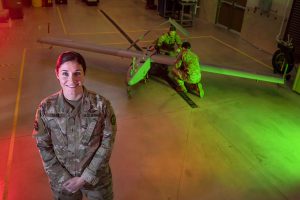 Chief Warrant Officer 2 Kira Tank is a dual-status federal technician, which means she has two jobs in the Idaho Army National Guard. During the week, she is the unmanned aerial systems supervisor for D Company, 116th Brigade Engineer Battalion. During drill weekend, she serves as the company’s operations officer and will become an instructor at the state’s Warrant Officer Candidate School next month.
“I want to give back,” she said of her new position. “I’ve had a lot of excellent mentors and I think I can do that for other individuals and shape the future of the warrant officer cohort.”
Tank has served in the Idaho Army National Guard for the past 13 years. She began her career as an UAV operator before becoming a maintainer. She deployed with the 116th Cavalry Brigade Combat Team in 2010 in support of Operation New Dawn.
Upon returning from the deployment, she met then Chief Warrant Officer 3 George Tomlinson, who was assigned as the UAS platoon leader. She said she didn’t know much about warrant officers then, but Tomlinson mentored her and Jacob Stavenau and developed them professionally, which led to both Soldiers becoming warrant officers. Tomlinson now serves as the state command chief warrant officer.
As an enlisted member, Tank flew more than 350 UAV missions and reached the rank of staff sergeant before becoming a warrant officer.
“I love being able to bridge the gap between officers and the NCO corps,” she said. “Warrant officers are a very trusted profession. We’re subject matter experts. Officers rotate positions often and they lean heavily on us. They have to be able to trust us to give them the best advice.”
Tank said she joined the Idaho Army National Guard because she wasn’t sure what she wanted to do with her life, but she felt like the military was something she’d be good at. She said she’s made it a career because she really enjoys the comradery she’s found.
As the UAS supervisor, she oversees a team of eight Soldiers and coordinates missions for the company’s Shadow.
“We just have really great hard-working people who are held to a higher standard than their rank,” she said. “They have a lot of the same training and qualifications pilots do.”
She’ll take the lessons she’s learned from the past 13 years to her new position and use them to develop future leaders.
“Being a leader and a mentor is super important to me,” Tank said. “I’ll be able to play a key part in a pivotal point in someone’s career and be someone they can reach back to if they have questions.”
2nd Lt. Elizabeth Horan
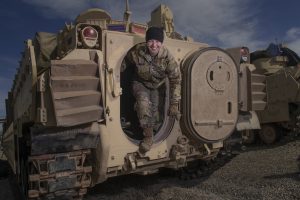 2nd Lt. Elizabeth Horan is a platoon leader for A Company, 116th Brigade Engineer Battalion. As a platoon leader, she leads three dozen 12B combat engineer Soldiers on the battlefield.
She joined the Idaho Army National Guard in 2017 as a 15D aircraft powertrain repairer and then earned her commission through BYU-Idaho’s ROTC program in 2020.
“I wanted to serve and to know that I contributed a little bit,” she said. “Plus, it’s fun.”
As a platoon leader, Horan said her job is making sure the platoon’s equipment is taken care of and that her Soldiers’ needs are met, in addition to making critical leadership decisions.
Combat engineers work to provide the maneuver commander with mobility, counter-mobility and survivability support, including detecting and clearing minefields and placing and detonating explosives. A Company uses Bradley Fighting Vehicles to provide engineer support to the 116th Cavalry Brigade Combat Team’s three combined arms battalions.
Horan said she enjoys getting to work with a Bradley crew and training with demolitions. As one of the Army’s junior officers, she relies on her platoon’s NCOs to help mentor her as she gains relevant experience in her career field.
“There’s a wealth of knowledge there,” she said. “A lot of those guys have been there for years and they are so willing to share what they know. It makes it fun to spend time with them on the Bradley and just do different things.”
As a platoon leader, she enjoys working with her Soldiers before she’ll take on additional administrative duties as she moves up in rank.
“Be willing to get dirty, get in and work hard next to your Soldiers,” she said. “Don’t try to excuse yourself from anything.”
1st Lt. Jessica Pauley
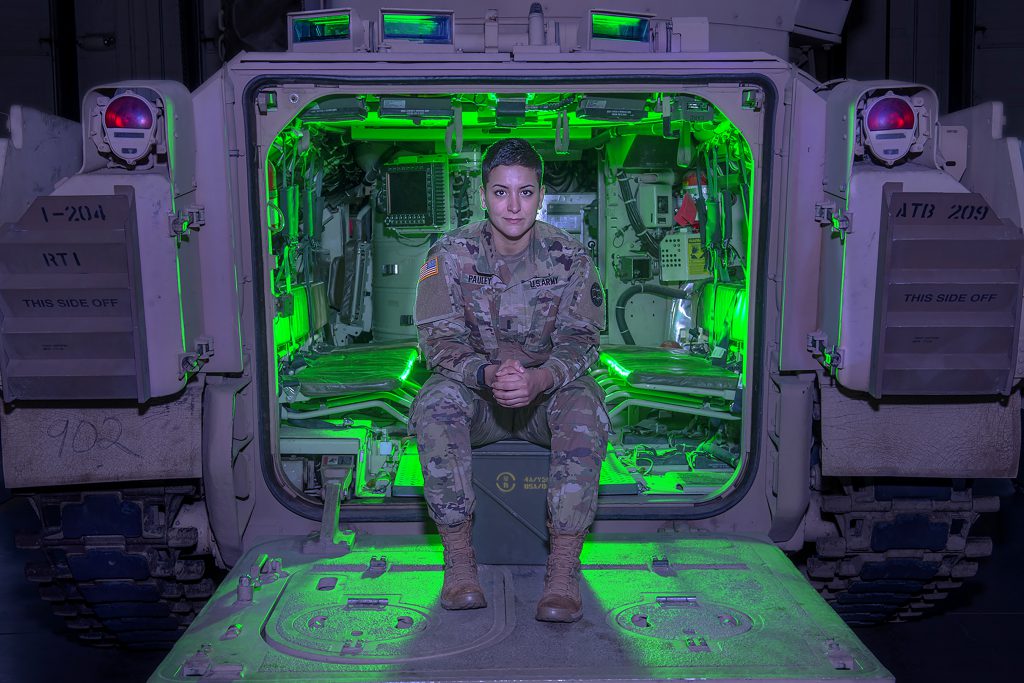
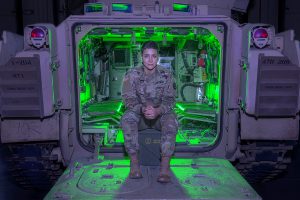 1st Lt. Jessica Pauley is thankful for the females who served before her.
“They paved the way and without them, we wouldn’t be here,” she said.
As the first female infantry officer in the Idaho Army National Guard, Pauley helped paved the way for future female infantry Soldiers to serve in the 2-116th Combined Arms Battalion, but it’s a position she probably wouldn’t have sought out if she hadn’t been encouraged to do so by Sgt. 1st Class Melanie Galletti.
Galletti was the state’s first enlisted female Soldier to become 11B infantry qualified in April 2017. As part of the Army’s initiative to integrate females into combat arms positions, units were required to have a branch qualified female officer and a noncommissioned officer in place before new female recruits could be assigned to the unit.
Pauley knew that by becoming an infantry officer, along with Gelletti, she would pave the way for females to serve in the unit. Since then, several females have served in the state’s only infantry company, but Pauley is currently the only female assigned to the unit.
She’s a platoon leader for C Company, 2-116th Combined Arms Battalion. She oversees four Bradley Fighting Vehicle crews, including her own, and three squads of dismounted infantry Soldiers.
“It’s exactly the stuff people generally join the Army to do,” she said. “We shoot, we do squad and platoon exercises and there’s lots of hands-on training, including demolitions.”
Pauley said the hours are long, but the job is fun. She trains yearlong to be able to meet the physical demands of the job.
“It’s part of my job to be as physically fit as I can be,” she said. “If it comes down to it, Soldiers expect that from me and I expect that from them. Just like I’d expect any of my Soldiers to be able to pull a fully kitted Soldier out of a Bradley Fighting Vehicle while under fire. It’s dangerous if they can’t do it. It’s dangerous if I can’t do it as well.”
Pauley enlisted into the Idaho Army National Guard on her 23rd birthday in 2014. She served as a public affairs specialist before enrolling into the Boise State University ROTC program for her final two years of college. She said getting school paid for and getting paid to go to school seemed like a really good idea.
“It’s a good opportunity for everyone,” Pauley said. “It’s a relatively small commitment and you get the benefits of giving back to your country.”
Pauley has spent most of her career as a part-time Soldier and is looking forward to deploying with the 2-116th Combined Arms Battalion later this year so that she can spend additional time with her platoon.
“I’m excited for the opportunity to get some quality time with my platoon and train,” she said. “When we only see our Soldiers one weekend a month and a few weeks in the summer, there’s only a certain level of proficiency you can hit with that amount of time. We will have the chance to train every day and set some things in stone for Charlie Company that will last longer than our time in the unit.”
Pauley earned her commission in 2018 and attended the US Army’s Infantry Basic Officer Leaders Course in June 2019.
“The entire experience is a learning experience from the moment you swear in,” she said. “You’re faced with challenging situations, and you have to learn as much as you can from each one.”
As she’s grown throughout her time in the Army National Guard, she’s also thankful for those who have mentored her along the way.
“The commanders and first sergeants I’ve had the honor and privilege of serving with have taught me so much and they care so much about Soldiers,” she said. “It’s really inspirational.”
Capt. Haily Barley
 Capt. Haily Barley serves as the commander of Headquarters and Headquarters Company, 2-116th Combined Arms Battalion. She initially commissioned as a signal officer after graduating from the University of Idaho’s ROTC program but rebranched as an armor officer to be closer to the fight on the ground.
“I loved the signal community,” she said. “But at the end of the day, I’m just more comfortable and confident in this role, especially with my civilian career. I love it. You’re fighting the fight and have to make decisions more quickly.”
Barley served as a platoon leader and executive officer in the battalion before assuming command of its headquarters unit. As the commander, she is responsible for more than 180 Soldiers and ensures the battalion’s scouts, mortars, snipers, medics and staff are ready to execute their missions when called upon.
“The biggest part is just taking care of your Soldiers, wholeheartedly and leading from the front,” Barley said. “If they are not taken care of, then you don’t have a fight.”
The battalion is scheduled to deploy later this summer.
“I’m excited, but it’s bittersweet,” she said. “Now that I have kids, it’s a little rough, but it’s pretty much the reason you join.”
In addition to serving in the Idaho Army National Guard, Barley is a patrol deputy for the Canyon County Sheriff’s Office.
“Don’t be afraid to make decisions,” Barley said. “Someone might think you’re being bossy or bitchy, but you’re just trying to get your job done. Don’t be afraid to take the reins and learn or fail.”
Maj. Kristin Daigle
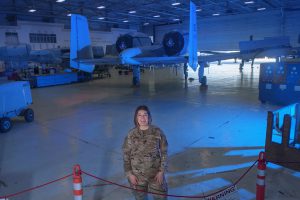 Maj. Kristin Daigle enlisted into the Idaho Air National Guard in 2004 to help pay for college.
She attended college at Boise State University without having to take out any student loans and found full time employment within the 124th Fighter Wing shortly after graduation. With her degree, she was also able to commission as an intelligence officer.
“I always wanted to be an officer,” she said. “The timing seemed right.”
Daigle was hired to be an instructor for the wing’s Intelligence Formal Training Unit after spending seven years as an enlisted intelligence analyst. She also worked as the wing’s sexual assault response coordinator and as the executive officer for the Idaho Air National Guard.
Today, she’s the commander of the 124th Fighter Wing’s Maintenance Operations Flight, a position she sought for increased leadership responsibilities.
“Best decision I ever made,” she said. “I love being in maintenance!”
The flight is responsible for the long-range management of the wing’s A-10 Thunderbolt II aircraft and manages aircraft maintenance to meet operational requirements for the 190th Fighter Squadron.
“There are different challenges presented every day,” she said. “There’s always something breaking and you have to figure out how to fix it and still meet the wing’s flying schedule.”
The flight consists of five shops and more than 20 Airmen. Daigle has been in command of the flight since 2019.
“It’s given me an appreciation for everyone’s different perspectives that they bring to the job and I try to balance the mission requirements with making sure the people are taking care of,” she said.
Lt. Col. Christina Taylor
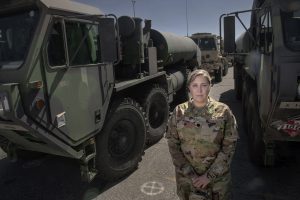 Lt. Col. Christina Taylor joined the University of Idaho Army ROTC program to help pay for college. She chose to commission into the Idaho Army National Guard after graduating so she could have a hand in deciding her future.
“I didn’t want the Army to choose for me,” she said. “I wanted to create my own path.”
By serving in the National Guard’s Simultaneous Membership Program, she was able to drill with an Idaho Army National Guard unit while still in college and identify a position for her to serve in after commissioning. Had she chosen to serve in the active Army, the Army would have selected her assignment and duty location.
Taylor drilled with C Company, 145th Brigade Support Battalion, 116th Cavalry Brigade Combat Team and remained with the unit after she commissioned in 2002. It began a path that has led to multiple command positions for Taylor since 2015.
In 2015, Taylor led the Mission Training Complex – Gowen Field. After a short break, she commanded C Company, 145th BSB for most of 2017. She then took command of the Idaho National Guard’s 101st Civil Support Team in February 2018 before transitioning out of that position to command the 145th Brigade Support Battalion last year.
As the 145th BSB commander, Taylor is the 116th Cavalry Brigade Combat Team’s senior logistician and is responsible for ensuring the unit’s maneuver commanders can maintain their operational reach for prolonged periods of time by maintaining logistical and sustainment support in the operational environment. The battalion consists of more than 400 Soldiers that comprise a distribution company, a field maintenance company and a medical support company in addition to forward support companies located throughout the state.
Taylor is also the brigade’s highest-ranking female Soldier, a fact she doesn’t pay much attention to.
“Never in my career has it ever been about me being a woman,” she said. “It’s always about being capable to assist the organization. The Guard’s provided a really great career path for me to be able to grow and learn as a leader. That’s why I chose to make it a career.”
Taylor earned her degree in elementary education and worked as a teacher prior to deploying with the 116th CBCT in 2005 in support of Operation Iraqi Freedom III. She started working fulltime for the Idaho National Guard shortly after returning home from deployment when she was hired as the medical operations officer for the 101st Civil Support Team.
“I like how we can directly give back,” she said. “You can show how one person can actually have an impact and give back to our fellow citizens, state and nation.”
Taylor describes leadership as an upside-down triangle, with leaders representing the bottom point, holding up and supporting Soldiers.
“We work to meet their needs,” she said. “With that mindset, we accomplish a lot more.”
Col. Elizabeth Sumner
 Col. Elizabeth Sumner is the highest-ranking female in the Idaho National Guard. She leads more than 340 Airmen as the 124th Mission Support Group commander.
The 124th Mission Support Group consists of four squadrons and one flight and provides a wide range of support for the 124th Fighter Wing. The group includes facilities, communications, security forces, logistics, civil engineering, contracting and force support.
“People are my mission,” she said. “I focus on getting them the resources they need to be successful because they are the ones who accomplish the Air Force’s mission.”
Sumner began her career in the United States Air Force before transferring to the Idaho Air National Guard in 2008 to find a good balance between having a military career, a civilian career and a spouse who also served in the Air Force.
“I thought it was the perfect marriage of things I liked to do,” she said. “I drilled on the weekends and I worked for an engineer company in Boise during the week.”
Sumner served in the Alaska National Guard and the Florida National Guard as her husband received new assignments before transferring back to the Idaho Air National Guard again in 2014 when he retired.
“I always wanted to serve,” she said. “I like being part of something bigger than myself and I like the discipline that comes with serving in the military.”
Sumner started her military career as an intelligence officer and later became an instructor at the wing’s Intelligence Formal Training Unit. She realized that the same qualities that would make her a good instructor to her students would also make her a good leader to her Airmen: be humble, credible and approachable.
“I think what we do in the Guard is such an incredible balance to the active duty,” Sumner said. “It comes from vast different experiences everyone brings. As a leader, it’s important to realize that differences can be a huge strength to an organization and that we should invite those differences of opinion, perspectives and experiences so we can get to the best solutions.”
Guardsmen help with understaffing, serve locally
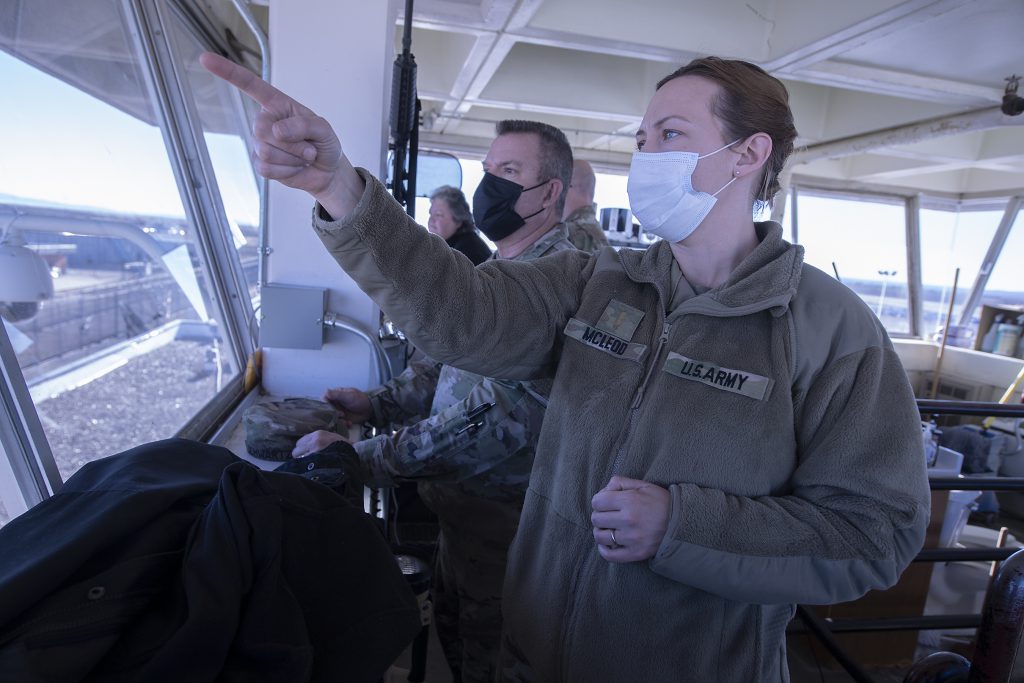
Maj. Robert Taylor/Idaho Military Division Public Affairs
Spc. Kyle Shuman grew up an Army brat and wanted to enlist into the Army himself. Five years ago, he enlisted into the Idaho Army National Guard as a 68W combat medic.
“I wanted to follow in my dad’s footsteps,” he said. “He used to say good things about the military. I thought that being in the National Guard would be a good way to serve in my community and still be in the military and have a civilian career.”
Shuman is one of approximately 75 Idaho National Guardsmen currently assisting the Idaho Department of Correction overcome staffing shortages due to the COVID-19 pandemic. Gov. Brad Little activated the Idaho National Guard for the fourth time Jan. 31, which also included support at multiple Primary Health Medical Group locations until Feb. 25.
Citizen-Soldiers and Airmen are performing non-security duties while the department is severely understaffed. He previously volunteered with the task force last year and deployed to Washington, D.C. in June 2020 to assist local civil authorities as part of an effort that included more than 5,000 National Guardsmen from 11 states and Washington D.C.
“I didn’t know what the mission would be,” he said. “I just volunteered to get new experiences and to get to do things I don’t get to do everyday and to meet people from other units.”
At the prison, Shuman said he assists with monitoring cameras in a control center and opens and closes doors as requested by correctional officers. Shuman said Guardsmen performing similar tasks throughout IDOC facilities helps free up correctional officers to perform security duties. The additional personnel allow residents to move around the facility as normal. Prior to the Idaho National Guard assistance, residents spent an increased amount of time in their cells throughout the day due to a lack of correctional officers.
“It makes me feel good to go out there and help the correctional officers with whatever they need help with,” said Sgt. 1st Class Vincent Mele, the non-commissioned officer in charge of the Idaho Guardsmen working at the state’s minimal security facility.
Mele is working at the facility’s front desk, where he helps sign visitors and staff in and out of the prison and answers the prison’s telephone.
“This mission provides a really good perspective on the world that maybe you didn’t have before hand,” he said. “We all get an idea of what the prison system might be like, and it’s definitely a little different in Idaho than I pictured.”
Guardsmen anticipate assisting IDOC until mid-March. Shuman, Mele and other Guardsmen will then return to their civilian jobs in their respective communities.
“We thank you for everything you’re doing for our staff and residents,” said Warden Timothy Richardson. “Before the Idaho National Guard arrived, at one point we were down to 48% staffing. We realize this is a unique and uncertain environment, but you’ve provided a solid cadre of troops and we couldn’t ask for a better group at such a critical time.”
Idaho Army National Guard deploys to Southwest Asia
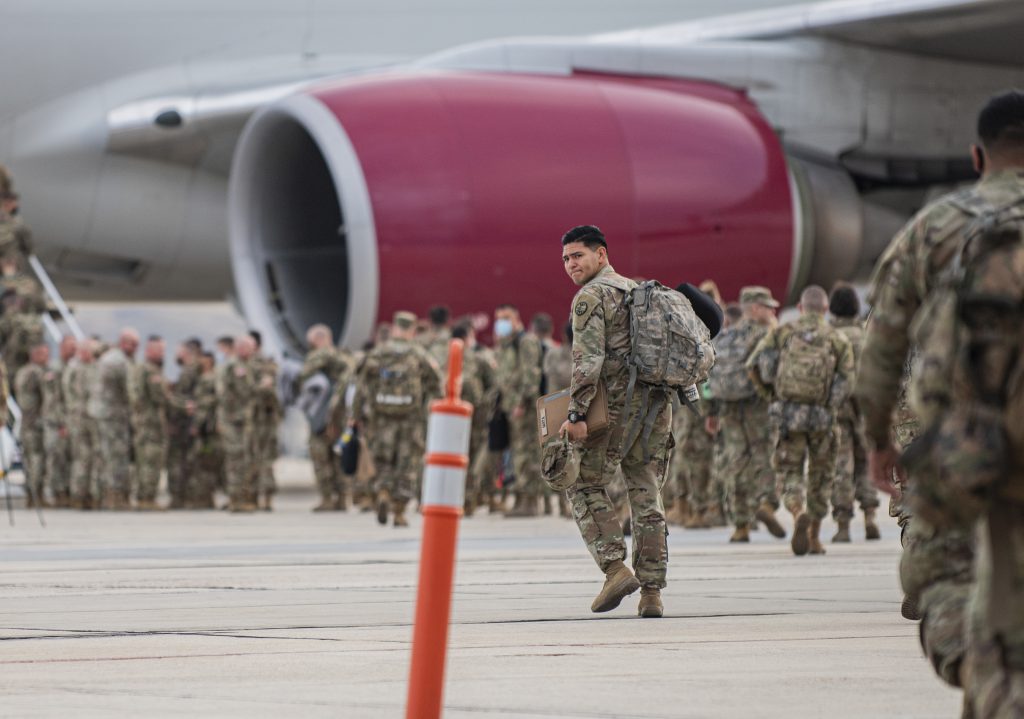
More than 250 Soldiers from the Idaho National Guard’s largest unit, the 116th Cavalry Brigade Combat Team, left for a 12-month deployment on Nov. 5 to Southwest Asia in support of Operation Spartan Shield. The brigade has trained for more than a year in anticipation of this mobilization.
OSS is a joint mission under the United States Central Command and is part of Operation Enduring Freedom. Idaho Soldiers will comprise nearly 20 percent of the 116th CBCT task force during this rotation. Soldiers from 116th CBCT units in Montana, Nevada and Oregon, as well as the Florida Army National Guard, will also fall under the task force.
“The Soldiers of the 116th are trained and ready to go,” said Lt. Col. Eric Orcutt, 116th CBCT commander. “I could not be more proud of these men and women and the efforts they’ve put forth in training and preparing for this mission. They are eager and they are focused and as always, they will achieve the highest level of success.”
OSS is an ongoing operation and supported primarily by Army National Guard units from across the country. This deployment is anticipated to last approximately 12 months and is the first rotation the brigade is scheduled to support, with the second rotation occurring in the summer of 2022. The Soldiers mobilizing today will receive 45 days of additional training stateside before deploying overseas.
The 116th Cavalry Brigade Combat Team previously deployed in support of the Global War on Terror in 2004 and 2010 to Iraq. Additionally, more than 400 Idaho Air National Guardsmen deployed to Southwest Asia in the summer of 2020.
From the ground to the sky: Idaho’s joint fire exercise
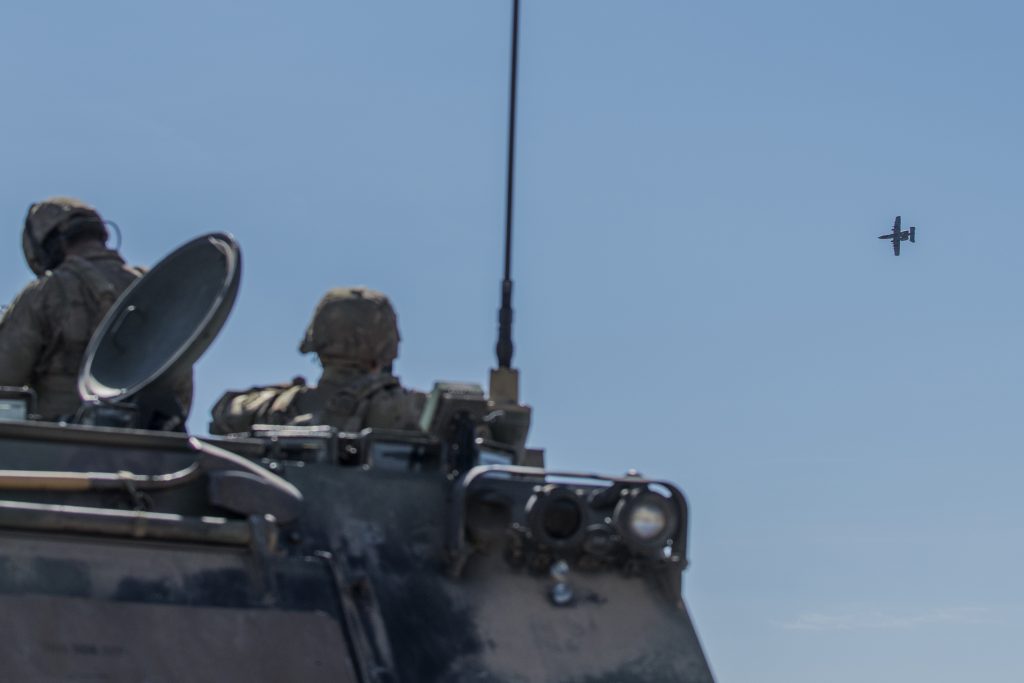
Master Sgt. Becky Vanshur/Idaho Military Division Public Affairs
Idaho citizen-Soldiers and Airmen trained together May 18-19 to support a joint fire exercise that combined live mortars from the ground with close air support from above. Included were live bombs, missiles and combined effects munitions at Idaho’s premier training location, the Orchard Combat Training Center.
The Idaho Army National Guard’s 2nd of the 116th Combined Arms Battalion and the Idaho Air National Guard’s 124th Air Support Operations Squadron and 190th Fighter Squadron joined forces from the ground to the sky in the large-scale joint training event.
“Our battalion hasn’t had this level of training or this level of interoperability working with the Air Force before,” said Maj. John Gregory, 2-116 CAB operations officer. “We want to get to that level of proficiency working with each other, Army and Air, and provide ourselves the most lethal amount of force and mass effects in one space, at one time.”
Integrating the Idaho Air National Guard to bring combined effects on the battlespace started two years ago with dry run munitions. This year the exercise combined live munitions. 124th ASOS joint terminal attack controllers worked with the 2-116 CAB’s joint fire observers to direct targets with combined live-fire weapons engagement.
Idaho’s A-10 Thunderbolt II aircraft dropped 500-pound bombs and other munitions in close air support for a combined effect after the ground forces engaged with the 120-millimeter self-propelled mortar explosives. This is the first time the A-10s dropped the live bombs at the OCTC as airpower support for the Idaho Army National Guard.
“Joint live-fire integration is the key to success on the battlefield of tomorrow,” said Brig. Gen. Timothy Donnellan, Assistant Adjutant General – Air. “The Soldiers and Airmen of the Idaho National Guard will continue to train together following the National Defense Strategy. The live-fire integration training conducted will give the ground commander the confidence they need to dominate the battlespace of the future aggressively.”
A variety of weapon platforms and munitions are used to attack enemy air defenses through the U.S. Department of Defense’s concept of suppression of the enemy air defense, or SEAD mission.
“We want to build on this training and make it a grander concept over the years to come,” said Capt. Jacob Bartlow, 2-116 CAB assistant operations officer. “We settled on a concept of the SEAD mission. This training turned out to be a great run and integrated all three units.”
The training will continue to become more robust each year. Bartlow plans to have several iterations of close air support from the A-10s in the future and possibly integrate F-15s from Mountain Home Air Force Base to support SEAD.
“In future joint fire exercises at the OCTC, we can include scouts to identify the enemy, bring in artillery, mortars and air defense to suppress the capabilities of the enemy so we can free the maneuver in another portion of the battlespace,” said Bartlow.
Located 18 miles south of Boise, Idaho’s OCTC has 143,000 acres of vast terrain and world-class ranges with a four-season climate, making it ideal for preparing units for combat in a challenging and realistic training environment.
“We have incredible training space here at the OCTC,” said Bartlow. “Ultimately, we envision Idaho as the National Guard’s premier location for joint fire integration.”
Idaho Guardsman, mother sets example
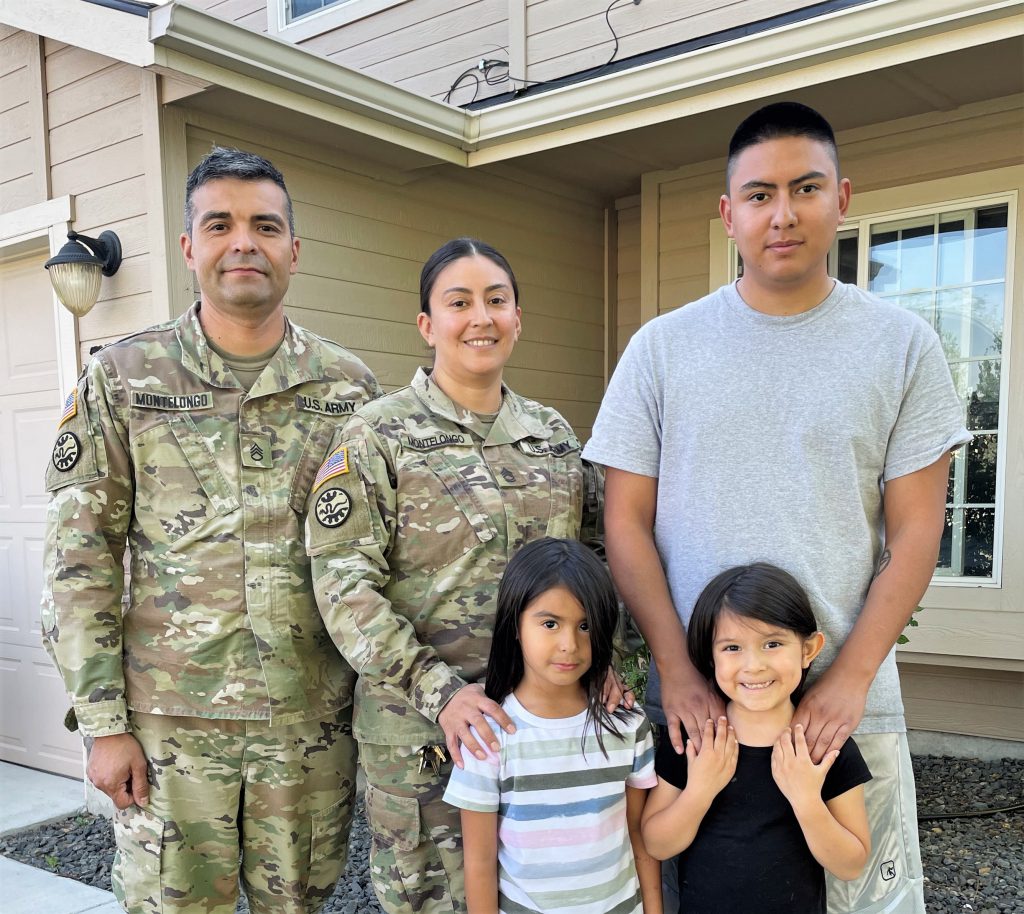
Idaho Military Division Public Affairs/Crystal Farris
Sgt. 1st Class Gladys Montelongo was a single mother raising three children and managing a Subway restaurant when she decided to change career path and join the Idaho Army National Guard at 28 years old in 2009.
“I felt I had more to offer and wanted to be a positive role model for my kids,” she said. “I knew joining the Guard would provide opportunities for myself and my family.”
Through the Idaho Guard, Montelongo has since received approximately $55,000 in enlistment and reenlistment bonuses; purchased her first home using a VA home loan; met her current husband and used her military tuition assistance to earn a bachelor’s degree at Boise State University.
“Before joining, I never imagined having the means to buy a house or earn a degree,” she said. “The money and opportunities are available in the Guard. Joining has helped me provide for my family and motivated me to do better.”
In April, Montelongo was promoted to sergeant first class as the culinary management noncommissioned officer for Golf Company, 145th Brigade Support Battalion.
She is also currently pursuing a master’s degree in legal studies at the American Military University. Montelongo said continuing her education and career advancement sets the right example for her four children and also the 11 Guardsmen who she manages at work.
“Being a mother and an Army leader is similar in my mind,” she said. “I show my kids the value of hard work and dedication and push them to be the best in what they do, just like I push my Soldiers to be the best they can be.”
One of Montelongo’s children currently manages a Little Caesar’s restaurant in Lewiston, Idaho, while her oldest son serves in the Idaho Army National Guard as a specialist with the organization’s 148th Field Artillery Regiment.
“Seeing my son follow in my footsteps gives me a proud feeling as a parent,” said Montelongo. “I believe my work ethic and service has positively contributed to his decisions.”
Although some aspects of leading a family and a group of troops overlap, leading Soldiers can be a lot different than managing individuals in a civilian job, she said.
“The difference between managing a Subway restaurant and a culinary section in the military is that I’m responsible for the wellbeing and career development of my subordinates,” said Montelongo. “My troops are a reflection of my leadership, which I provide through on-the-job mentorship, training and counseling.”
Montelongo developed her leadership through years of experience as a senior food service specialist and while in Army leadership courses, where she learned to provide Soldiers purpose and fulfillment, she said.
“I take the time to get to know my Soldiers and what motivates them,” said Montelongo. “I look out for them, make sure they have what they need and advocate for their best interests. When everyone feels good, they do good things and that’s the rewarding part.”
While preparing large-scale meals for hundreds of Soldiers during training, including in field environments from mobile kitchens, she also provides her subordinates with motivation by getting in the kitchen and showing them how to spice up recipes using bacon or rubs made from scratch.
“The job is demanding and its hard work, but very rewarding,” Montelongo said. “As cooks, we work early mornings and late nights preparing and serving meals, but Soldiers look forward to seeing us and getting a hot meal in the field. It’s a nice feeling knowing we get to provide that to them, so we make it fun and ensure the food always tastes good.”
Idaho National Guard, Idaho Army National Guard, National Guard, 145th Brigade Support Battalion, Mother’s Day, Women’s History Month
IDAHO NATIONAL GUARD SENDS PERSONNEL TO WASHINGTON, D.C. TO ASSIST 59TH PRESIDENTIAL INAUGURATION
Idaho Military Division Public Affairs
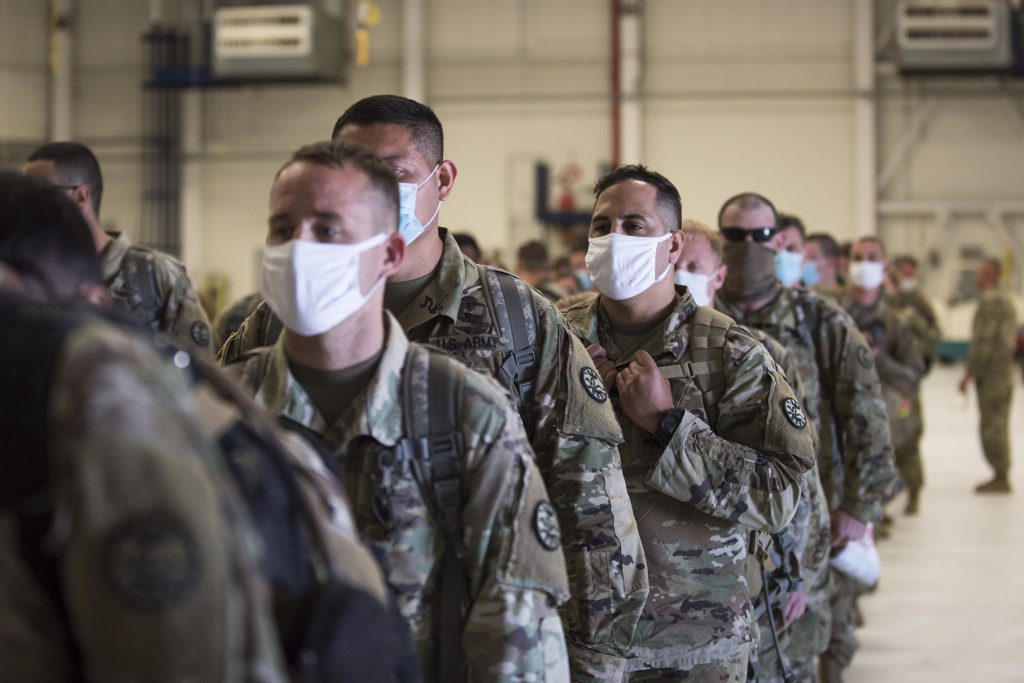
(GOWEN FIELD) — The Idaho National Guard will send approximately 300 Soldiers and Airmen to Washington, D.C. in the coming days to assist district and federal agencies with the presidential inauguration. These Guardsmen will augment the Washington D.C. National Guard and serve in support of the U.S. Secret Service, the lead federal agency responsible for coordinating the event.
Personnel will begin departing from Gowen Field in Boise less than 72 hours after Gov. Brad Little approved the mission. The Nation’s Guard response could include an estimated 25,000 Guard members from all states and territories.
“The National Guard has participated in every presidential inauguration in our nation’s history,” said Maj. Gen. Michael Garshak, adjutant general of Idaho. “It is an honor to be a part of the tradition of ensuring the peaceful and orderly transition of national power; an act that separates us from many other countries across the world.”
Guardsmen will travel to Washington, D.C. via military airlift and contracted aircraft with standard government-issued equipment to perform a number of potential tasks to include security, communications, medical, logistics, and safety support to district and federal agencies. Nearly half of the National Guard task force will conduct security-related duties to include traffic control or by assisting visitors to proper assembly locations as well as entry and exit points.
The Idaho National Guard has planned for more than a month to send roughly a dozen personnel to the region in support of the inauguration. The increase in personnel is part of a new request to provide additional Guard support and represents roughly six percent of the Idaho National Guard force.
This deployment does not involve Soldiers and Airmen already working in their communities as part of the COVID-19 response effort. The Idaho National Guard will continue to maintain its capacity to provide emergency response in Idaho, whether it be a COVID surge, civil unrest, natural disaster or other emergency response function.
The Idaho National Guard has deployed out of state in support of national emergencies in the past. From Hurricane Katrina in 2005, wildland fire suppression in Oregon and Washington in 2015, to Puerto Rico for Hurricane Maria recovery support in 2017, the Idaho National Guard has provided hundreds of Soldiers and Airmen over the last decade in response to national emergencies.
More recently, last summer the Idaho National Guard sent Soldiers and helicopters to fight California wildfires and more than 400 Soldiers to Washington, D.C. to assist with civil unrest response. Additionally, the Idaho National Guard continues to provide state emergency relief here at home during the COVID-19 pandemic.
Soldier becomes Idaho’s first female 19D cavalry scout instructor
Master Sgt. Becky Vanshur, Idaho Military Division Public Affairs
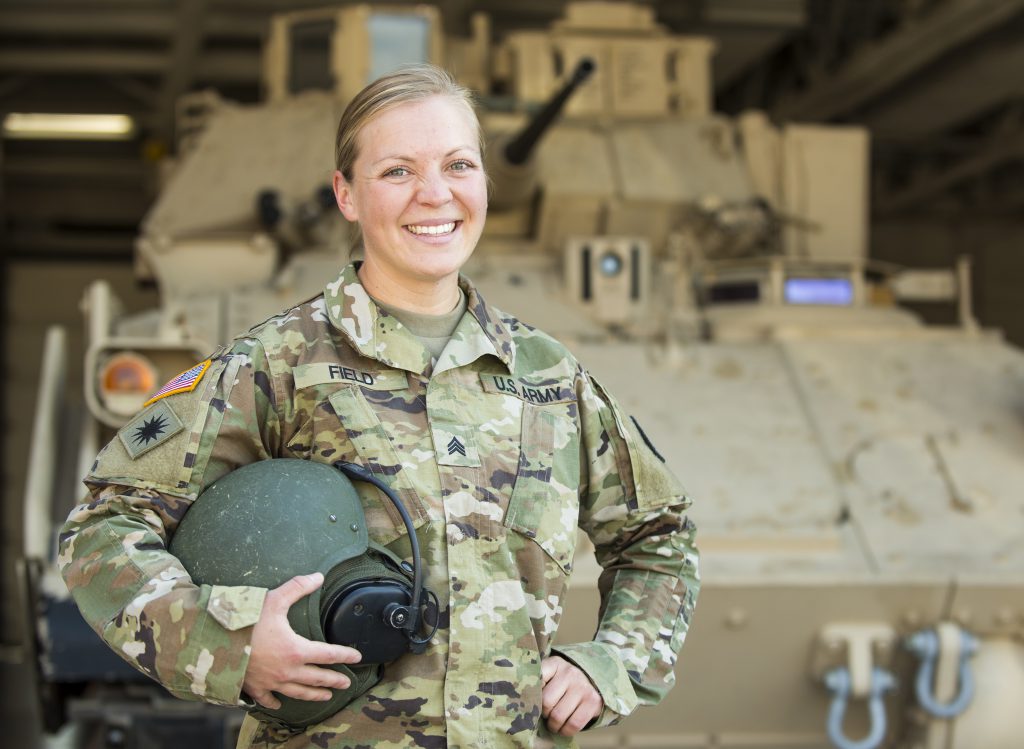
Sgt. Sarah Field put on the Army uniform for her first time when she enlisted in June 2010, and 10 years later, she puts on that uniform with a little more pride as she is now the Idaho Army National Guard’s first certified female 19D cavalry scout instructor at the 1st Battalion, 204th Regional Training Institute (Armor) at Gowen Field.
Although she grew up in Boise, Idaho, Field started her military career in the Utah National Guard, while she attended college at Utah State University. During her time in the Utah National Guard she served one combat tour in Afghanistan in support of Operation Enduring Freedom as a chaplain assistant. Following her initial military training and deployment, Field graduated from USU in 2014 with a bachelor’s degree in parks and recreation. After graduation, she transferred to the Idaho Army National Guard to Headquarters and Headquarters Company, 116th Cavalry Brigade Combat Team, to come back to her hometown.
In 2020, she transitioned into the combat arms, wanting to be a cavalry scout, with the seed planted in her mind of becoming a certified instructor. While assigned to the HHC, 2nd Battalion, 116th Cavalry Regiment, Field became a more experienced scout team member as a truck commander and Bradley gunner. On Dec. 4, Field became certified to instruct cavalry scouts in the Military Occupational Specialty – Reclassification course (MOS-R) and on Dec. 22, she became certified to instruct the Bradley Commander and Gunner Course (BCGC). Her next goal is to be certified as an instructor for the Advanced Leadership Course (ALC).
“Becoming a certified instructor can be a long process,” said Field. “First you must go through the specific class as a student, then shadow the class, and follow up by teaching specific lesson plans back to the instructors. Once you complete those steps you become a provisional instructor and teach the classes while you are being shadowed and evaluated. I am now certified in two of the three courses in just nine months.”
Field attended the MOS-R as a cavalry scout student in February 2020. She was the only female in the combat arms class of 12 students but she knew she had to get through the challenging course to be considered for an instructor position.
“The MOS-R course is demanding and extremely physically and mentally challenging,” said Field. “It starts off with a 12-mile ruck march, heavy physical demands testing, day and night land navigation and works up to the Gunnery Skills Testing. I was definitely nervous and afraid of failing, but I knew if I didn’t try then I would never know what I was capable of accomplishing in my career.”
The GST consists of testing on ammunition and vehicle identification, small and medium weapons systems and other Bradley platform specific tasks. Despite having little previous combat arms experience, Field went on to graduate the 19D MOS-R in March and the 19D BCGC and the 19D ALC in August, completing all of the courses the 19D instructors teach. She is now certified as the instructor for the two courses and is currently starting the process to be certified as the instructor for the 19D ALC.
“I am grateful to have the opportunity be the first female instructor here at the Regional Training Institute. I feel it is important to have diversity in the learning environment,” said Field. “We all have different experiences and can relate to others in different ways. I have been able to use my gifts and talents to enhance the ways I teach our curriculum at the schoolhouse, helping students overcome their own challenges and learn and grow as Soldiers.”
Back to Newsroom
JOIN the Idaho Army National Guard
39 former Marine Reservists enlist into the Idaho Army National Guard
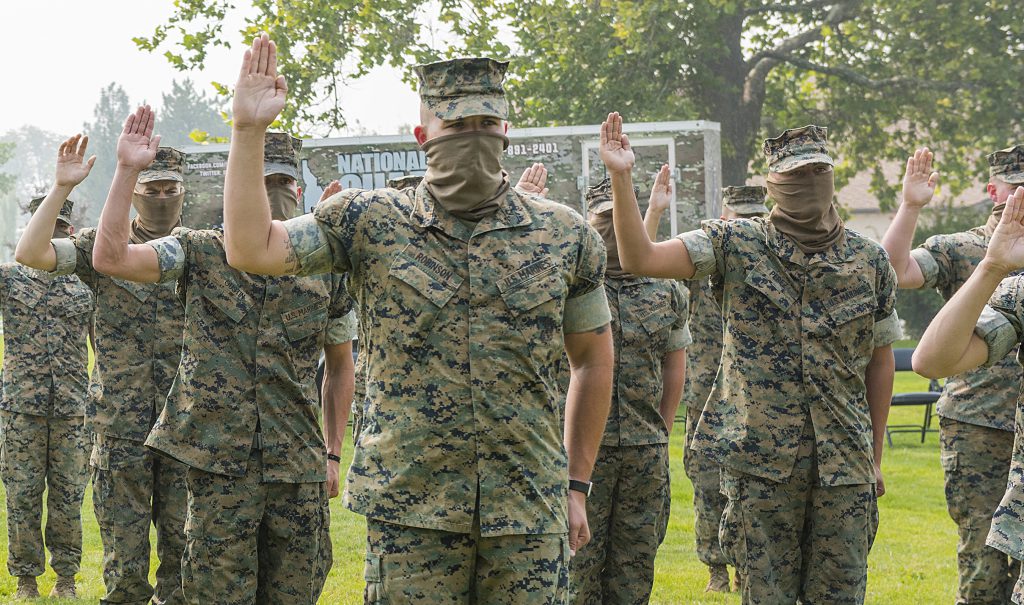
Today, more than three dozen former Marine Reservists enlisted into the Idaho Army National Guard. Idaho’s newest Citizen-Soldiers all served in Company C, 4th Tank Battalion, which was deactivated in August as the Marines look to divest its armor battalions.
“Marines make excellent Soldiers,” Brig. Gen. Farin Schwartz, commander of the Idaho Army National Guard said. “They each have the potential to make an immediate impact to their new unit and have already proven to be successful in the military.”
New recruits can take six to eighteen months to train before they can reach their assigned unit and once there, must continue to train and learn their new job before they can fully contribute to their unit’s mission. Most of the Marines who transferred into the National Guard will have similar positions when possible, Schwartz said.
Marine 1st Sgt. Craig Wilcox said more than a third of the company’s Marines transferred into the Idaho Army National Guard for one of two reasons: to continue to serve their country locally or to continue to work on or in tanks. Company C operated the M1A1 Abrams Main Battle Tank while the 116th Brigade Combat Team of the Idaho Army National Guard operates the updated M1A2 Sep v.
“I looked at all of my options and I knew I wanted to stay in Idaho because my family is here,” said Staff Sgt. Kyle Dycus, one of the Marines who transitioned into the Idaho Army National Guard. “Initially, I wanted to stay within the tank community but decided to look for a more real-world option for my future and I chose the information technology field. I am looking at this from a positive aspect and I am thankful for this new opportunity. Change can often be a good thing.”
The majority of the Marines who enlisted into the Idaho Army National Guard are tankers, maintainers and other support individuals.
“We tried to match their Marine skill sets to an Army military occupational specialty as much as possible,” Schwartz said. “And we’ll continue to pay them special attention for the foreseeable future to ensure their transition is as smooth as possible.”
Wilcox said Marine Reservists were given the option of transferring to a new job and unit in the Marine Reserve, to transfer to a new branch or join the Individual Ready Reserve. An additional 10 Marines joined National Guard units in other states.
The number of Marines to transition into the Idaho Army National Guard increases the total strength of the organization by more than a percent.
In 2019 the Marines began divesting its tanks and reducing its artillery cannon battalions to focus on developing light mobility options to get around island chains with the assistance of unmanned systems and mobile anti-ship missiles. The efforts are part of Marine Corps Commandant Gen. David Berger’s plan to modernize the corps to become a lighter and faster force.
The Marines also plan to reduce its number of infantry battalions from 24 to 21, artillery cannon batteries from 21 to five and amphibious vehicle companies from six to four.
Locally, Wilcox said that a small number of Marines will remain on Gowen Field to maintain the Marines’ connection to the Treasure Valley until a decision is made regarding future units being assigned to Gowen Field. In the meantime, Marines will continue to engage in community relations events, host their annual Toys for Tots program and conduct funerals and honors for Idaho’s Marine veterans.
Back to Newsroom
JOIN the Idaho Army National Guard
Idaho Guardsmen train to fight wildland fires earning Red Card certifications
By Master Sgt. Becky Vanshur
Idaho Military Division Public Affairs
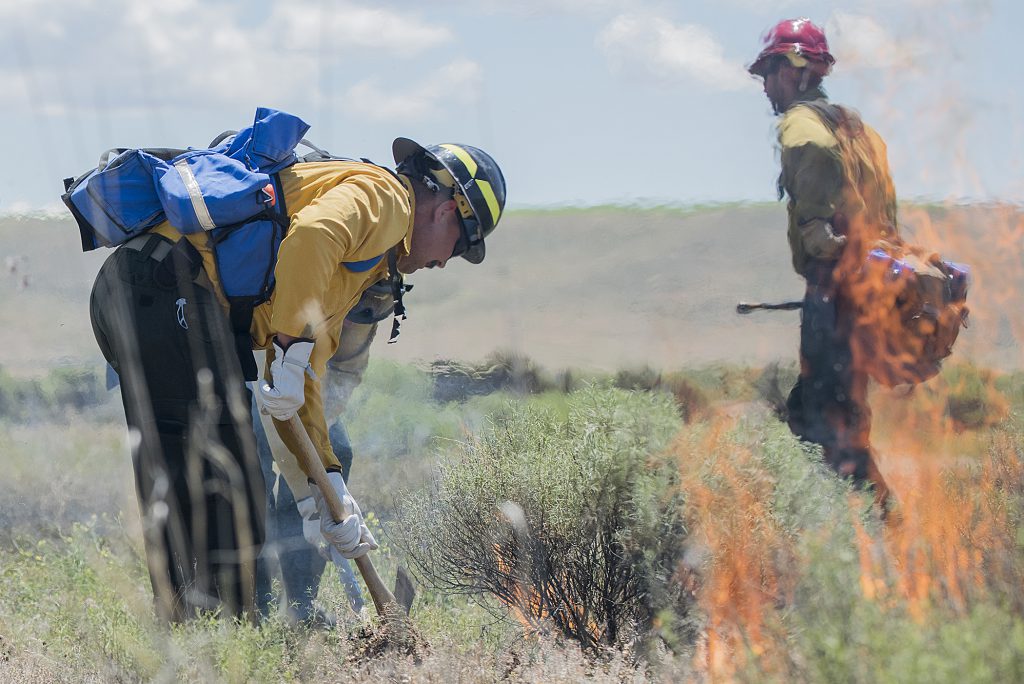
Approximately 40 Idaho Citizen-Solders are now equipped with the knowledge and training to fight wildland fires, as the Idaho National Guard hosted its first wildland firefighting training course at Gowen Field, Idaho, June 15-19 and June 22-26.
Although Gowen Field and the Orchard Combat Training Center fire departments have qualified wildland firefighters, this is the first time the five-day courses have been offered to non-firefighter Guardsmen, enabling them the opportunity to earn an Incident Qualification Card, commonly known as a Red Card certification.
As Soldiers become certified by Idaho Department of Lands, they are prepared to assist firefighting efforts in the event the governor declares a state emergency. Additionally, it allows the Guardsmen the opportunity to learn a new skill they can use for job opportunities within the military or the civilian workforce.
“The Idaho National Guard is proud to offer our Soldiers the opportunity to participate in this entry-level firefighter course,” said Brig. Gen. Russ Johnson, director of the joint staff. “It enables us to enhance our capability to respond to local, state and federal calls with trained and qualified wildland firefighters.”
The Soldiers who were willing and able to complete training standards for this course are also willing and able to volunteer for state activation during the fire season, Aug. 1 through Nov. 30 of this year, if requested.
“We want to train and Red Card certify as many as 200-300 Guardsmen over the next several years,” said Lt. Col. Tony Vincelli, director of strategic plans for the joint staff. “It’s part of our overall strategy that the Idaho National Guard be prepared to support any domestic emergency.”
The week consisted of two online introduction courses leading into 32 hours of training in the Basic Firefighting and Wildland Fire Behavior courses and the demonstration of individual physical fitness by completing a pack test consisting of a three-mile ruck march carrying a 45-pound pack in less than 45 minutes.
“I have always been one to just go for it and volunteer for everything,” said Spc. Tatiana Campbell from Bravo Company, 116th Brigade Engineer Battalion. “As one of the few females signed up for the course, I was pretty impressed with the physical challenge of it. Physically it wasn’t too hard on me, but if you are physically fit, it’s going to be easier on you.”
National Guard Bureau provides funding for specific wildfire prevention and protection activities. These courses were offered at Gowen Field at no cost to the Idaho Guardsmen. When available, this funding is provided annually to Idaho and other western states prone to wildland fires.
“Wildland firefighting is something I have always wanted to do,” said Sgt. Nolan Myer from the 148th Field Artillery Regiment. “Within 45 minutes of getting the email that there was a wildland firefighting course being offered, I sent an email immediately back and signed right up.”
The IDL and the OCTC firefighters taught the course and at the end of each of the weeklong courses, the IDL certified those individuals who met the qualifications and issued their Red Cards. Every year those individuals can recertify to maintain their skills and Red Card certification.
“This unique training compliments the existing levels of specialized capability that currently exist in the Idaho National Guard,” said Johnson. “And it further reinforces our commitment to serving and protecting our great citizens.”
New Idaho Guard enlistees receive school tuition assistance, $20,000 bonus
Story by Crystal Farris
Idaho Military Division Public Affairs
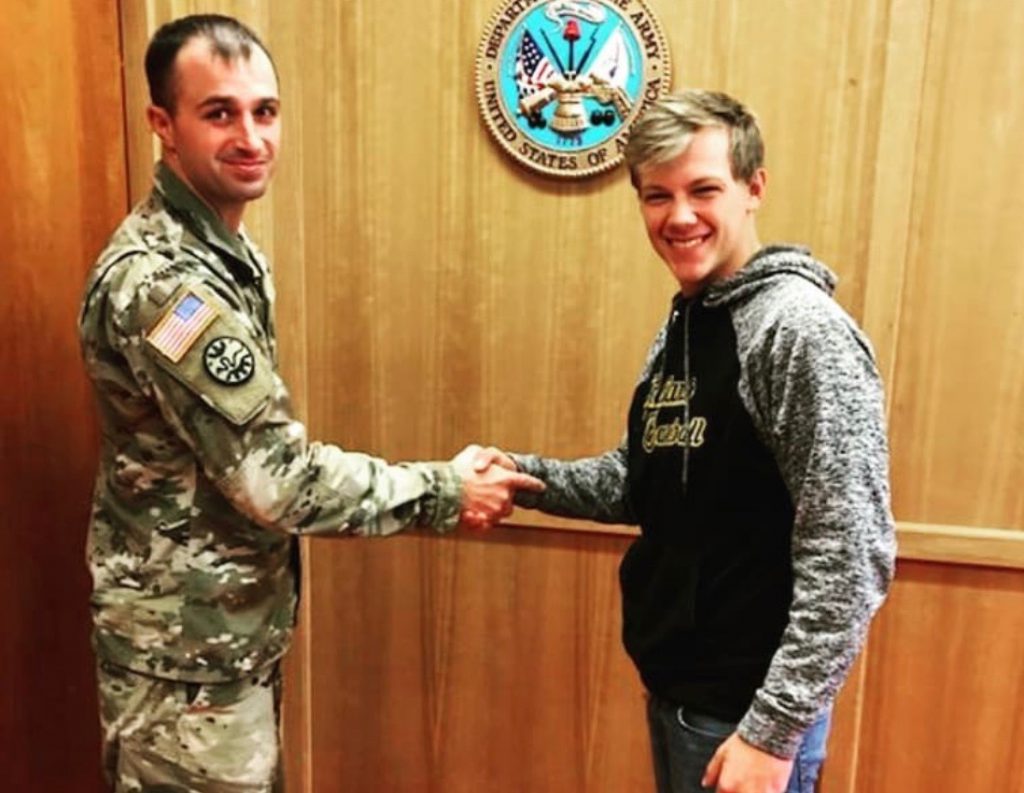
Idaho Army National Guardsman Pfc. Kolten Jordan needed a bit of direction in his life after graduating high school. Working full time in the construction industry just to make ends meet, he decided to find a more enjoyable career and a way to help pay for college.
“I really wanted to go to school to get a degree,” said Jordan. “After hearing that I could receive an enlistment bonus and college tuition benefits through the guard, I knew it would be a good direction to take in my life.”
Jordan enlisted as a cannon crew member with the 116th Cavalry Brigade Combat Team’s A Battery, 148th Field Artillery Regiment in November 2018. Upon joining, he received a $20,000 enlistment bonus, the Montgomery GI Bill Kicker of $350 per academic month and the ability to earn an additional $8,000 in annual federal and state tuition assistance.
Since returning from basic and advanced individual training, Jordan has started using his school tuition assistance to pursue an associate degree in fire science at Boise State University and has received $10,000 of his enlistment bonus.
“Receiving my bonus was one of the biggest reliefs I’ve ever had,” said Jordan. “The money has so far helped me pay for college, enabled me to give my girlfriend a good birthday and is still helping to keep me on my feet with bills while I focus on school.”
The Idaho Army National Guard is one of approximately five other states national-wide to offer a $20,000 non-prior service enlistment bonus as part of a new pilot program that began in October 2018. The organization has since signed 93 enlistees under the bonus.
“The bonus program is just one example of how the Idaho Army National Guard helps Soldiers accomplish whatever they want in their civilian life,” said Brig. Gen. Farin Schwartz, commander, Idaho Army National Guard. “The benefits of our organization make the Guard an easy first choice for Idahoans who want to serve their country while remaining close to home.”
The bonus incentivizes Soldiers to maintain good standing throughout their commitment by changing the way it pays over the course of six years compared to previous bonuses. Previous bonuses paid service members half their entitlement after completing advanced individual training and the remaining half in even allotments every two years for the remainder of their contracts.
While the new bonus also pays out half after AIT, service members now receive the second half in even allotments dispersed annually on the anniversary of their AIT graduation, but only if they are in good standing.
By issuing payments every year, the bonus gives service members money they can count on more frequently, said Sgt. Preston Hair, Idaho Army National Guard recruiter. It’s an added benefit to fulfilling requirements service members are already expected to meet regardless of a bonus, added Hair.
“I’ve always been someone who wants to get a job done well but the bonus payments definitely help motivate me to maintain good readiness standing with the guard,” said Jordan. “It’s always nice to receive a payment, especially for doing something that I absolutely love being a part of.”
To qualify for the enlistment bonus, individuals must meet various initial entry requirements, including: no prior military service, score above a 50 on the ASVAB and have either a high school diploma or a GED in combination with 15 or more college credits.
Additionally, enlistees must sign for six years and chose from a list of the organization’s 10 to 15 qualifying military occupational specialties.
The organization also offers educational incentives to those qualifying under the new pilot program bonus, including the Montgomery GI Bill Kicker of up to $350 per academic month and a student loan repayment program that pays up to $50,000 in previously acquired academic loans. This is in addition to $4,000 in federal educational assistance and $4,000 in state educational assistance service members are already entitled to per year.