 Official Government Website
Multiple Agencies train for mass destruction
Click here to read more: Multiple Agencies train for mass destruction
Missing in Idaho – A lost hiker training scenario
BOISE AIR TERMINAL AIR GUARD STATION, ID, UNITED STATES
03.13.2019
Story by Master Sgt. Becky Vanshur
124th Fighter Wing
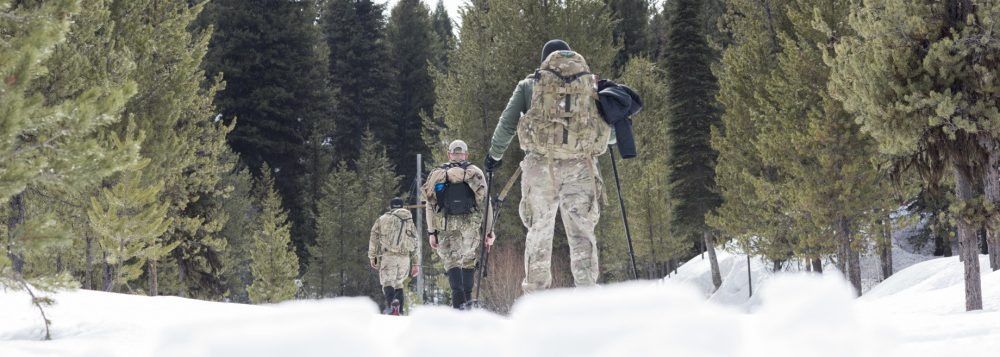
CASCADE, Idaho – Imagine there is a missing hiker in the snow-covered mountains. The Idaho Air National Guard’s 124th Air Support Operations Squadron is called for assistance with local northern Idaho search and rescue teams. This is the second year of this specific training with state authorities for possible rescue missions involving the IDANG here on March 7-9, 2019.
Friday, March 7 at 11:32 a.m.
The call comes in. Idaho Emergency Dispatchers notify the Air Force Rescue Coordination Center, the single agency responsible for coordinating federal search and rescue activities, with a request deemed necessary for military assistance. A missing hiker is reported to possibly be lost in the mountains near Horse Thief Reservoir. The hiker was due home by 11:00 p.m. that previous night and all communication was lost as of 8:00 p.m., Thursday evening, three hours earlier. The incident was reported the following morning.
Time is of the essence.
It is just minutes past noon. The Airmen from the 124th ASOS’s Tactical Air Control Party have gathered their response team and their equipment. A convoy of their vehicles leave the gates of Gowen Field to begin the two hour drive north to assist with the search mission.
2:00 p.m.
With the weather calm and clear, a surveillance search and rescue aircraft has been called and is circling the area with specialized thermal imaging systems, equipped with GPS and laser rangefinder to enable precise geolocation.
A large parking lot near Horse Thief Reservoir quickly becomes the search and rescue incident response center. The Idaho TACPs have set up their communications vehicle with an elevated antenna mast for air-to-ground and ground-to-ground radio communications. A TACP makes contact with the aircraft. “The missing person is a 48-year-old male wearing a gray sweatshirt. Last known whereabouts were hiking in the hills south of Horse Thief Reservoir roughly 18 hours ago.”
The Valley County Search and Rescue’s team leader describes the area he wants searched. The air controller wastes no time translating to the aircraft. “Condor, this is Vandal. At grid November-Kilo-271356 you should see a hilltop, with a 30 meter clearing, no trees. From this hilltop, perform a circular search pattern in a 500-meter radius, working outward.”
The aircraft is equipped with a specialized system, Remotely Operated Video Enhancer Receiver (ROVER), which transmits the digital video feed down to the TACP’s tablet. The aircraft will switch between a television camera picture and thermal infrared radiation picture, which detects longer wavelengths of thermal energy invisible to the human eye. Condor’s search is on, while the ground teams watch the video and further direct the camera.
3:07 p.m.
The ROVER video has found a thermal spot similar to that of a person’s size. The aircraft calls it in. “I have a heat signature under some trees, no movement, possible shape and size of a person.” A precise grid location immediately follows and the radio chatter between ground stations begins.
Already standing by, the initial search team heads out. Two individuals from Valley County Search and Rescue, and two from the 124th ASOS use snowmobiles and tracked all-terrain vehicles to make their way up the mountain. The TACPs utilize GPS receivers with paper and digital maps essential for navigating this mountainous terrain.
3:40 p.m.
Team 2 remains at the Horse Thief Reservoir incident response center, anticipating possible extraction scenarios and preparing appropriate equipment. Communication continues back and forth between the aircraft, the incident response cell and the initial search team. The initial search team is close, but the terrain has required them to proceed on foot down a near-vertical cliff face. Minutes continue to pass, hands clenching tightly to the radios.
3:49 p.m.
The initial search team has located the missing hiker, and team 2 is mobilized over the radio. “Copy. The individual has been found. One male, gray sweatshirt, around 48-years-old and is unresponsive, could have a possible head injury. Requesting team 2 for extraction, bring the hoist stretcher, SKED and ropes systems. Bring medical assistance.” The initial search team is accessing the individual but has requested the additional medic.
Every minute counts.
Team 2 sets out on foot. Valley County Search and Rescue’s search dog is sniffing the ground and air, determined. The snowshoes of two ski patrollers and the team of six TACPs trekking at a very fast pace, hauling the requested equipment and making their way straight to the location of the initial search team. They continue off road, hiking straight up steep terrain, cutting valuable minutes off the clock.
4:00 p.m.
Team 2 arrives, the medic assesses the patient while the TACPs locate a suitable helicopter landing zone. He needs immediate medical assistance at the nearest hospital. The request for a rescue helicopter is made. The two teams, working quickly together to load and strap the patient to a backboard-SKED combination, while others build a pulley system used to haul the patient up a 25-foot cliff face to an open patch of ground suitable for a landing zone. The extra military manpower has saved precious time. The patient is handed off to the rescue snowmobile team, heading toward the landing zone for Life Flight Network assistance.
In this scenario, the local Life Flight helicopter would respond, but if a special extraction hoist is necessary for extreme terrain, the Idaho Army National Guard’s UH-72 Lakota Rescue Helicopter could be called and ready to respond within hours to transport a patient.
4:27 p.m.
With the help of the Idaho Air National Guard’s 124th ASOS, in this training scenario, the lost hiker was successfully found, rescued and a life was saved.
Local civilian search and rescue teams present for this joint training included Valley County Search and Rescue, Cascade Fire Department, McCall Fire Department, Tamarack Ski Patrol and Bogus Basin Ski Patrol.
The Traditional: A Pile of hope for Idaho’s youth
BOISE, ID, UNITED STATES
11.02.2018
Story by Airman 1st Class Taylor Walker
124th Fighter Wing
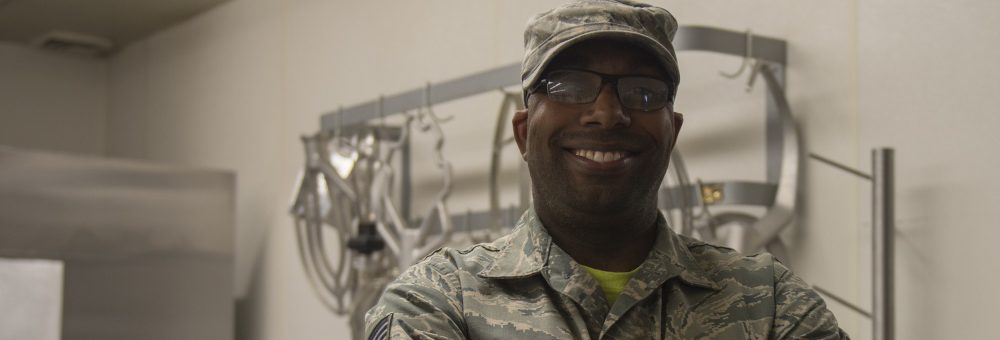
It’s Saturday. Airmen pack themselves along a wall outside the base cafeteria as they exhaustedly shuffle along toward a dry erase board. Eyes scan the board and land on colored letters that read JALAPEÑO POPPERS. The closest Airman quietly celebrates.
“Drill can be tedious,” said Tech. Sgt. Mario A. Pile. “If people can have at least one good meal, then people are happy. That’s the biggest thing for me; I get to be part of that bright spot on a tedious drill weekend.”
Pile, the NCO in charge of the 124th Force Support Squadron Services Flight, dedicates his time to creating welcoming environments for people around him because he believes in building bridges between colleagues and those in need.
“Even as a traditional guardsman, he spends time communicating with the people he supervises outside of drill weekend, checking in on them and seeing how they’re doing,” said Senior Master Sgt. Amethyst R. Keaten, the 124th FSS base services superintendent. “That’s the guy you want on your team.”
Pile’s people-oriented disposition doesn’t stop with his role in the Idaho Air National Guard. As the full-time program manager for the Idaho Youth Ranch Hays House, Pile is responsible for overseeing a homeless shelter for youth ages 9-18.
“I manage chaos,” said Pile. “Everything that might go on with a kid, from school to therapy to casework to listening to them cry, I manage all of that.”
When it comes to a high-stress environment and the welfare of others, Keaten said Pile’s multifaceted approach to problems elevates his success in both his military and civilian careers.
“He’s able to take a situation and look at in a multitude of ways versus just one way,” said Keaten. “He does that with a lot of willingness and ability to empathize and put himself in another person’s shoes. That level of thoughtfulness and care helps him to be very well-suited for what he does at the Hays House and what he does (in the Air National Guard).”
Hays House provides a home to nearly 100 kids each year and is the valley’s only shelter for runaways and homeless kids who are victims of abuse or neglect. To parents who have a hard enough time managing the schedules and development of their own children, Pile’s dedication to Idaho’s homeless kids seems like the work of a superhero. Although fans like Keaten say he shines on a regular basis, Pile disagrees.
“I don’t do anything unique or super special,” said Pile. “I listen and I try to smile and greet the kids. It’s a lot of the small things.”
Pile, who has also worked for the Idaho Youth ChalleNGe Academy, said he’s driven by the opportunity to influence how youth in Idaho are treated. While Hays House provides food, shelter and important resources 24 hours a day, he emphasizes that the best way for anyone to help a kid is by taking the time to mentor them. The key, Pile said, is to slow down and truly listen to and understand what they have to say.
“Just because a kid is labeled as at-risk doesn’t mean they’re a bad kid,” said Pile. “If every adult could see that an at-risk youth is not a bad kid, maybe we’d show more empathy. We need more empathy. Not more efficiency. Not more doing things quickly. We need more empathy.”
Idaho Army National Guard, 116th CBCT Soldiers conduct signal gunnery
BOISE, ID, UNITED STATES
02.19.2019
Courtesy Story
Idaho Army National Guard
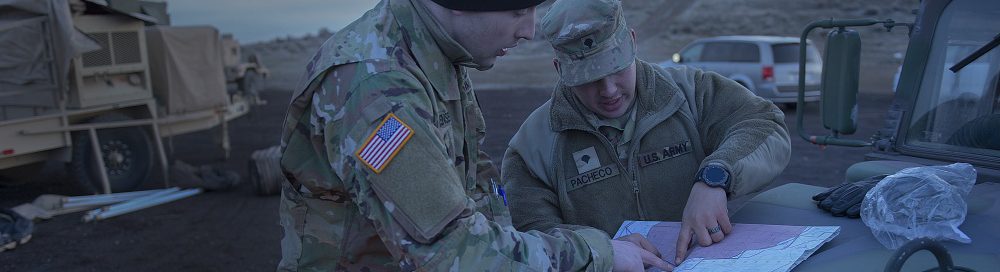
The 116th Cavalry Brigade Combat Team signal Soldiers conducted signal gunnery Feb. 5-10 on Gowen Field and in the Orchard Combat Training Center to train signal Soldiers on their communication platforms in a challenging environment.
“Information is a weapon we wield,” said Chief Warrant Officer 3 Jerred Edgar, the brigade’s network defense chief. “Our communication platforms bring the messages that put rounds on target.”
Approximately 100 signal Soldiers from each of the 116th CBCT’s seven battalions and the Idaho Army National Guard’s 1-183rd Aviation Battalion who hold six signal military occupational specialties participated in the exercise. The training audience focused on junior leader and crew proficiencies.
The training was planned and executed by Idaho Army National Guard Soldiers assigned to the brigade’s communications section to accommodate the brigade’s training schedule prior to its upcoming rotation at the National Training Center.
The exercise was an expansion of last year’s signal gunnery, the first in the brigade’s history. Edgar developed the concept of “signal gunnery” over two years ago after not being able to find any doctrine regarding crew-level training in the Army to mirror the kind of training line units are familiar with.
This year saw the addition of the 1-183rd Aviation Battalion and incorporated battalion signal officers. Four officers were assigned crews in a manner comparable to their organic unit’s structure. They had to plan, track, maneuver and synchronize their crews through their communication platforms.
“We typically are consolidated at one location,” said Capt. Kenneth McNamara, battalion signal officer. “It is different having them far away. It creates a greater challenge for command and control.”
This year’s training was conducted during extreme cold weather, which Edgar said provided an excellent training environment for developing basic Soldier skills. Crew leaders learned how to operate in cold weather, which included rotating Soldiers on tasks to ensure their Soldiers stay healthy and their mission objectives are achieved.
“It’s very difficult, especially with the wind gusts and cold temperatures,” said Spc. Christopher Payne, a joint network node operator. “Things just take more time because of cold weather gear. Sometimes we just sucked it up and removed our gloves to get the job done.”
The five-day training event gave Soldiers the chance to train on their assigned equipment and practice setting it up quickly. During the two-day field exercise, crews jumped four times, including twice at night.
“It’s good to see the growth and development from last year, I definitely feel more confident with my equipment,” Payne said.
The brigade will participate in a National Training Center rotation in May and June to prepare for a possible follow on a real-world mission in 2020. NTC, located at Fort Irwin, California, is one of the Army’s largest training centers and allows the brigade to conduct combat operations against a simulated enemy force.
Part-time Guardsmen eligible to receive full-time healthcare after retirement
BOISE, ID, UNITED STATES
03.14.2019
Story by Crystal Farris
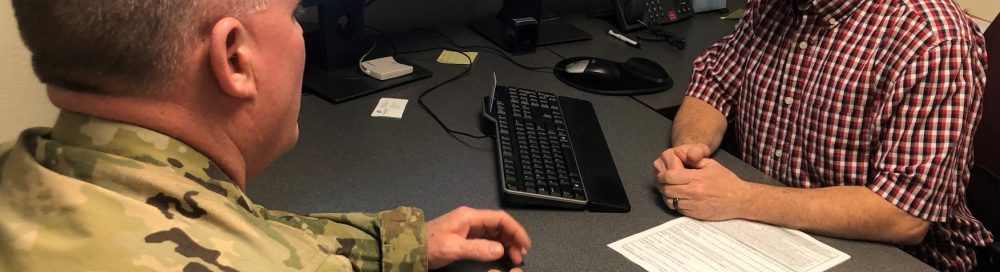
National Guardsmen and their families do not have to struggle to afford healthcare and can stay medically insured after retirement. Those who serve 20 years or more in the National Guard are eligible to receive lifelong medical benefits for themselves and their families through various TRICARE health plans.
These plans offer quality care at affordable rates, making it one of the most valuable benefits available to Guardsmen and an important reason to stay in until retirement.
“TRICARE is one of the best reasons to stay in the National Guard for 20 years,” said Col. Jim Hicks, Idaho Army National Guard director of personnel. “With these benefits you have the potential to save hundreds and thousands of dollars when you reach retirement.”
At age 60, retirees and their families can expect to pay as little as $48 a month for TRICARE, whereas others pay a minimum of $1,000 a month for outside insurance, said William Fackler, Idaho National Guard retirement services officer. Then at age 65, retirees can expect to pay close to nothing for TRICARE, he added.
Several healthcare plans are available through TRICARE depending on the retiree’s age. Each plan offers little-to-no out-of-pocket costs, deductibles or premiums; low catastrophic caps and costs per family; and more freedom to choose healthcare with fewer restrictions.
“People don’t want to worry about medical bills after they retire,” said Fackler. “I’ve talked to lots of veterans who got out before 20 years and they all regret it. I tell folks to stick around because those benefits will be well worth it later on.”
Idaho Army National Guard retiree and Family Assistance Center Specialist Tom Obstarczyk knows first-hand the value of being a TRICARE beneficiary after he accidently sawed two of his fingers off in 2003.
“I was lucky,” said Obstarczyk. “My surgeon at St. Luke’s in Meridian was able to reattach my fingers and it cost me nothing through TRICARE. Where else can you receive full-time medical benefits as a part-time employee?”
Once retired, members can purchase TRICARE Retired Reserve from any age until 60. At that time, retirees may either chose TRICARE Prime Retired or TRICARE Select Retired, which recently replaced TRICARE Extra and Standard. At 65, retirees are no longer eligible for the previously mentioned health care plans but may then choose to enroll in TRICARE for Life.
TRICARE Retired Reserve
Upon retirement, members with 20 or more years of service are eligible to purchase TRICARE Retired Reserve for themselves and their family until they reach age 60. The premium-based health plan offers beneficiaries the option to receive care from any TRICARE-authorized provider for $451.51 a month per member or $1,083.40 a month to include unlimited family members, in addition to deductibles and a $3,598 catastrophic cap.
TRICARE Prime and Select, Retired
Retirees ages 60 to 64 are eligible to purchase TRICARE Prime Retired if living in a prime area or TRICARE Select Retired for themselves and their families.
TRICARE Prime Retired is a managed care option that offers affordable and comprehensive coverage with fewer out-of-pocket costs. Eligible members will receive care from a primary care manager and pay $24.75 a month, or $49.50 a month to include their family, with no deductibles and a $3,000 catastrophic cap.
TRICARE Select Retired is a preferred provider network that offers beneficiaries the most freedom to choose any TRICARE-authorized provider. There are no enrollment fees, however, deductibles are $150 for individuals and no more than $300 per family, with a $3,000 catastrophic cap.
TRICARE for Life
Retirees age 65 and older are eligible to enroll in TRICARE for Life, which is a secondary healthcare coverage for individuals with both Medicare Parts A and B. The program offers members and families the ability to receive care from any authorized provider with no enrollment fees, deductibles of $150 per individual and no more than $300 per family, with a $3000 catastrophic cap.
Medicare costs individuals approximately $135.50 a month and may not cover everything. With TRICARE for Life, beneficiaries typically pay nothing out-of-pocket for services TRICARE pays after Medicare, giving retirees the confidence to quite working sooner, said Fackler.
“People are out there working after age 65 because Medicare is only covering so much of their health costs,” said Fackler. “After retirees turn 65, TRICARE for Life gets billed. Nearly 99 percent of the time whatever Medicare doesn’t pay, TRICARE does so that beneficiaries never see a bill.”
Additionally, retired Guardsmen and their families are eligible for TRICARE’s pharmacy program and various dental and vision healthcare plans.
TRICARE Pharmacy Program
All current TRICARE beneficiaries are eligible to use the TRICARE Pharmacy Program to receive affordable prescription drugs either through retail pharmacies or by a home delivery option. Using Express Scripts, individuals can receive a 90-day supply of medication at home for small copayments of $7 for generic or $24 for name brands.
Dental and Vision Coverage
Retired Guardsmen now have comprehensive dental and vision coverage through the Federal Employees Dental and Vision Insurance Program, which replaced the TRICARE Retiree Dental Program in January 2019. With this new program, beneficiaries may choose between 10 dental and four vision carriers, ranging in price between $40 and $120 a month depending on the plan. Coverage for vision includes routine eye exams, vision corrections without referral and eyeglass frames and lenses.
“Before this new program took effect, Guardsmen had no vision care option and only one available dental plan through TRICARE,” said Fackler. “Now beneficiaries have more options, which is important because not every dental provider took TRICARE.”
TRICARE Young Adult
While adult-children of current-serving Guardsmen are eligible for TRICARE health coverage until age 21, or age 23 if they are enrolled in college, those of retired Guardsmen are entitled to coverage until age 25. With TRICARE Young Adult Prime, beneficiaries receive care through a primary care manager and pay $358 a month, with no deductibles.
With TRICARE Young Adult Select, beneficiaries have the option to receive care using any TRICARE-authorized provider for $214 a month, with deductibles ranging between $51 and $154 per individual and between $102 and $308 per family, depending on a retiree’s rank. Both plans have catastrophic caps of $3,598.
Until Retirement
While TRICARE benefits after retirement may provide Guardsmen a reason to stay in the Guard for 20 years, another TRICARE health plan offers members a reason to stay in until 60.
Current members and their families are eligible to receive TRICARE Reserve Select, which offers lower healthcare rates than TRICARE Retired Reserve and comparable rates to TRICARE Retired Select.
“Soldiers are staying in the military for TRICARE Reserve Select,” said Fackler. “They would spend approximately $800 or more a month on other health plans if they got out before age 60.”
The premium-based health plan offers beneficiaries the option to receive care from any TRICARE-authorized provider for $42.83 a month or $218.01 a month to include their family. Deductibles range between $51 and $102 per individual or between $154 and $308 per family, depending on a member’s current rank, with a $1,028 catastrophic cap.
Preparing for Retirement
To receive benefits, retirees must enroll online for each TRICARE health plan prior to their age of eligibility at www.tricare.mil. Enrollment assistance is available through the Idaho National Guard’s Retirement Services Office at (208) 272-3815 and the Family Assistance Center at (208) 272-4330 or (208) 272-4355. Individuals can also find further information on retirement, transitioning and eligibility by visiting the previously mentioned website and services or by contacting the Idaho National Guard Retiree Outreach Program at (208) 258-4910.
Female armor officers prepare to lead Idaho Soldiers into combat
BOISE, ID, UNITED STATES
02.19.2019
Story by Capt. Robert Taylor
Idaho Army National Guard
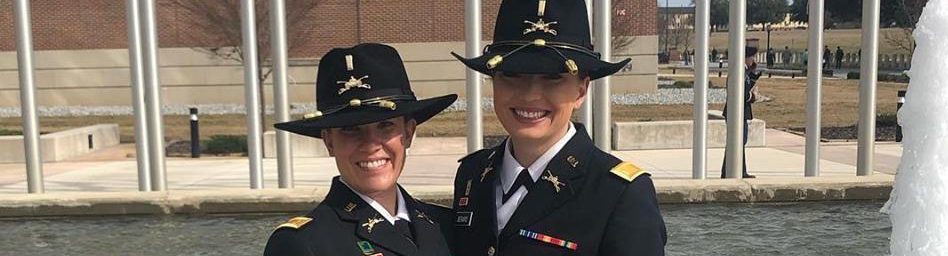
The 116th Cavalry Brigade Combat Team’s B Company, 2-116th Cavalry Regiment conducted gunnery Feb. 8-15 at the Orchard Combat Training Center, marking the first time female armor officers qualified in the M1A2 Abrams main battle tank in the Idaho Army National Guard’s history.
2nd Lt. Brooke Berard and 2nd Lt. Lauren Bolt graduated from the U.S. Army’s Armor Basic Officer Leaders Course Feb. 1 before returning to Idaho and accompanying their company to the field to conduct gunnery.
“After seeing the Abrams tank, I didn’t feel like I had another option,” Berard said. “Once I saw the tank’s power, that’s all I wanted to do.”
Both lieutenants will serve as platoon leaders for B Company, which is located in Nampa. As platoon leaders, each Soldier will command a platoon of up to 14 Soldiers and four Abrams.
Berard and Bolt are the first qualified combat arms female officers in the Idaho Army National Guard’s history. They follow other Idaho Army National Guard female Soldiers into the combat ranks since females were permitted to serve in all positions in the military in December 2015.
In 2016, 1st Sgt. Erin Smith became the first enlisted Soldier in the U.S. Army to graduate from the service’s M1 Armor Crewman School. In 2017, Staff Sgt. Kylene Huetra became the first female assigned to the 2-116th Cavalry Regiment as a tank crew member. She was recently reassigned as B Company’s supply sergeant.
Sgt. 1st Class Melanie Galletti graduated from the Infantry Transition Course in April 2017, becoming the first female Soldier in the state’s history to earn the Army’s blue infantry cord. She served as a squad leader in C Company, 2-116th Cavalry Regiment until she was reassigned to a position in a different company and subsequently promoted.
“I don’t care if you’re male or female,” said Lt. Col. Jason Gracida, commander, 2-116th CAV REG. “I care if you’re a good leader and Soldier. At the end of the day, you’re going to lead Soldiers into combat. I need to know if you’re a capable officer.”
Both junior officers know and understand their role on the battlefield.
“We close with and destroy the enemy with shock, mobility and firepower,” said Berard. “Not only do you have this firepower, you also have to make choices quickly.”
The M1A2 Abrams main battle tank is the Army’s most advance battle tank.
“When we get together and put rounds down range, and begin to maneuver as an element, there’s nothing more exhilarating,” Bolt said.
Bolt served as an 88M motor transport operator with the Nevada Army National Guard before transferring to the Idaho Army National Guard to become an armor officer. Both her parents also served in the military.
Gunnery tables often mean long days, with mechanical issues and winter weather causing delays, adding to the stress for new lieutenants conducting gunnery for the first time.
“Sometimes it doesn’t feel like work,” Beard said. “You’re tired but it’s so much fun.”
IDNG quake response exercise flexes multiagency response muscle
BOISE, ID, UNITED STATES
03.19.2019
Story by Master Sgt. Sarah Pokorney
Joint Force Headquarters, Idaho National Guard
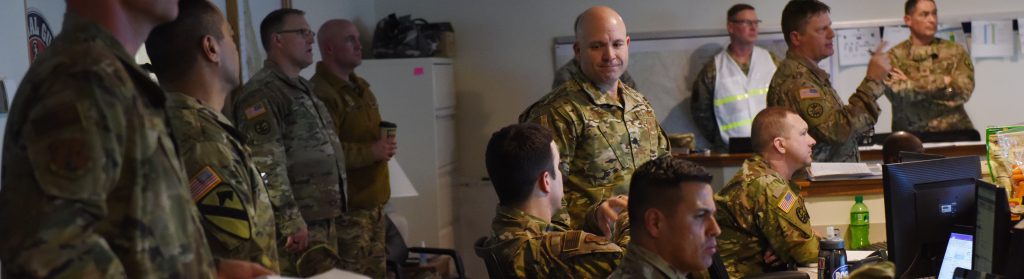
A team of personnel from the Washington National Guard’s 10th Homeland Response Force, dressed in tan protective suits enters a partially collapsed building in search of possible survivors. The damage to the building and potential deadly argon gas contamination is the result of a catastrophic earthquake and jolting aftershocks affecting southern Idaho. Across town, in a dark, cramped room deep within the Lucky Peak Dam, Guardsmen of the Idaho 101st Civil Support Team assemble a rescue tripod over a dark utility hole to rescue workers trapped hundreds of feet below.
These are just a few of the hundreds of disaster scenarios that played out over the week-long Idaho National Guard disaster response exercise, Idaho Response-19, that took place March 7 to 13 in Boise, Idaho.
More than 350 Guardsmen took part in the exercise. Nearly 80 were Idaho Army National Guard Soldiers and Idaho Air National Guard Airmen, including the 101st Civil Support Team, Joint Staff assigned to Idaho’s Joint Operations Center, white cell planners, observers and personnel orchestrating Joint Reception, Staging, Onward Movement, and Integration, or JRSOI, for inbound organizations. Nearly 250 participants came from surrounding states including Guardsmen from the Washington’s 10th HRF, Montana National Guard’s 83rd CST, and Utah National Guard’s 85th CST. Representatives from U.S. Northern Command and the National Guard Bureau joined the Joint Taskforce Idaho staff.
The purpose of the Idaho Response-19 exercise was to test the Idaho National Guard’s ability to interact with regional partners and support civil authorities and agencies during a no-notice, catastrophic disaster. The scenario was designed to overwhelm an otherwise prepared state.
“When we started planning in early 2017, we envisioned an exercise of such magnitude that it would drive objectives we’ve never performed in a domestic response before,” said Col. Doug Smith, exercise director. “It would include seeking National Guard capabilities outside of the state like the 10th Homeland Response Force and civil support teams, require us to JRSOI incoming resources and stand up a dual-status commander to receive Title 10 forces.”
“I didn’t want to make too many factors notional, so we could really go through the motions as we would in a real response. The joint staff came in piecemeal as they would in a real incident—because they would be victims too,” said Smith. “The staff struggled at first but exceeded my expectations as they tracked both simulated and notional activities.”
The exercise was engineered to challenge the participants in a variety of ways. Day one started with a high volume of incidents overwhelming local first responders and testing participants’ communication skills and established processes. Day two brought fewer but more complex scenarios, which required more specialized response capabilities and taxed decision-making and prioritization skills. As the exercise progressed, the highly complex situations required focused working groups and multi-agency collaboration. The exercise culminated with a significant infusion of notional federal resources, which brought the exercise to a timely end.
“Some of the biggest lessons learned included our coordination with the Idaho Office of Emergency Management and how to support them as well as the process that the joint staff developed to effectively respond to situations as they rolled in,” said Col. Ryan Robinson, exercise chief of joint staff.
Robinson explained that the 18 months of preparation for the exercise included quarterly joint staff training, practical exercises, sending observers to Vigilant Guard exercises in other states and a visit to U.S. Northern Command at Peterson Air Force Base, Colorado.
Smith noted that the Idaho National Guard plans to hold another similar exercise in 2022 that will align with the Washington and Oregon Vigilant Guard Exercises, NORTHCOM’s Ardent Sentry and FEMA’s Cascadia Rising, which are based on a scenario following an earthquake and tsunami in the highly probable Cascadia Subduction Zone. Dubbed “The Big One,” this widespread incident is predicted to unleash a 9.0+ magnitude earthquake and a 100 foot-tall tsunami affecting the bulk of the Pacific coast shoreline and western states.
Smith went on to explain that key to maintaining our preparedness is by keeping leadership and the joint staff engaged while continuing to refine the planning and training. “The joint staff needs to stay engaged, which can be challenging as an additional duty, but we’re on a good path.”
The exercise followed the Idaho Office of Emergency’s Management’s three-day exercise, Operation Shared Response, which focused on the same scenario the week before. That exercise included local, state and federal responders. Both exercises ensure that the Idaho Military Division remains capable to respond during a real-world emergency or disaster.
Nearly a third of Middleton Police Department police officers serve in Idaho Army National Guard
Story by Capt. Robert Taylor
Idaho Army National Guard
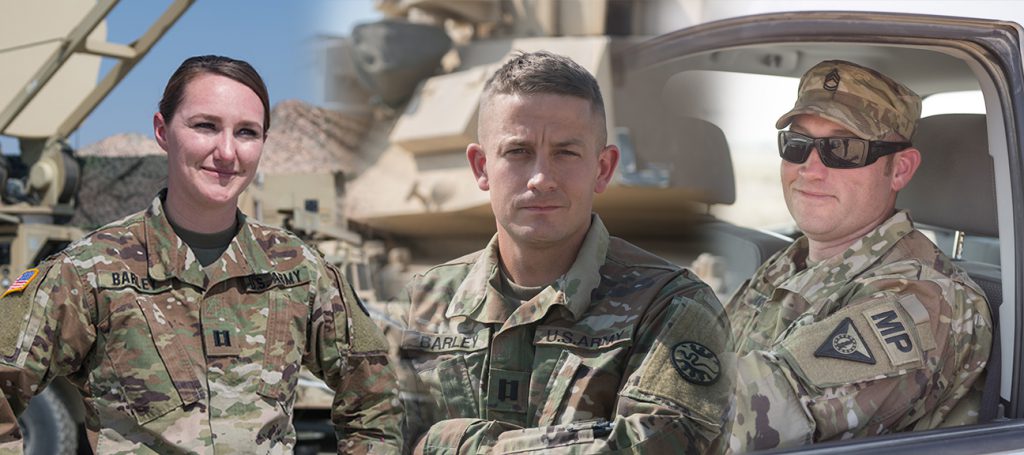
Capt. Haily Barley sees a lot of similarities between her job as a police officer for the Middleton Police Department and her service to the Idaho Army National Guard.
“I’m pushed to my limits, both physically and mentally, at both jobs,” she said. “But the best part is the people. You’ll never meet more amazing people dedicated to helping or serving.”
Barley should know about the type of people who do both. Out of the eight officers in the Middleton Police Department, three are members of the Idaho Army National Guard.
“I’m pretty proud to have those guys on our police department,” said Alan Takeuchi, chief of the Middleton Police Department. “Not only are they serving their community in their civilian jobs, we also have guys serving their country. We couldn’t ask for better officers at our police department.”
Barley, one of the department’s two school resource officers, is a signal officer with the 116th Cavalry Brigade Combat Team’s 116th Brigade Engineer Battalion. Capt. Mike Barley, is the 2-116th Combined Arms Battalion’s personnel officer and serves the department as a team lead and field training officer. The two were married in 2010 and hired by the department together in 2016.
Sgt. First Class Nathan Hilkey has similar jobs in both organizations. He’s a police officer and is assigned to the Installation Support Unit’s military police section.
“A lot of what Guard Soldiers possess are the same qualities we look for in police officers,” Takeuchi said. “I think the two go hand-in-hand with each other.”
Specifically, Takeuchi values the experience, confidence and leadership skills his Soldiers bring to his police force. He knows those qualities aren’t developed in police officers overnight.
The department was established in 2014 with a part-time police chief and three officers. Today its staff consist of eight fulltime officers, one clerk and a part-time clerk. Takeuchi expects the department to continue to grow with the town’s population. As it does, his Soldiers’ leaderships skills will be useful as the department grows to include captain and lieutenant positions.
In the meantime, Mike Barley said he enjoys being able to do a little bit of everything in the department without formal divisions and sections. He initially decided to become a police officer in 2011 because he needed a job before attending medical school. He said he liked being a cop so much he decided to forego becoming a doctor, even after being accepted into medical school.
Hilkey was one of the officers Mike Barley trained in the department. Hilkey grew up in Middleton and returned home to take a job with the department two years ago.
“I came back here to try to keep the city the way I remember it,” he said.
He grew up wanting to be a police officer because almost everyone in his family was a police officer. He’s been a 31B military police Solider for the past 18 years and has deployed four times with Army National Guard units from multiple states.
Takeuchi said the only challenge of having almost a third of his department in the Idaho Army National Guard is scheduling overtime. He said officers don’t mind covering to help each other out, but the overtime required to make it work can add up quickly for the small department.
Takeuchi admits that a long-term deployment for one or more of his officers would present additional challenges. However, none of the three Soldiers have been deployed long-term while working for the department.
“We’d hate to lose someone for that long, but we understand that they are needed for a higher purpose,” he said. “We would hold their spot no matter what.”
Haily Barley credits her great grandmother for instilling the values of hard work, sacrifice and service into her. She knew when she was younger she wanted to be both a police officer and in the military. She feels fortunate she’s able to do both.
“I chose a hard and sometimes thankless life style, but every day I can serve and protect, it’s worth it,” she said.
Back to Newsroom
JOIN the Idaho Army National Guard
ASOS Airmen Preparing and Training for State Emergency Response
BOISE AIR TERMINAL AIR GUARD STATION, ID
03.08.2018
Story by Master Sgt. Becky Vanshur
CASCADE, Idaho – Envision a scenario where the crash of an avalanche has left several people missing, or you are skiing in the mountains and lose sight of your buddy. Visualize it’s you that is lost off-trail, hoping to be rescued, waiting for the sound of helicopter blades pulsating in the air or the sound of voices ahead. This is the mission of search and rescue teams – to find you.
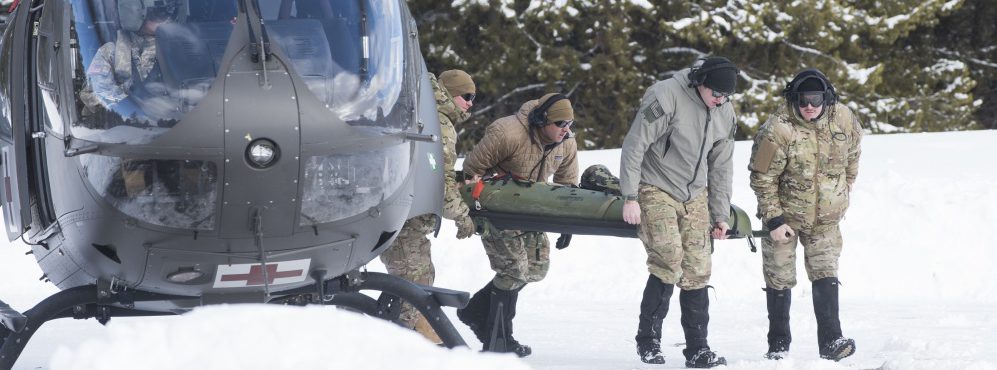
In an effort to begin rescue missions with civilian and state entities, Idaho’s 124th Air Support Operations Squadron (ASOS) conducted its first-ever training event that involved approximately 70 civilians from local rescue teams in Cascade, Idaho, March 1-4, 2018. The goal for this integrated training was to take the skills used in the federal mission and apply those capabilities for the Defense Support of Civil Authorities (DSCA).
“I feel like we are moving into a domestic operations concept. We’ve been at war for a long time, we’ve been deploying for a long time, we want to enlarge our footprint,” said 1st Lt. Jason Waites, 124th ASOS, officer in charge of operations. “We want to roll into the DSCA and establish the ASOS as a state entity.”
The Idaho Air National Guard’s ASOS, specifically the Tactical Air Control Party (TACP) Airmen, have endured intense physical, mental and technical training. They are experienced in extensive outdoor training, survival skills, Rough Terrain Evacuation Course, Wilderness First Responder training, and mountain warfare. Additionally, they have the equipment available for helping with search and rescue missions.
“This training for us is like a proof of concept that we will be able to advertise our capabilities to the state, that this is what we have the ability to do. When that emergency goes out, we can come to help. TACPs from neighboring states have pre-packaged communications systems set up and have helped with mudslides and fires because of the night vision and thermal capability of finding people in the dark,” said Chief Master Sgt. Mike Furman, chief enlisted manager of ASOS. “These other states have coordinated helicopter landing zones, helped with post hurricane and flood response already. Although we haven’t been called upon yet, we just want to make sure we are ready for when the call comes.”
The goal of this joint engagement was to work alongside civilian authorities during avalanche rescue training, snowmobile training, sling load training, and stretcher hoist rescue training, along with the Idaho Army National Guard 1-183rd Aviation Battalion’s UH-72 Lakota Rescue Helicopter.
“We weren’t really aware, until today, how accessible you guys [ASOS] were,” said Dan Corsberg, Garden Valley Fire Department. “To know it could be an hour, hour and a half, for you guys to be on scene. That really does change the equation for us, a lot. That has been the biggest take-away for us with this training.”
Local civilian search and rescue teams present for this joint training included: the McCall Police Department, McCall Fire Department, Cascade Fire Department, Donnelly Fire Department, Garden Valley Fire Department, Valley County Search and Rescue, Valley County Sheriff’s Office, Boise County Sheriff’s Office, Adams County Sheriff’s Offices, Bogus Basin Ski Patrol, Brundage Ski Patrol, Tamarack Ski Patrol, Idaho Fish and Game, and the U.S. Forest Service.
The training was focused on everything from search and rescue, to command and control, to effectively testing communications. When it comes to the Federal Emergency Management Agency, there are Emergency Support Functions (ESF). ESF number nine is search and rescue related, and ESF number two is communications. This exercise effectively tested command and control with air-to-ground and ground-to-ground communications.
“These guys know what they are doing, and it’s been great. We are all learning from each other. This is an incredible opportunity,” said Jim Pace, Valley County Search and Rescue.
Brig. Gen. John Goodale retires
BOISE, Idaho
Jan. 31, 2018
Story by Capt. Robert Taylor
Idaho Army National Guard
Brig. Gen. John Goodale, Assistant Adjutant General – Army and commander of the Idaho Army National Guard, is retiring after spending four decades serving his state and nation. Goodale has served in the military since 1976 and in the Idaho Army National Guard since 1988, including the past five as the organization’s senior Army officer.
During the past five years, the Idaho Army National Guard has undergone several changes to remain among the most equipped and professional fighting force in the nation. Units in the organization also deployed and completed historical missions under Goodale’s command.
“It’s amazing what you can accomplish if you do not care who gets the credit,” Goodale said, quoting President Harry S. Truman.
The 116th Calvary Brigade Combat Team, the state’s largest unit, returned from its second deployment to Iraq in 2011. Since then, the unit has transitioned to the modern M1 Abrams tank and Bradley Fighting Vehicles. The brigade was the first National Guard brigade to be fielded with this equipment. The brigade’s special troops battalion converted to an engineer battalion, and its field artillery battalion restructured to add additional guns and personnel to its ranks.
In 2015, the 116th CBCT became the first National Guard brigade since 9/11 to attend the Army’s largest force-on-force training center, the National Training Center at Fort Irwin, California. More than 2,500 Soldiers from Idaho and an additional 1,700 Soldiers and Airmen from 17 other states supported the brigade’s training mission. The following summer, the brigade was the lead element in Saber Guardian 2016 in Cincu, Romania. The multinational military training exercise involved 2,800 military personnel from 10 countries. The exercise was the first time a National Guard armored brigade deployed to Europe since the end of the Cold War.
The 1-183rd Aviation Battalion (Attack) transitioned several times since 2012. First, the aviation battalion received the latest attack helicopters, the AH-64D Apache Longbow, and then transitioned to the UH60 A/L Black Hawk helicopter. So far the transition has left the aviation battalion with more aircraft than it previously had and provides a unit that can better assist in the execution of the Idaho Army National Guard’s state mission to respond to state and local emergencies.
In addition, more than 60 Soldiers from A Company, 1-168th General Support Aviation Battalion deployed to Afghanistan in support of Operation Enduring Freedom in 2012-2013.
Goodale’s development of a strategic plan was instrumental in addressing strength, training, and readiness initiatives like the Idaho Army National Guard Public Affairs cell and Comprehensive Fitness Program that were needed to improve the strength and readiness in the Idaho Army National Guard.
Finally, the Orchard Combat Training Center has grown considerably during the past five years. Active Duty and National Guard units from around the country train at the site.
The Idaho Army National Guard has continued to develop the facilities and increase the number of Soldiers who train and work on the training range. The OCTC’s infrastructure and facilities have both improved and expanded vastly during the past five years and are expected to continue to do so over the next several years. The training site will continue to become more valuable to the Army National Guard as it continues to increase its operational tempo.
Goodale’s career path to the organization’s commander began at West Point and is filled with opportunities from some of the Idaho Army National Guard’s most challenging positions.
The United States Military Academy
Goodale’s career in the military started with his education at the United States Military Academy in July 1976, the same year the first class of female cadets attended the academy.
“The Academy teaches you to treat everyone with respect and dignity and they were no different,” Goodale said. “They were all cadets like I was a cadet and had to do the same things I had to do.”
119 female cadets were among the first co-ed class to attend West Point after President Gerald R. Ford signed legislation in 1975 directing the Army, Navy and Air Force academes to admit females. 62 females graduated in Goodale’s class.
Goodale remembers West Point for its hard academics, good friends, and home football games on Saturday. Because the Academy is small and cadets live on campus, cadets get to know each other well over their four years at the school.
Goodale still stays in touch with some of his classmates and follows the careers of others.
Giebelstadt, Germany
After graduating West Point in 1980, Goodale became an armor officer. Aviation wouldn’t become its own branch until 1983, but he was selected to attend flight school before graduation. He attended Armor Officer Basic Course at Fort Knox, airborne school at Fort Bragg, and air assault school at Fort Campbell before attending flight school at Fort Rucker. At flight school, he became qualified on both the A and the C models of the OH-58 via the aeroscout track.
Goodale’s first assignment was in 1981 to A Company, 3rd Aviation Battalion (Combat), 3rd Infantry Division in Giebelstadt, Germany, as an aeroscout team leader. While there, he flew along the air defense identification zone, which required him to fly an exact pattern along the German border.
He was also assigned to the general support platoon, which was responsible for flying 3rd Infantry Division general officers around the country.
“That was a tough mission because you never wanted to screw that up,” he said.
He eventually became the operations officer for the company. At the time, each company resembled a battalion. His company had 45 helicopters, compared to the six to eight aircraft in today’s aviation companies.
While there, Goodale met his wife, Elisabeth. The two have four children and one granddaughter.
In 1985, Goodale left Germany to attend aviation officer advanced course and was then assigned as the operations officer in Air Troop, 116th Armored Cavalry Regiment with the Idaho Army National Guard on Gowen Field. The Army used to assign active duty aviation and engineer officers to National Guard units.
In 1989, Air Troop became the 1-116 Aviation and later, the 1-183 Attack Reconnaissance Battalion.
This transition from an Air Cavalry Troop to a battalion created the need to hire additional staff officers. Goodale was selected to become the unit’s assistant operations officer in December 1988.
Idaho Army National Guard
To accept the Army Guard/Reserves (AGR) position, Goodale had to resign from the active component and be re-commissioned into the Idaho Army National Guard.
Goodale said that his decision to leave the active component wasn’t met well by his current Army leadership, but he did so because he didn’t want to have to move his children around and he liked being in the Pacific Northwest. He has no regrets about doing so.
Goodale played a key role in the unit’s transition to an attack aviation battalion as the assistant operations officer and later the operations officer, but left the unit before the unit completed the Apache Battalion certification at Fort Hood, Texas. His next assignment was as the training officer in the deputy chief of staff of operations directorate, which is comparable to working in today’s G-3 (operations) section.
In 1996, he was assigned to the 116th Calvary Brigade in anticipation of the unit’s rotation through the National Training Center in 1998. He was the brigade’s operations officer and managed the exercise’s budget for the state. The 116th Calvary Brigade was one of the first National Guard units to deploy to the Army’s largest force-on-force training center.
“I basically got a cot,” he said, an indication of the long hours he put into learning the job. “I didn’t grow up in a brigade. I didn’t know things like how many tanks were in the brigade, but I had the ability to maneuver and control because I did a lot of that in aviation.”
During the battles at the National Training Center, Goodale had to monitor several radios and know which ones to respond to when. He credits his time in the cockpit in Germany for the success he had in being able to do so.
Goodale said that his experience as the operations officer for the NTC rotation set him up for success for the rest of his career, but first he would spend a year at the Army War College in Carlisle, Pennsylvania, before continuing his career.
“You have to take the hard jobs if you want to move up.”
At the conclusion of the National Training Center rotation, Goodale flew straight to the Army War College, where his family was already waiting for him.
“It was awesome,” he said. “They tell you it’s one of the best years of your life, and it’s right up there.”
Goodale said he met a lot of good people there and enjoyed the extra time with his family. In addition, he learned a lot from the school that provides graduate-level instruction to senior military officers.
He became the deputy chief of staff, operations (G3/J3), when he returned home and held this position until March 2005. This position put him in charge of operations at the state level for the organization.
He left this position to become the interim Assistant Adjutant General-Army, Idaho National Guard while the 116th Calvary Brigade was deployed to Iraq in support of Operation Iraqi Freedom III.
When the unit returned, Brig. Gen. Alan C. Gayhart assumed the Assistant Adjutant General-Army position and Goodale took command of the 116th Calvary Brigade. Gayhart commanded the brigade in Iraq.
In 2008, Goodale was the joint task force commander for the World Special Olympics, held in Boise in 2009.
“It was a big undertaking, but it went well,” he said.
His next assignment was as the United States Property and Fiscal Officer for the state until 2012, when he was promoted to brigadier general into his final position as commander of the Idaho Army National Guard and Assistant Adjutant General-Army.
He said his experience as the commander of the 116th Calvary Brigade, the Idaho National Guard’s largest unit, helped prepare him for the challenges and opportunities he faced as commander of the Idaho Army National Guard.
“The organization did a good job moving me around to prepare me,” he said. “You have to take the hard jobs if you want to gain experience and move up.”
Though Goodale originally planned to retire as a lieutenant colonel and has since surpassed that rank, there are still two things that he didn’t get to do in his career that bother him: he never got to be the 1-183rd battalion commander or deploy to a combat zone.
Goodale plans to spend his retirement catching up on several delayed projects at home, spending time with his family, traveling and coaching his granddaughter’s basketball team.
After some time off, he plans to eventually volunteer in some capacity, but does not anticipate working again, including any civilian military positions.
“The Army keeps rolling along,” he said. “Old Soldiers just fade away.”
His advice to other Soldiers as he ends his career is similar to the lessons he learned at West Point at the start of it.
“Treat everybody fairly and with respect,” he said. “No matter what ranks they are. And you have to maintain a positive attitude no matter what’s going on. It really shows up when you’re around Soldiers when you don’t have a positive attitude. Set the Example in all you do or say.”