 Official Government Website
New vehicle Vismods could transform Army training
Story by Crystal Farris
Idaho Army National Guard
The National Guard Bureau has partnered with a Hollywood special effects company to make future training more realistic for brigade combat teams during Exportable Combat Training Capability exercises.
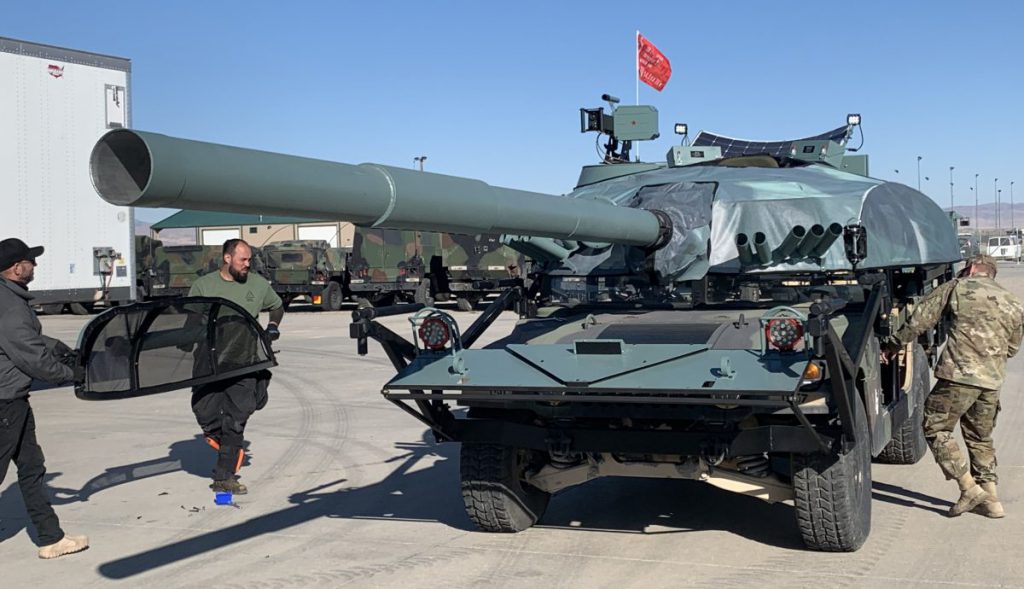
The improvements involve a new visual modification kit that will transform the Army’s M1097 HMMWV into simulated Russian T-72 Main Battle Tanks and BTR-90 Personnel Carriers.
While BCTs already use variations of visual modifications – plastic, fiberglass, and sheet metal – to replicate enemy vehicles, these new kits are the first of their kind, said Maj. Aaron Ammerman, XCTC program manager for the NGB.
“Taking a look at how VisMods are done across the Army, I think these are the best I’ve ever seen,” said Ammerman. “They will provide an exponentially more realistic threat signature for troops to train against as they do force-on-force exercises.”
In 2018, NGB contracted Westefx in an effort to improve the XCTC program and its 21-day combat training exercises that ready units for mobilization. The company has provided special effects for movies such as “James Bond”, “Taken” and “Men in Black II”. They have also participated in approximately 50 XCTC rotations by providing battlefield effects, props and equipment for the military over the last 10 years.
Westefx owner and lead designer Erick Brennan said the new VisMods will provide Soldiers with realistic identification and engagement training through their effective noise and visual signals.
“No enhanced battlefield training simulators can compare with the functionality, realism, durability and cost-effectiveness of this new VisMod vehicle,” said Brennan. “They are pretty amazing and we are really proud of them.”
The kits – each weighing approximately 1,700 pounds and fitting over the chassis of a Humvee – resemble the size and silhouette of the tank and personnel carrier but with an inflatable canvas-like frame.
Its gas-operated weapon systems simulate the firing of .50 Cal and 125mm main guns that can be configured to multiple integrated laser engagement systems. The MILES gear, along with the kit’s smoke generator, will enable Soldiers to track and simulate target acquisition.
“We will be able to train against a realistic enemy,” said Sgt. 1st Class Clinton Doramus, Idaho Army National Guard VisMod fleet manager. “These kits aren’t going to look and act like a Humvee. They are going to look and act like T-72s and BTR-90s.”
While exponentially more realistic than previous VisMod vehicles, these kits also provide a more cost -effective alternative to the military than using actual tanks and personnel carriers. The Humvee cost less and the Army has more of them.
“A Humvee costs approximately $30,000 plus another maybe $5,000 to maintain for the year, whereas an M1A1 tank costs a lot more,” said Doramus. “It’s initial and maintenance expenses that make these kits a lot more cost-effective to do on Humvees than tanks or Bradleys. Plus the Army doesn’t just have 60 spare tanks sitting around somewhere.”
Doramus and a team of Idaho Guardsmen, mostly comprised of engineers and mechanics, helped Westefx install 12 completed kits onto Humvees at the Idaho Army National Guard’s Orchard Combat Training Center. The team has spent more than a year assembling and maintaining the fleet of 60 Humvees allocated for installation. NGB and Westefx plan to continue production of 48 more kits over the next three years.
Putting the pieces together: TACP share experiences with 124th Fighter Wing Airmen
Story by Airman 1st Class Taylor Walker
124th Fighter Wing
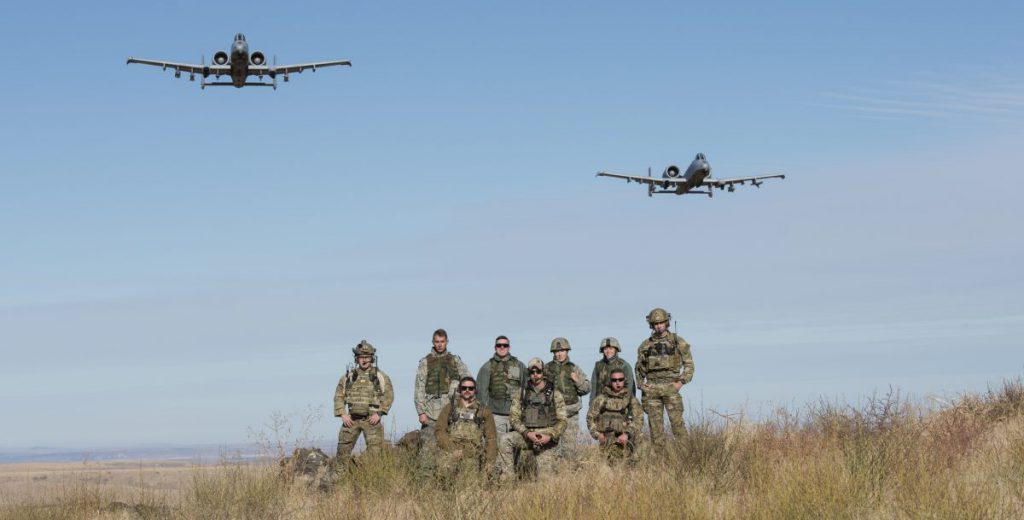
GOWEN FIELD, Idaho (October 5, 2019) – Airmen from the 124th Maintenance Squadron and 124th Medical Group joined Tactical Air Control Party Airmen from the 124th Air Support Operations Squadron for a show of force, October 5, at the Saylor Creek Bombing Range, Idaho.
The primary role of TACP Airmen from the 124th ASOS is to provide close air support by directing combat strike aircraft against enemy targets, but that role continues to expand.
“As a TACP, we focus on deconflicting airspace and preventing fratricide and collateral damage,” said Staff Sgt. Brandon Wells, a Joint Terminal Attack Controller in the 124th ASOS. “Being a JTAC isn’t just about the bomb hitting the ground or the gun going off, there are a lot of minor steps and critical thinking that occurs for every process we encounter.”
Planning for a training mission begins more than three hours before time on target. TACP Airmen conduct briefings, perform safety checks and develop missions that ensure opportunities to practice skills used in real-world scenarios.
“This job is 90 percent planning,” said Wells. “Our newest Airmen will spend days focused solely on planning missions, problem solving and figuring out how to make sure communication between ground force commanders, team leaders and comrades are on point so everyone knows their role and stays safe.”
For traditional guardsmen, time is precious and mission planning must be accomplished alongside additional duties.
“A JTAC is a JTAC regardless of whether you’re in the National Guard or on active duty,” said Tech. Sgt. Justin Clark, a JTAC in the 124th ASOS. “We have the same requirements as everyone else and less time to do it. We all have multiple additional duties. Some even have five or six.”
With such a small window available to accomplish mission readiness, it’s hard to imagine the ASOS adding more to their plate, but they’re ready to branch out.
“We understand the other people on base are part of our team and have responsibilities that enable us to successfully do our job,” said Clark. “When people have the opportunity to come out and see what we do, we try to make the most of it, but we want to do that with other shops as well so we can have a better understanding of how each piece of the puzzle fits together and build a more rounded understanding of our extended team.”
The key, said Clark, is to avoid the tunnel vision that can result from staying in one shop and not venturing out to explore.
“Until we can experience what other squadrons do, we can’t make assumptions,” said Wells. “We’re all one team.”
Two-day suicide intervention course teaches life-saving skills
Story by Crystal Farris
Idaho Army National Guard
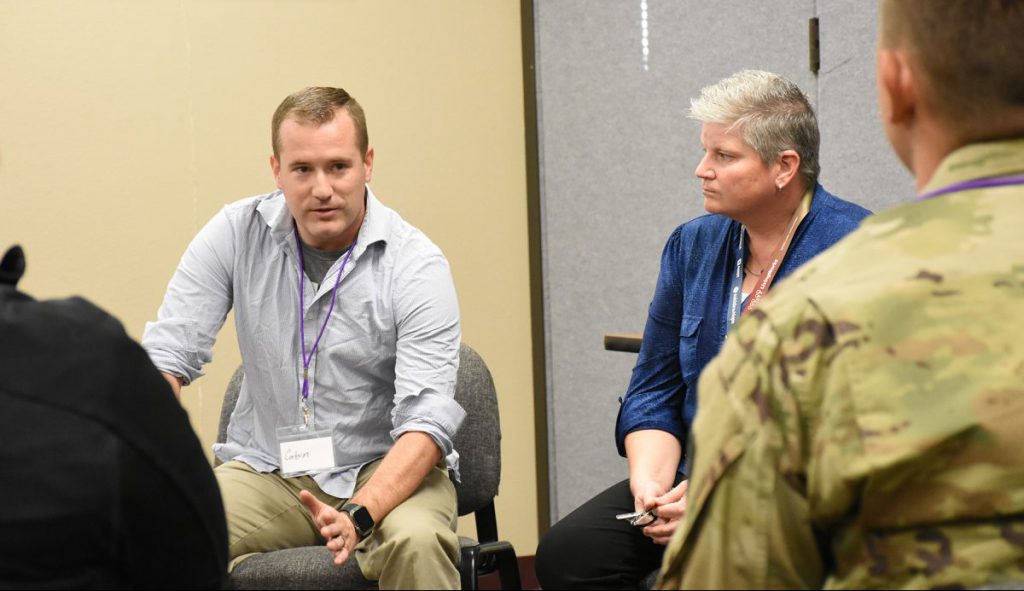
The Idaho National Guard hosted a two-day Applied Suicide Intervention Skills Training workshop at Gowen Field Oct. 24, for service members and employees.
A type of “suicide first-aid,” the course teaches participants to recognize individuals who are having suicidal thoughts and to work with them in creating a plan that supports their immediate safety.
“Having issues in your life does not mean they are going to end your career,” said Robert Smith, coordinator for the Idaho National Guard’s Resilience, Risk Reduction and Suicide Prevention, or R3SP, program. “Help-seeking behavior is actually a sign of strength. It is better for you to address those issues when they come up so you can get the help you need.”
Currently the Army’s ACE model teaches Soldiers to mitigate possible suicides by “asking” individuals who display suicidal tendencies if they are suicidal, “caring” for those who are, and “escorting” them to a source of professional help. ASIST takes that model a step further.
“The course educates individuals to go a step further by actually showing them what the ‘caring’ part of ACE is,” said Smith. “It also gets Soldiers and leaders more comfortable with ‘asking,’ because it’s such a difficult question to ask.”
Small-grouped open discussions offer participants an interactive environment to gain insight from other’s experiences and knowledge, in addition to familiarity with talking about suicide. The course has proven successful in Spc. Javier Wells’ experience.
Wells, a Soldier from the 1-148th Field Artillery Battalion, said he was able to assist a fellow Soldier less than a month after attending the course in April. The Soldier seemed distressed, Wells said, so he asked her if she felt suicidal. The Soldier said yes. He recalled pulling out an ASIST quick- reference tool that was stored in his wallet and immediately applied suicide first-aid.
“I wasn’t nervous at all and was grateful to have the skill set,” said Wells. “If it weren’t for ASIST I highly doubt I would’ve had that conversation. Now we are close friends and it feels incredible to have touched her life and be her support system.”
Along with learning how to apply suicide first-aid, participants also identify key elements of an effective suicide safety plan; gain an appreciation for improving and integrating suicide prevention resources within the community; discuss how personal and societal attitudes can affect views on suicide and intervention; and learn to recognize other important aspects of suicide prevention, including life-promotion and self-care.
Self-care can go a long way to help individuals prevent their own risky behavior, Smith said. Individuals can practice self-care by having an awareness of their issues and knowing when it may be necessary to seek help without worrying about possible negative consequences, he added.
“Trauma happens in life,” said Smith. “If we are resilient and have a good support system, such as individuals trained in ASIST, then we can get through those issues rather than letting them fester and grow.”
ASIST is one of various intervention resources offered through the Idaho National Guard’s R3SP program. The program focuses on giving targeted and comprehensive training in resiliency, substance abuse and suicide prevention.
Further information on the R3SP can be found at https://www.imd.idaho.gov/for-our-members/. Individuals seeking immediate assistance or having suicidal thoughts can contact the Idaho Suicide Prevention Hotline at (208) 398-4357. Counseling is also available upon request through military health professionals, the Yellow Ribbon, Family Programs and Chaplain Corps.
Idaho National Guard conducts engineer, medical and leadership exchange in Cambodia
PHNOM PENH, CAMBODIA
Story by Capt. Robert Taylor
Idaho Army National Guard
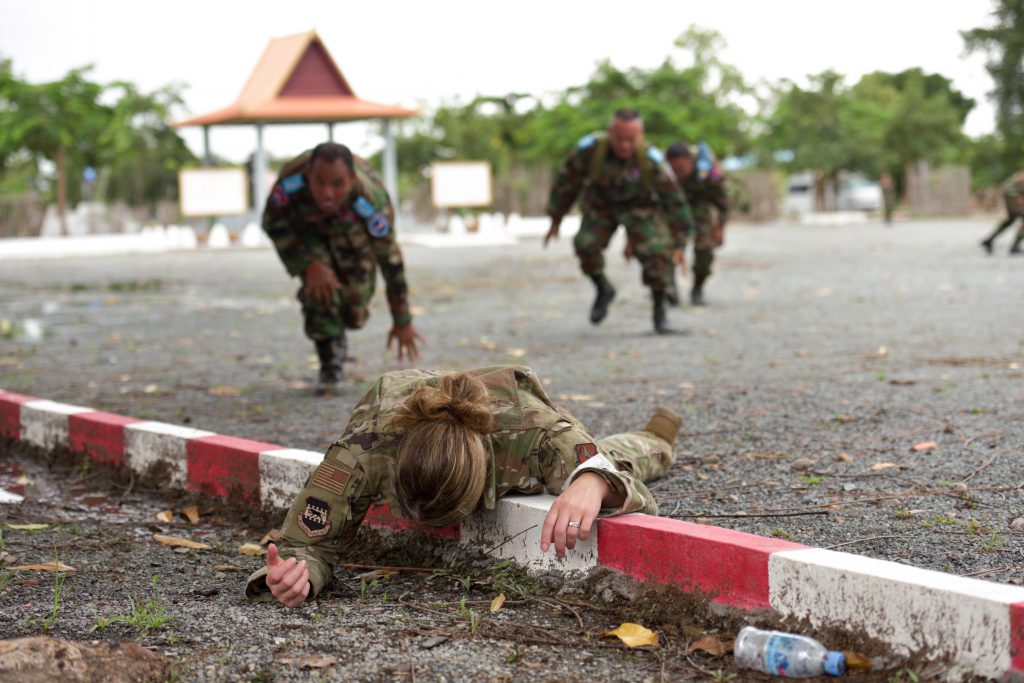
Idaho National Guard Soldiers and Airmen participated in a subject-matter expert exchange Sept. 16–20 at the United Nations Peacekeeping Operations center with members of the Royal Cambodian Armed Forces.
The mission was part of the National Guard’s State Partnership Program and included a team of four Idaho Army National Guard Soldiers and two 124th Fighter Wing Airmen. Subject-matter expert exchanges facilitate the exchange of ideas, capabilities, training and experience between a host country and a state’s National Guard.
“These exchanges provide a great opportunity for our Idaho Guardsmen to not only train along side Cambodian Soldiers, but to also learn and grow, both personally and professionally,” said Maj. Gen. Michael Garshak, adjutant general of Idaho.
Garshak and a small team of Idaho National Guardsmen also spent the week in Cambodia meeting with embassy officials and discussing ways to better collaborate across issues of defense cooperation.
Soldiers and Airmen spent the week training with members of Cambodia’s peacekeeping directorate who are preparing to deploy to several countries as part of the National Center for Peacekeeping, Mines, and Explosive Remnants of War Clearance program. More than 70 NPMEC Soldiers made up three groups consisting of engineer, medical and leadership engagements.
“It was an amazing experience,” said Tech. Sgt. Kelly Goodman. “Their ingenuity is through the roof.”
Throughout the week, Goodman and Lt. Col. Brandon Pieper, explored basic first aid and CPR techniques with NPMEC Soldiers.
Pieper, a traditional Guardsman and dentist from Boise, Idaho, said he volunteered to participate in the exchange to get outside of his comfort zone of providing dental exams during drill weekend. In addition, he wanted to work with members of the Idaho Army National Guard.
He said the experience gave him a similar perspective to deploying with the Army and having to form a team with people he doesn’t normally work with.
Engineer Soldiers from both armies worked together to build a 30-foot beam bridge over a creek to increase their shared understanding of bridging concepts. The bridge will allow future students at the PKO to access the facility’s helicopter pad faster.
“Working with the NPMEC Soldiers left me energized each day with their enthusiasm of learning,” said Maj. Steve Keeton, an engineer officer.
Soldiers also reviewed and practiced troop leading procedures, land navigation and basic leadership skills together.
The exchange occurred during the Cambodia’s Pchum Ben, a 15-day religious festival, which gave Soldiers and Airmen the chance to visit a nearby temple and experience the country’s culture firsthand. Idaho and Cambodia have participated in the State Partnership Program since 2009. Soldiers and Airmen from the Idaho National Guard conduct approximately four subject-matter expert exchanges in Cambodia each year.
Idaho Army National Guard prepares for new combat fitness test
Story by Crystal Farris
Idaho Army National Guard
In October, the new Army Combat Fitness Test will be introduced throughout its ranks. Within the following 12 months, Reserve and National Guard Soldiers are expected to complete one not-for-record ACFT before it becomes the official for-record test in October 2020.
To prepare, the Idaho Army National Guard is taking a deliberate but active approach to ease logistical concerns, limit injuries and ensure overall success, said Command Sgt. Maj. Scott White, State Command Sergeant Major.
“Currently we are in the crawl phase of this transition,” said White. “We want to approach this methodically to take the Soldiers’ uncertainty out of it and provide units a comfort level before they even start thinking about running a test.”
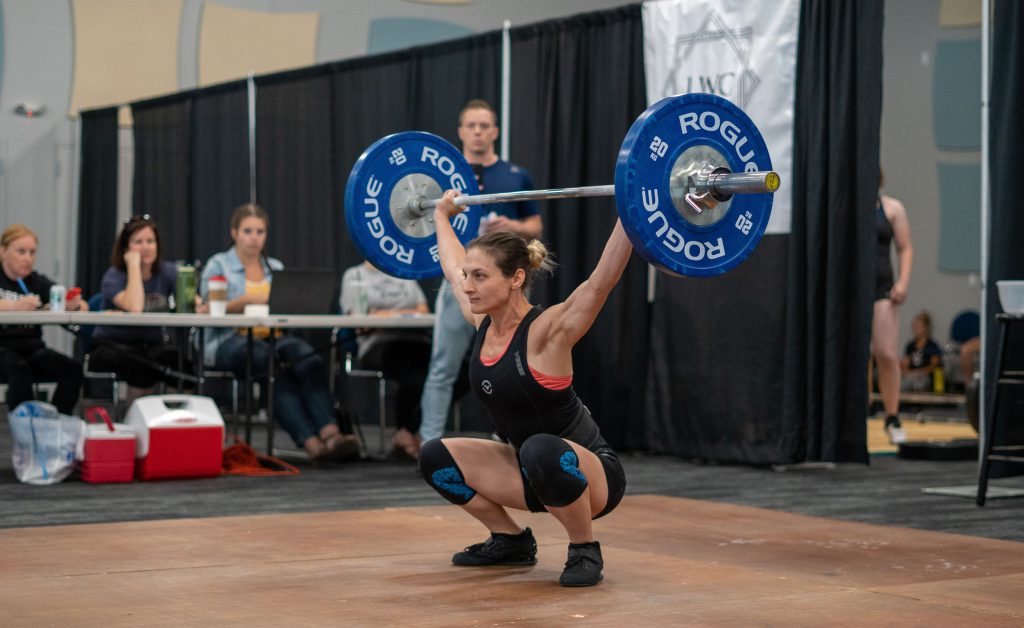
Over the last six months, master fitness trainers have demonstrated the new test for units throughout the state. The demonstrations offer Soldiers insight into expectations and how to accurately conduct the six-event test.
During a demonstration on Gowen Field August 3, Soldiers with the state’s Joint Forces Headquarters had the opportunity to attempt events and receive feedback on form and ways to achieve better results.
“I think it may have been a shock to some of our Soldiers that there is such a contrast in physical demands between the current Army Physical Fitness Test and the ACFT,” said 1st Sgt. Valerie Walts. “Once we attempted some of the events a lot of them were a bit surprised how draining performing the entire test in a timed setting is going to be.”
The new test events are the three-repetition maximum deadlift, standing power throw, hand-release push-up, sprint-drag-carry, leg tuck and two-mile run. They require different techniques and body mechanics than the current three-event APFT does, explained Staff Sgt. Esteban Gonzalez, the state’s lead MFT. It also requires various types of equipment, unlike the APFT that requires none.
This fall, Idaho will receive approximately 800 lanes of equipment that include hexagon barbells, nylon drag sleds and medicine balls. The fielding will bring the Idaho Army National Guard into its walk-phase of the fitness transition by enabling it to conduct diagnostic tests and certify Soldiers who will be responsible for grading it.
However, there are ways individuals can train on their own now and with little to no equipment. Guidance on exercises, drills and sample training aids can be found at www.army.mil/acft. The website also offers other resources such as the Center for Army Lessons Learned Manual, an equipment list and a testing manual.
It is important Soldiers understand their current physical abilities and start training while there is still time, Gonzalez said. MFTs can provide Soldiers personal training advice and help units prepare by offering training plans and certifying graders.
“We strongly recommend using the MFTs and our demonstrations so that when it comes time to conduct the ACFT Soldiers are comfortable and ready,” he said. “MFTs are one of the best benefits available to Soldiers. As long as individuals are dedicated to showing up, the MFTs are willing to work with them.”
Back to Newsroom
JOIN the Idaho Army National Guard
Gowen Field Firefighters Learn Firsthand About Flashover – “Near Certain Death”
Story by Ryan White
124th Fighter Wing
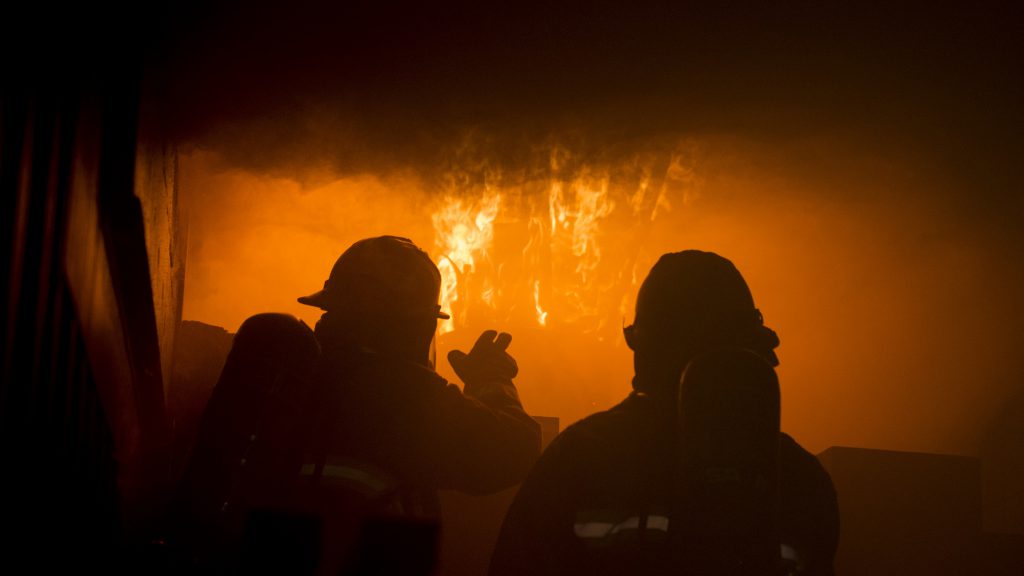
Firefighters from Gowen Field participated in a unique flashover-training course, Sept. 11-13, 2019, Gowen Field, Boise, Idaho.
The course allowed for nearly 30 firefighters from the Gowen Field Fire Department and four firefighters from the Orchard Combat Training Center to perform live fire training in a controlled environment. It consisted of four hours of lecture and four hours in a specialized burn trailer.
“This is one of those training opportunities that every firefighter who goes through it remembers,” said SSgt. Reginald Pierce III, a firefighter with the Gowen Field Fire Department and primary instructor for the training.
Flashover happens when all contents in a room hit their combustion point and ignite at the same time in a flash. The training provided an opportunity to see what flashover looks like and figure out how to deal with it, how to prevent it, and how to react and escape if encountered.
“If a firefighter is in a structure fire and the room flashes, it’s near certain death,” said Pierce. “You have two seconds, as a firefighter in your full gear, to make it out of that situation before your gear fails. That’s why this training is so important.”
According to Pierce, the training helps build confidence in equipment, demonstrates what temperature ratings gear can handle and also teaches firemen how to utilize water in this type of scenario.
“For some of these guys, it’s the first time they are seeing real fire because fire school only uses propane,” said SSgt Jack Simonds, a firefighter with the Gowen Field Fire Department and assistant instructor for the training.
The live fire is done in a specialized mobile burn trailer. The upper part of the trailer is a burn chamber and the lower middle area is a classroom. A burn barrel filled with wood is lit in the center of the chamber and ignites the walls and roof, which are lined with oriented strand board. The off-gassing of the wood igniting then causes fire to rollover the firefighters’ heads as the room heats up to over 700 degrees.
“In fire school, you’re learning strategy and techniques,” said Simonds. “Here, there’s nothing about strategy and technique. All we’re doing is studying the fire. We’re not trying to fight it. We’re trying to watch it and learn from it—see how it’s going to go up the ceiling and how the heat is going to come down the wall and light on fire.”
Now that they’ve had this training, Pierce believes the firefighters will be able to quickly see signs of a possible flashover and decide if they should fight a fire defensively from the outside. Knowing those signs can be the difference between near certain death and living to fight fire another day.
Back to Newsroom
Join the Idaho Air National Guard
Idaho Army National Guard’s best warriors – Barrera, Crockett
Story by Capt. Robert Taylor
Idaho Army National Guard
After three days of intense competition during the Idaho National Guard’s Best Warrior Competition, Sgt. Roy Barrera Jr. and Spc. Colton Crockett were recognized as the Noncommissioned Officer and Soldier of the Year.
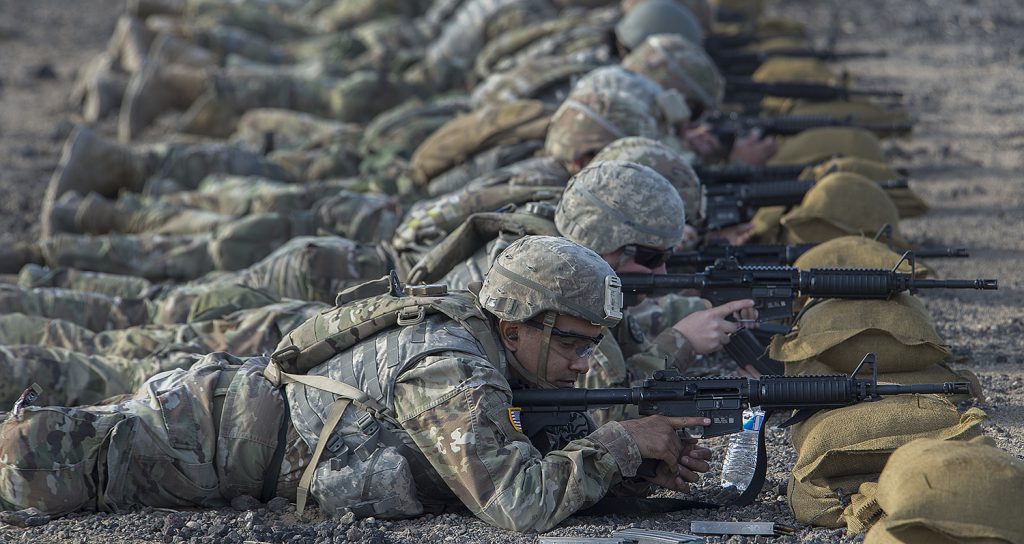
Throughout the competition, four NCOs and 11 Soldiers from across the state competed in the event held at Gowen Field and the Orchard Combat Training Center Sep. 5-7.
“This competition is about the warrior spirit,” said Brig. Gen. Farin Schwartz, commander, Idaho Army National Guard.
Barrera Jr. and Crockett both serve in the 116th Cavalry Brigade Combat Team. Barrera Jr. is in the brigade’s headquarters company and Crockett serves in the 2nd Battalion, 116th Cavalry Regiment.
Sgt. Andrew Henson, also from 2-116 CAV REG, finished second in the NCO category. Sgt. Jordan Hudson and Cpl. Juan Campos also competed to be the state’s top NCO.
Spc. Alex Amour finished as the runner up for the Soldier category. Spc. Jonathon Ames, Pfc. Rodney Farichild, Spc. Jaslyn Greco, Prf. Connor Hensley, Spc. Isaac Morado, Pfc. Adam Nichols, Pfc. Nathan Rands, Pfc. Benjamin Rudolph and Spc. Dakota Woodwick also competed in the completion.
“These Soldiers are a great representative of the Idaho Army National Guard,” Schwartz said. “Their high level of physical fitness and mental fitness separates them from their peers.”
Competitors were tested on numerous Army Warrior Tasks, including their ability to disassemble and reassemble multiple weapons; land navigation at day and night; ruck marching; shooting; combatives; first aid and the Army’s new Army Combat Fitness Test. Competitors were stressed physically with little sleep to push them to their limits.
Idaho National Guard builds a new road for the Shoshone-Paiute Tribe
Story by Ryan White
124th Fighter Wing
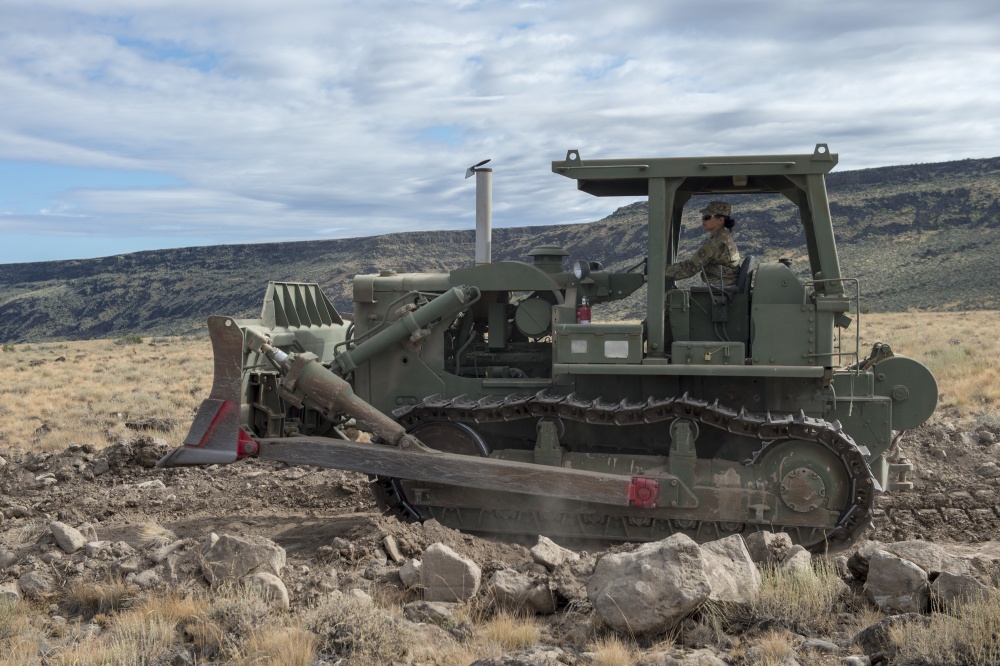
The Idaho Air National Guard’s 124th Civil Engineer Squadron and the Idaho Army National Guard’s 116th Calvary Brigade Combat Team and Installation Support Unit completed construction of BIA-211 Damon Trail during an Innovative Readiness Training project, Aug. 19-26, 2019, Duck Valley Indian Reservation, Idaho.
“We faced similar tasks out here that we’d face in the field, so it was good training for us,” said 1st Lt. Matthew Mills, deputy base civil engineer, 124th CES. “I am very impressed with everyone who worked on the project. We had fairly seasoned heavy equipment operators teaching beginning operators. That’s what this was all about—getting our training up and getting our readiness up, so when these Airmen and Soldiers go overseas they know what to do.”
The team of 18 Airmen and Soldiers from the IDANG and IDARNG completed a new road to replace the existing Damon Trail—an eight-mile fire-access trail, providing access to grazing grounds on the Duck Valley Indian Reservation north-east of the town of Owyhee, Nevada. The trail had badly eroded and was inaccessible when there was a forest fire in 2014. Since then, improving the access road has been a high priority for the Shoshone-Paiute Tribe. The Idaho National Guard began work on improving the access trail for the tribe three years ago for readiness training and to give back to the tribe.
“We serve the citizens of Idaho while building our combat readiness,” said Maj. Gen. Michael Garshak, adjutant general of Idaho. “It is especially rewarding having our Soldiers and Airmen work together in support of the Shoshone-Paiute Tribe. This IRT project is a tremendous opportunity to highlight what makes being a Guardsman special.”
According to ISU Deputy Commander Lt. Col. Dennis Stitt, The first year of the project was a stock trail improvement of Damon Trail. Erosion had made a steep incline of the trail in-traversable, so no wheeled vehicles could get to the eroded area to be repaired. Instead, UH-60 Blackhawk helicopters from the 1-183rd Assault Helicopter Battalion hoisted gravel up to the top of the mountain to fill in the erosion.
The original plan for this year’s portion of the project was to rebuild another part of the existing road. However, after surveying the area, engineers decided it would be better to build a new road to replace the existing road. The team of Airmen and Soldier heavy equipment operators used IDARNG equipment to excavate the new road, remove large rocks and truck-in material from a quarry six miles away to put on top of the road. This year’s work completed the three-year project.
“We added in a little over a mile of new road,” said Mills. “We cut out the part of the road that was non-accessible. It was unrepairable and for most of the year it had snow drifts that made it inaccessible. The new road won’t have that issue.”
Idaho National Guard demonstrates joint capabilities to governor

Story by Master Sgt. Becky Vanshur
124th Fighter Wing
Idaho Gov. Brad Little met with several key military leaders Aug. 19 at the Orchard Combat Training Center to receive an update on current Idaho National Guard programs and major upcoming events and exercises.
“It is critical that the governor, in his role as the commander in chief of the Idaho National Guard, takes the time to see the capabilities of our Soldiers and Airmen,” said Maj. Gen. Michael Garshak, adjutant general of Idaho. “It allows him to fully understand, firsthand, the issues that are relevant to our readiness.”
Senior leaders briefed the governor on unit training missions and deployment rotations, the F-35A Lighting II Environmental Impact Study, Idaho’s State Partnership Program with Cambodia, the Idaho Youth ChalleNGe Academy dormitory project, A-10 Thunderbolt II modernization efforts, and current and future issues facing the Orchard Combat Training Center.
The OCTC plays a large role in the readiness and training of Idaho Army National Guard Soldiers and Idaho Air National Guard Airmen. During the governor’s visit, the Idaho National Guard highlighted the ways it ensures good environmental stewardship to protect and preserve the National Conservation Area of the OCTC, which includes the OCTC Fire Department’s quick response times.
“Our fire department has an extremely quick response time – less than two minutes,” said Lt. Col. Chris Borders, Idaho National Guard public affairs officer. “In return, we also have the smallest average number of acres burned in the NCA and a high concentrated area of native vegetation and monitored wildlife, due to our fire department and the Idaho National Guard biologists working to preserve this area.”
During a tour of the OCTC, Tactical Air Control Party Master Sgt. Douglas Brock from the 124th Air Support Operations Squadron called in air strike locations to A-10 Thunderbolt II pilots above to emphasize the capabilities of close air support with ground forces, similar to a deployed environment. This also highlighted to the key leaders the joint relationship between the Army and the Air National Guard working together in a combat situation.
“We are extremely fortunate here in Idaho to have Gov. Little embrace his duties as commander in chief and fully support the men and women of the Idaho National Guard,” said Garshak.
Back to Newsroom
Join the Idaho Air National Guard
Children of National Guardsmen “survived” summer camp
Story by Master Sgt. Becky Vanshur
124th Fighter Wing
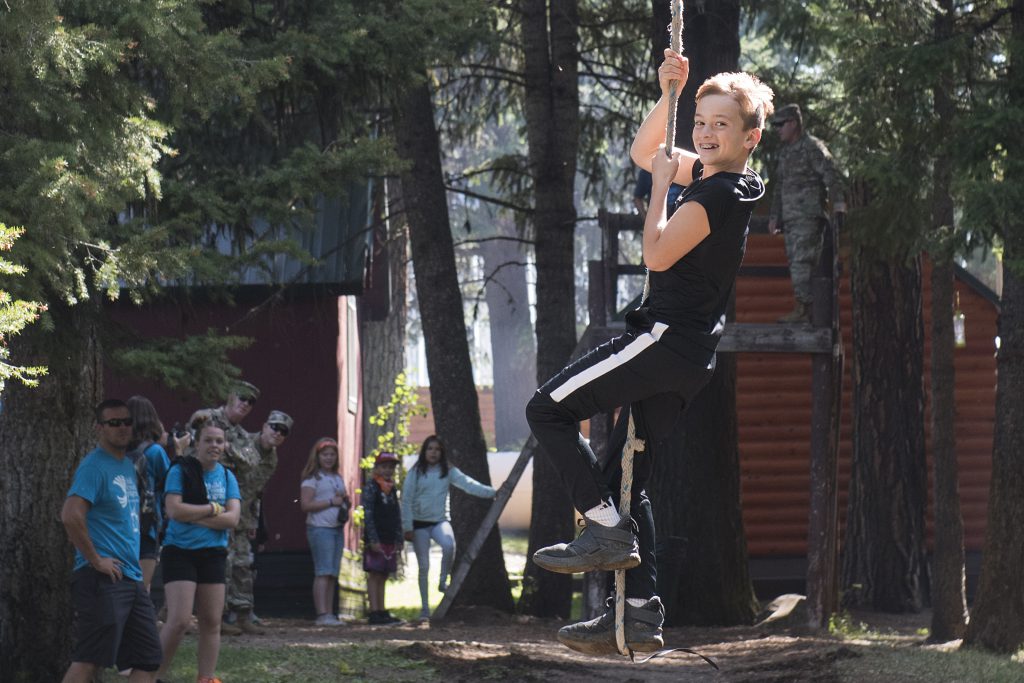
McCall, IDAHO – After a week away from their parents, 115 children of Idaho Army and Air National Guardsmen not only survived the “Survivor”-themed summer camp, they thrived. The event-filled camp was held Aug 12-16 and was designed to build resiliency and strength in youth of military families.
“This camp is a small token of our appreciation for these children,” said Brig. Gen. Farin Schwartz, assistant adjutant general-Army, Idaho Army National Guard. “We realize that we impact the lives of the youth and appreciate the sacrifice of each and every one of these children, and what they do to support their mom or dad when they are away.”
Idaho National Guard Child and Youth Programs invite children from families in the Idaho National Guard to a winter camp and a summer camp each year. This year’s summer camp theme was “Survivor – Camp vs. The Camper” held at Quaker Hill Camp in McCall.
Activities included archery games, art classes, creative STEM challenges, inner reflection classes, lakeside water activities, a peer pressure and stress management class, a ropes team-building course, team-building races, and a zip line confidence-building course.
“All activities here are fun, but they are based on strength and resiliency training,” said Lt. Col. Douglas Uphoff, IDNG family program director. “The parents of these children could be at risk for a deployment at any time. We are enabling the children to hopefully cope with the stress of their loved ones leaving.”
Older children had the opportunity to volunteer as teen leaders. The child and youth programs are designed with opportunities for youth to gain leadership skills, feel valued, and interact with their peers.
“I love this camp, I have made a lot of friends,” said Gabbie Barton, a participating child at the camp. “I have learned that I am strong.”
Many of these military children shared common experiences with each other during the activities and know each other from past events.
“This camp has been so fun and I learned a lot,” said Lillyan Lowery, whose mother serves in the Idaho Army National Guard. “I have made all of these new friends that I can hang out with after, like her, both of our moms are in the Army together.”
It doesn’t matter how long the deployment is, the goal is for campers to build networks including other children with a similar background. Children at the camp know that their newly bonded friends are also going through the same situation and might have similar issues.
“It’s not easy for children and spouses to have us be in the military,” said Schwartz. “But it is very necessary for us to go out and do what is needed in the defense of our nation.”