 Official Government Website
Category: Idaho Military Divison
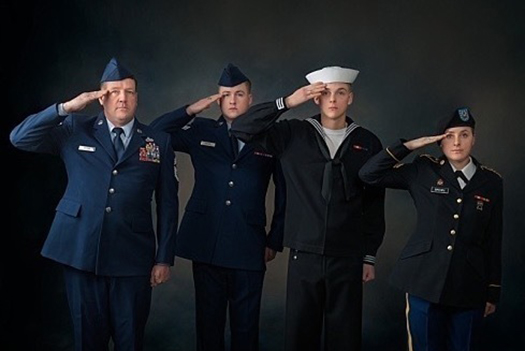
Family service: Father, three children serve together
 Story by Airman 1st Class Taylor Walker
124th Fighter Wing
In 1986, Idaho Air National Guard Command Chief Master Sgt. Sid Brown was itching to leave the small town of New Plymouth, Idaho. With the financial burden of college heavy on his mind, he met with an Air Force recruiter in Ontario, Oregon, He quickly found himself in uniform, working as an F-16C weapons load crew member at Ramstein Air Base, Germany.
He didn’t know it at the time, but he had just embarked on a career that would last more than three decades and see three of his children follow him into military service. As the Idaho Air National Guard’s senior enlisted leader, Brown is ending his career as his children begin their own careers, each in a different military branch.
“It means a lot to me to have my children serving,” Sid said. “I believe everyone who is able should serve in some capacity – even if they don’t join the military – and I’m very happy they’ve all chosen unique paths to do that.”
The first of Sid’s kids to join the military was Everett Brown, a traffic management specialist with the Idaho Air National Guard’s 124th Fighter Wing at Gowen Field. Now a senior airman, Everett said the military is engrained in his family history.
“We have a very long bloodline of military in our family, all the way back to when they stormed the beaches of Normandy, to Vietnam and the world wars,” said Everett. “The tradition has carried on from generation to generation. It’s an established part of our lives.”
For Everett, joining the Idaho Air National Guard was a way to honor his father and the experiences he had as a child on Gowen Field.
“As a kid, I watched my dad come home from deployments and saw the respect and pride he had and I wanted to feel that way,” Everett said. “My dad has always been my hero and it didn’t matter what branch I ended up joining, I just wanted to work hard the same way he did.”
Everett left for basic training the same day his sister, Kassandra, enlisted in the Idaho Army National Guard.
Cpl. Kassandra Brown is an ammunitions specialist in Golf Company, 145th Brigade Support Battalion. Although she wasn’t initially sure what branch she wanted to join, she knew the military was where she belonged.
“Joining the military felt like something I needed to do,” said Kassandra. “None of my friends were surprised when I finally joined. I feel like I’ve always had that decision in my heart.”
Kassandra said between the conflicting schedules and excessive pride, there’s a bittersweet feeling when it comes to having a family full of military members.
“I feel very proud of my family, but also scared at the same time because you never know what will happen to them,” she said. “But we all have cool stories to share. In our family you always have someone to talk to. You always have someone to relate to.”
Everett and Kassandra’s brother Wesley, who joined the Navy in June 2019, agreed that the support from their family is invaluable.
“They really understand what I’m going through, especially my dad who has had active duty experience,” said Wesley. “He takes time to answer all of my questions.”
Seaman Wesley Brown is a hospital corpsman at Wayne Caron Clinic, Camp Lejeune, North Carolina. Although his mom’s side of the family has a rich naval history, Wesley’s motivation for joining the military had less to do with his family’s history of service.
“I mostly wanted to branch out from Idaho and experience the world through a different lens than the rest of my family,” he said.
Regardless of their selected branch or individual reasons for joining, Wesley said the military establishes a common thread between him and his siblings.
“I take pride in my family because we’re all doing our part to serve our country,” said Wesley. “We come from a good background with strong morals.”
Although Sid has decades of experience and sits in a highly regarded position, he largely keeps his influence to himself when it comes to his children.
“I do my best to stay out of their careers,” Sid said. “Good, bad or indifferent, it’s their path.”
According to a 2013 Pentagon report, more than 82% of recruits across the Army, Navy and Air Force have a family member who has served in the military. Whether that’s the case or not for a military hopeful, Sid emphasized that it’s important for parents to be supportive of their children’s decisions.
“The military is a great career path,” he said. “Your kids will learn new skills, get great benefits and a great education. They’ll have to stay off drugs and they’ll potentially see the world. Don’t be afraid. Don’t stifle their decisions.”
Back to Newsroom
Join the Idaho Air National Guard
Story by Airman 1st Class Taylor Walker
124th Fighter Wing
In 1986, Idaho Air National Guard Command Chief Master Sgt. Sid Brown was itching to leave the small town of New Plymouth, Idaho. With the financial burden of college heavy on his mind, he met with an Air Force recruiter in Ontario, Oregon, He quickly found himself in uniform, working as an F-16C weapons load crew member at Ramstein Air Base, Germany.
He didn’t know it at the time, but he had just embarked on a career that would last more than three decades and see three of his children follow him into military service. As the Idaho Air National Guard’s senior enlisted leader, Brown is ending his career as his children begin their own careers, each in a different military branch.
“It means a lot to me to have my children serving,” Sid said. “I believe everyone who is able should serve in some capacity – even if they don’t join the military – and I’m very happy they’ve all chosen unique paths to do that.”
The first of Sid’s kids to join the military was Everett Brown, a traffic management specialist with the Idaho Air National Guard’s 124th Fighter Wing at Gowen Field. Now a senior airman, Everett said the military is engrained in his family history.
“We have a very long bloodline of military in our family, all the way back to when they stormed the beaches of Normandy, to Vietnam and the world wars,” said Everett. “The tradition has carried on from generation to generation. It’s an established part of our lives.”
For Everett, joining the Idaho Air National Guard was a way to honor his father and the experiences he had as a child on Gowen Field.
“As a kid, I watched my dad come home from deployments and saw the respect and pride he had and I wanted to feel that way,” Everett said. “My dad has always been my hero and it didn’t matter what branch I ended up joining, I just wanted to work hard the same way he did.”
Everett left for basic training the same day his sister, Kassandra, enlisted in the Idaho Army National Guard.
Cpl. Kassandra Brown is an ammunitions specialist in Golf Company, 145th Brigade Support Battalion. Although she wasn’t initially sure what branch she wanted to join, she knew the military was where she belonged.
“Joining the military felt like something I needed to do,” said Kassandra. “None of my friends were surprised when I finally joined. I feel like I’ve always had that decision in my heart.”
Kassandra said between the conflicting schedules and excessive pride, there’s a bittersweet feeling when it comes to having a family full of military members.
“I feel very proud of my family, but also scared at the same time because you never know what will happen to them,” she said. “But we all have cool stories to share. In our family you always have someone to talk to. You always have someone to relate to.”
Everett and Kassandra’s brother Wesley, who joined the Navy in June 2019, agreed that the support from their family is invaluable.
“They really understand what I’m going through, especially my dad who has had active duty experience,” said Wesley. “He takes time to answer all of my questions.”
Seaman Wesley Brown is a hospital corpsman at Wayne Caron Clinic, Camp Lejeune, North Carolina. Although his mom’s side of the family has a rich naval history, Wesley’s motivation for joining the military had less to do with his family’s history of service.
“I mostly wanted to branch out from Idaho and experience the world through a different lens than the rest of my family,” he said.
Regardless of their selected branch or individual reasons for joining, Wesley said the military establishes a common thread between him and his siblings.
“I take pride in my family because we’re all doing our part to serve our country,” said Wesley. “We come from a good background with strong morals.”
Although Sid has decades of experience and sits in a highly regarded position, he largely keeps his influence to himself when it comes to his children.
“I do my best to stay out of their careers,” Sid said. “Good, bad or indifferent, it’s their path.”
According to a 2013 Pentagon report, more than 82% of recruits across the Army, Navy and Air Force have a family member who has served in the military. Whether that’s the case or not for a military hopeful, Sid emphasized that it’s important for parents to be supportive of their children’s decisions.
“The military is a great career path,” he said. “Your kids will learn new skills, get great benefits and a great education. They’ll have to stay off drugs and they’ll potentially see the world. Don’t be afraid. Don’t stifle their decisions.”
Back to Newsroom
Join the Idaho Air National Guard
Brother, sister serve together
By Ryan White
124th Fighter Wing Public Affairs
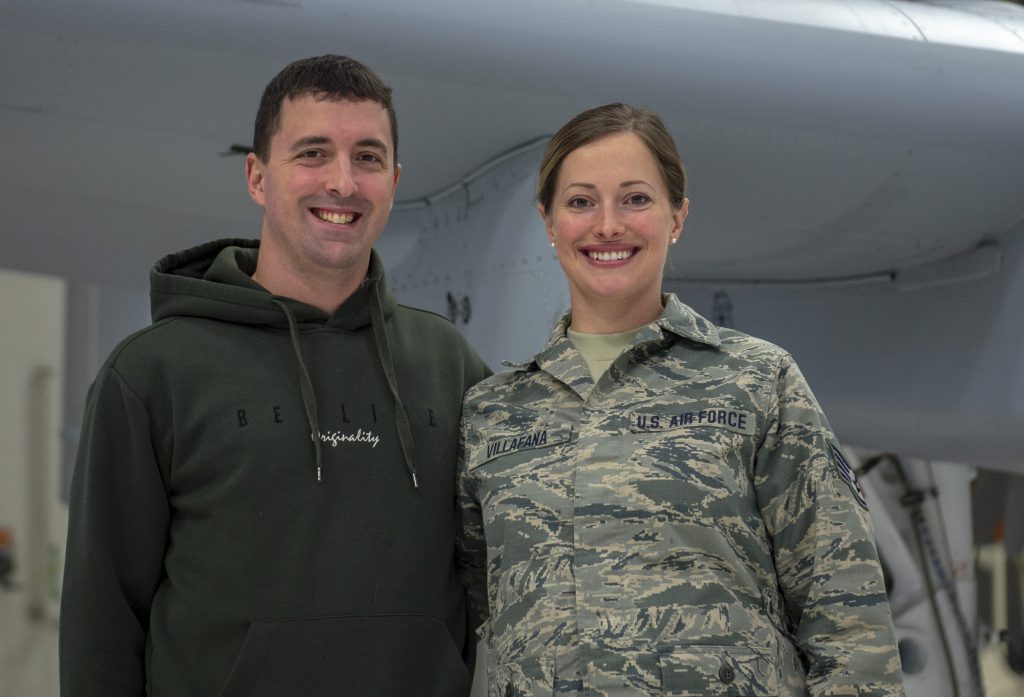
Staff Sgt. Mason Allen and his sister, Staff Sgt. Camas Villafana, were both responsible for each other’s decisions to become Idaho National Guardsmen. Allen, who was the first to join the military, chose to enlist in the active duty Air Force in 2014. He then influenced his sister’s decision to join the Idaho Air National Guard in 2015. Now the siblings have come full circle. This year, Villafana influenced her brother’s recent decision to join the IDANG after leaving active duty.
One would think Allen, a former aircraft integrated avionics specialist for the A-10 Thunderbolt II, would be joining the IDANG to continue working on the A-10s. However, he is following in his sister’s footsteps and the two are serving side-by-side at the 124th Medical Group.
“I was considering joining the National Guard,” said Allen. “After talking to my sister, it allowed me to see what was available to me at this unit.”
While Villafana was looking into options for Allen, she learned about a recent vacancy her brother would be interested in. Allen did some research and decided she was right. Now, he is enlisted as the MDG’s newest biomedical equipment specialist.
“The job title alone tells me that it’s going to be more mechanically inclined,” said Allen. “I feel like that is something I became exceptional at in the job I had on the active duty side. I am excited to learn how to put those skills to use at a different job and also learn a whole new set of skills that I can apply later in a civilian job.”
Allen will have to attend a technical training school, for about a year and a half, sometime after September. Until then, he will be working at the MDG starting this month. For the first time, Allen and Villafana will be working together.
Villafana first started working at the MDG in 2015, when she became a part of the IDANG family. She is currently working full-time until April, just in time to begin planting and irrigating on the farm she and her husband operate in Wilder, Idaho. They grow sugar beet row crops. She says she appreciates the flexible schedule that comes along with the IDANG, allowing her to farm. This was one of the benefits that originally appealed to her about joining IDANG.
“I wanted to join the National Guard since high school,” said Villafana. “It kind of fell off my radar until after I graduated [college], when Mason joined the active duty Air Force. I started thinking about it more and talking to Mason. He was the one who helped me understand the different ins and outs of the different branches. I knew I wanted to join the Air Force, but I didn’t want to leave Boise.”
Villafana ultimately decided that joining the IDANG was the right choice for her and she’s glad she did. She says she enjoys the tight-knit relationships she has, which she may not have been able to develop, had she joined active duty instead.
Those close relationships and the flexibility with the IDANG, along with a new job opportunity, were ultimately what sold her brother on joining. Allen is looking forward to living closer to his family and continuing his Air Force career as an Idaho Guardsman alongside his sister.
A day in the life of an A-10 fighter pilot
By Master Sgt. Becky Vanshur
Idaho Military Division Public Affairs
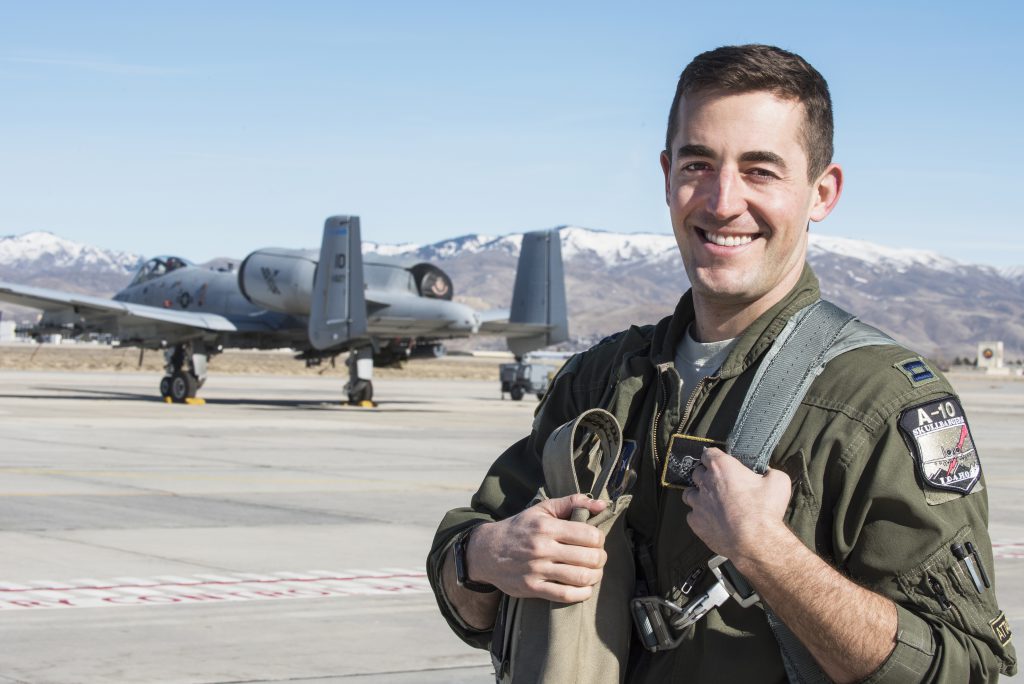
GOWEN FIELD, Idaho — Spend a day flying with Capt. Mike Shufeldt, one of the Idaho National Guard’s A-10 Thunderbolt II pilots, and feel firsthand what it is like to be an A-10 fighter pilot.
He can smell the strong scent of coffee brewing from the kitchen, as he brushes his teeth. It’s early in the morning, but his dog, Poppy, sits at his heels patiently waiting with a ball in her mouth and tail wagging. Shufeldt grabs his thermos of coffee, throws the ball a couple of times for Poppy, pats her furry head and walks out the door.
The commute across the Treasure Valley isn’t too bad as he heads down the interstate, even with the sun shining in his eyes as it rises above the beautiful Idaho foothills. Shufeldt approaches the main gate of Gowen Field, Boise’s Air Terminal and National Guard Base, with a smile on his face. Today is a good day to fly the mighty A-10 over the nearby Orchard Combat Training Center.
Shufeldt enters the building of the 190th Fighter Squadron and prepares for his day. He gets dressed in his flight G-suit, then his harness for his seat and parachute, and he grabs his high-tech flight helmet. Preparing for his flight and the training mission can take up to two hours. At the operations desk, he listens to his step brief. Today, he is called Bang 11.
The step brief is for him and his wingman, the additional pilot flying the second aircraft on this morning’s training mission. They are briefed on the weather, coordinates, weapons and the close air support mission they are about to fly.
“Bang 11, you are clear to step. Attack,” are the last words said before he heads out to the flight line where his A-10, commonly referred to as a Warthog, is patiently waiting. It is nearing 9 a.m. as he begins the 45-minute preflight check. He walks around his A-10, scanning for any visible issues.
“I do a full preflight inspection on the outside of the jet, to make sure there isn’t anything I see wrong,” said Shufeldt. “Usually there isn’t because our crew chiefs and our maintainers are really good. They are the best, actually.”
He climbs up the ladder and straps into his seat. He and his crew chief turn on the auxiliary power unit and fire up the twin turbine engines. “Clear on one,” said Shufeldt. “Good start on one,” is the response. “Clear on two.” “Two is clear,” is echoed back to him and the two engines are now fired up.
“We check everything, from the brakes to the rudders to the digital systems inside the jet,” said Shufeldt.
Both Warthogs are now ready for flight. “Pull the chalks, see you soon,” said Shufeldt. He disconnects with his crew chief, they salute and he taxis to the runway, stopping near the end to have his A-10’s weapons armed.
The powerful Warthogs line up. Shufeldt is out front. Once cleared for takeoff, he steps firmly on the brakes and runs up the engines. As he eases the throttles forward, the 12-and-a-half-ton beast starts to shake as it reaches nearly 20,000 pounds of thrust.
After checking his gauges and instruments, he pushes the throttles to maximum and releases the brakes. The mighty Warthog gains speed quickly, reaching approximately 150 miles per hour before he pulls back on the stick and the tires leave the runway.
He is up in the air. He takes a deep breath. A moment of calm, but it is short-lived as he begins his in-flight checks and focuses on the mission. He flies toward the target area.
The sun is just above and to the left, the heat from its rays beating down on his neck, the only portion of skin that is exposed.
He can see several dirt roads below in the vast desert and sagebrush-filled land of the OCTC as he approaches the target area near the ground troops below. They are providing ground support while shooting training targets.
“Bang 11 in from the south, guns,” said Shufeldt. “Bang 11, cleared hot,” said the ground troop on the radio below, providing Shufeldt clearance to shoot the 30 mm Gatling gun. “Bang 11, good hits,” is heard after the rounds are fired.
After expending all weapons, he has completed the training mission. Before flying back to Boise, the pilots check each other’s aircraft for any issues. This is called a battle damage check. The A-10s fly wingtip to wingtip, then Shufeldt dips below his wingman’s aircraft and looks up, checking the belly of the A-10. They switch positions and fly back in formation to Gowen Field.
Shufeldt lands, taxis the satisfied Warthog back to the flight line and parks in the same spot in which he started. He reverses the order of the prefight for the shutdown procedures with the crew chief. Once inside, he debriefs the mission with his wingman. It is nearing 1:30 in the afternoon and he is hungry. He warms his lunch, a stir-fry he cooked the night before.
Pilots, like any Airman, have additional military training and duties. He completes these, spends an hour at the gym and heads home.
He walks through the front door with barely enough time to close the door behind him as Poppy jumps up as high as she can, almost knocking him over. Shufeldt is home now after a day in his life as an A-10 fighter pilot.
Leadership is the most important component in any organization
By Master Sgt. Becky Vanshur
Idaho Military Division Public Affairs
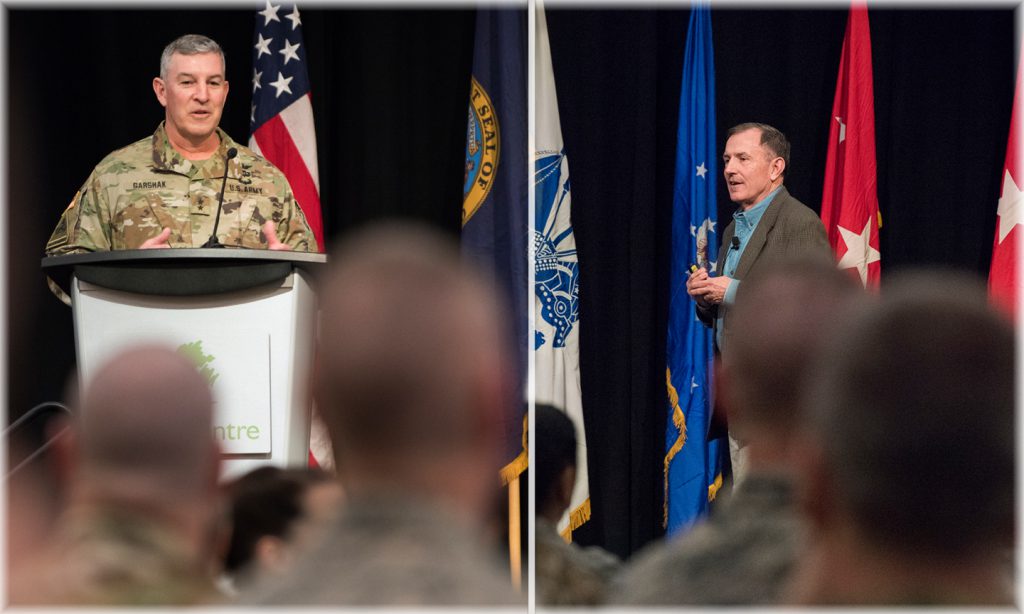
The Idaho National Guard held its annual adjutant general’s leadership conference focusing on what makes a successful leader. The joint conference on Feb. 22, held at the downtown Boise Centre, brought together leaders from the Idaho Army National Guard and the Idaho Air National Guard with several keynote speakers and informative breakouts for the daytime event, followed with the Family Programs Awards Ceremony and Banquet the same evening.
“Leadership is the most important component in any organization,” said Maj. Gen. Michael Garshak, adjutant general of Idaho. “We have tremendous leaders throughout the Idaho National Guard. This is not about fixing what may be broken, but continuing to grow and develop as leaders to make our organization even better. Our Soldiers and Airmen deserve the best leadership we can provide.”
Mr. Tom Greco was the daytime event’s primary speaker. He is Idaho’s civilian aide to the secretary of the Army and a retired combat veteran.
“Everything rises and falls on leadership,” said Greco. “If you don’t have the right location, you move. If you don’t have the right people in your organization, you go out and hire them. If you have the right people, but they don’t have the right skills, you train them. But if you don’t have the leadership in your unit, you are sunk. Everything rises and falls upon leadership.”
His advice on successful leadership can be summed into a list: leaders have a vision, leaders lead with integrity, leaders are credible, leaders are decisive, leaders are communicators, leaders are risk-takers, leaders are mentors, leaders are generous, leaders have balance, leaders are listeners and leaders are learners.
The night banquet event was about recognizing the accomplishments of the Idaho National Guard, and taking the time to recognize outstanding contributions by individual members, volunteers and family members within the organization.
The ceremony recognized the recipient of the 2019 Governor’s Outstanding Unit Award, given to Detachment 2, Charlie Company, 1-168th General Support Aviation Battalion. The annual award is given to a high performing unit whose contributions exemplify the highest levels of excellence.
Family Programs also awarded Amanda Signorio, 25th Army Band, Lt. Col. Christina Taylor, Cassandra Rzepa, Colter McBride, Sgt. 1st Class Dustin Dyer, and Newby-Ginnings a supportive business located in Northern Idaho, founded by Theresa Hart for outstanding achievement and selflessly devoting hundreds of hours of volunteer service.
The annual Clinton R. Taylor Integrity in Leadership award was presented to Lt. Col. John Williams from the 124th Operations Squadron, Capt. William Miller from the 2nd of the 116th Cavalry Armor Battalion, Senior Master Sgt. Shallan Prickett from the 124th Logistics Readiness Squadron and 1st Sgt. Sheldon Stace from Charlie Company 145th Brigade Support Battalion. The Integrity and Leadership award is given to individuals with exemplary traits in trust, mentorship, attitude, empowerment, resiliency, courage, professionalism and community service.
Idaho Military Division supports community, youth through STEM Matters Day
Story by Crystal Farris
Idaho Army National Guard
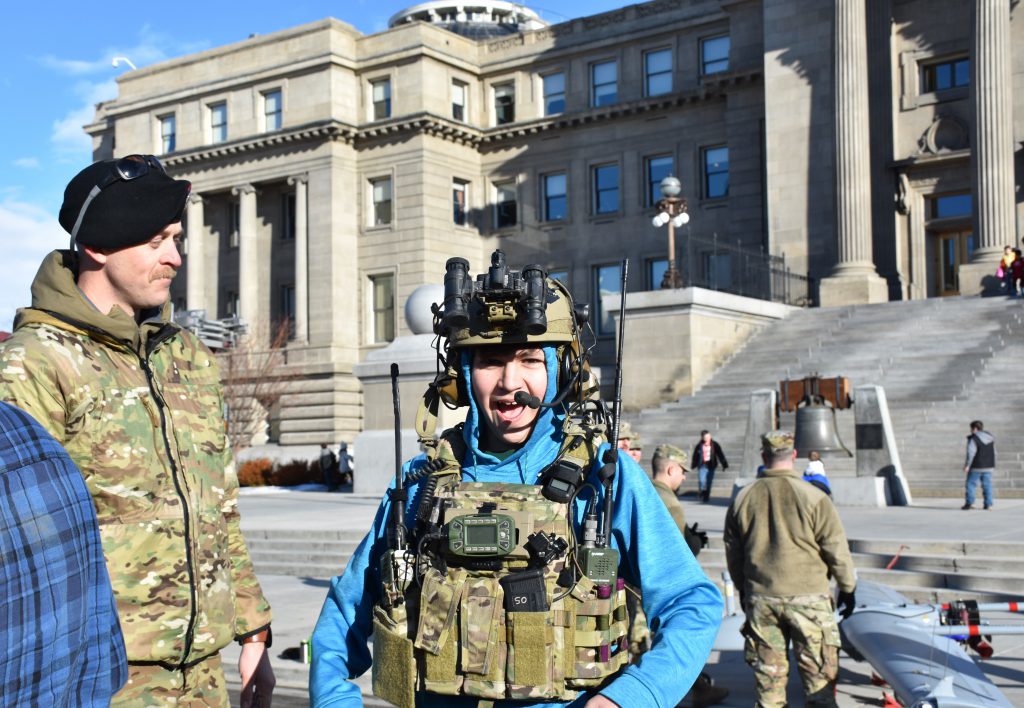
Members from the Idaho Military Division joined Gov. Brad Little, state legislators and various local organizations Jan. 15 at the Idaho State Capitol in support of the fifth annual Idaho STEM Matters Day.
The event provided free, hands-on educational opportunities for K-12 students, families and community members across the Treasure Valley looking to explore science, technology, engineering and mathematics.
It also gave the Idaho Military Division the opportunity to familiarize visitors with the various STEM-related careers available within its organization, said Capt. Gregg Miller an intelligence, surveillance and reconnaissance liaison officer for the Idaho Air National Guard’s 124th Air Support Operations Squadron.
“Our overall mission is to advise and assist the Army in the use of air assets for kinetic strikes on the battlefield,” said Miller. “It’s important we recognize that STEM is part of many things we do in this job and throughout the military. One example is the use of radar, which helps us to maintain positive control of air assets and ensure ground forces are properly supported.”
The team of ASOS Airmen were one of several Idaho Military Division representatives to participate in the event. Others included the 101st Civil Support Team, the 116th Brigade Engineer Battalion, the 2nd Battalion of the 116th Cavalry Regiment and the Idaho Office of Emergency Management.
Each representative provided information and familiarized visitors with their equipment on display, which included the 101st CST’s mobile Analytic Laboratory System; the 116th BEB’s RQ-7B Shadow unmanned aircraft system; the 124th ASOS’s MRZR all-terrain vehicle; and the IOEM’s Mobile Communications Vehicle.
The ASOS’s MRZR is a good example of a high-tech vehicle that enables military personnel to quickly traverse all types of terrain and environments, said Miller. However, it is just one of many pieces of equipment the organization depends on daily to conduct operations, he added.
In addition to STEM equipment, STEM-related careers are widely available within the Idaho Military Division and include professions in the medical, cyber, communications, construction, intelligence and logistical fields.
“The military has so many cool STEM jobs around the world,” said Angela Hemingway, Idaho STEM Action Center executive director. “Having the Idaho Guard at this event helped kids engage with all types of STEM professionals and showcased the diversity of job opportunities available to them right here in our amazing state.”
The annual Idaho STEM Action Center event promotes a prosperous STEM-literate Idaho by introducing communities to STEM opportunities and highlighting students, community members and industries making positive impacts in the field, Hemingway said.
In addition to members of the Idaho National Guard and Idaho Office of Emergency Management, the Boise State University Children’s Center, Discovery Center of Idaho, First Tech Challenge, Idaho Commission for Libraries, Idaho National Laboratory and Micron also participated.
Hosts provided guests with various interactive displays and activities involving building blocks, Legos, robotics, virtual reality devices and more. Each station incorporated some aspect of science, technology, engineering or mathematics designed to motivate guests to apply STEM-skills such as collaboration, critical thinking and problem-solving.
Idaho National Guard Family Programs bring Christmas joy to 500 Idahoan families in need
Story by Crystal Farris
Idaho Army National Guard
Over the past 12 years the Idaho National Guard Holiday Assistance Program has helped make Christmas merrier for military families throughout the state by providing meals and presents to those in need.
“The Holiday Assistance Program is important to our service members and their families,” said Maj. Stephen Self, Idaho National Guard Family Programs deputy director. “It provides food and gifts to those who are experiencing financial hardships or other crises.”
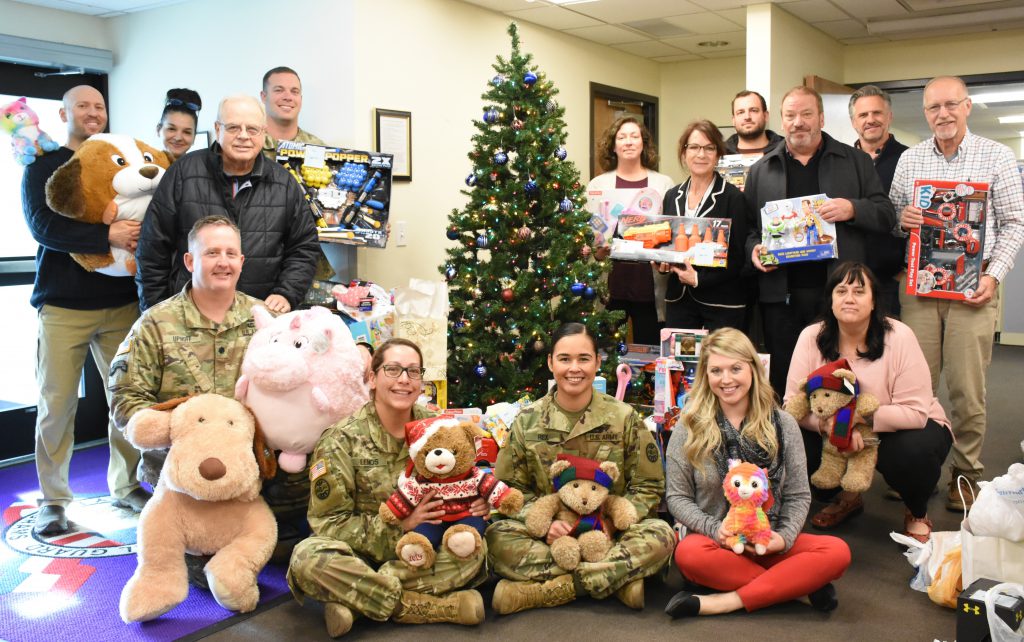
This year the program received its largest amount of donations from approximately 800 sponsors, enabling more than 500 Idahoan families to receive gift cards, toys for under their trees and food to serve at their tables.
Holiday assistance is part of the Idaho National Guard Family Programs and ran by family assistance center specialists located throughout the state’s seven regions. Each year, FACS support the program by getting donations to local families in need from all branches and components depending on their individual needs.
Families nominated to receive assistance by their units were given the opportunity to indicate the type of assistance needed, along with a list of family members, their ages and types of gifts wanted. By helping military families in their moment of need, the program aims to sustain and develop resilient families through the holidays and beyond.
Local contributors donated gifts ranging from stuffed toys to dolls, board games, art supplies, books, action figures and more. Sponsors from across the U.S. donated approximately $8,000 in gift cards for families requesting assistance other than toys. Local church groups donated approximately 100 pounds of turkeys, 25 gallons of milk, 25 dozens of eggs, butter, gravy and more so that families could make traditional Christmas dinners.
“Our generous sponsors go above and beyond to meet the needs of these service members and their families,” said Self. “They provide them with supplemental support and gifts that bring joy and foster the holiday spirit.”
In addition to local churches, sponsors included retired service members, civilians and more. Many donors return annually to pay some sort of contribution to the cause and give back to the community, said retired Air Force chaplain Thomas Westall.
Westall first organized the holiday assistance program around 2008, while serving as a chaplain at Gowen Field.
“This is what I’ve been doing my whole career as a chaplain with the Air Force,” said Westall. “Trying to take care of those who have it tough this time of year.”
Family Programs also offer information and referral services to service members and their families throughout the year. Services include legal and financial resources and referrals, crisis intervention, TRICARE support, benefit enrollment assistance and community information and outreach.
FACS are available 24 hours a day and located throughout the state in Boise, Caldwell, Idaho Falls, Lewiston, Pocatello and Post Falls. For more information visit https://www.imd.idaho.gov/idaho-national-guard/family-programs/ or call 1-800-479-7006.
Back to Newsroom
JOIN the Idaho Army National Guard
Idaho Guardsman lifts her way to record-setting achievements
Story by Crystal Farris
Idaho Army National Guard
Idaho Army National Guardsman 1st Lt. Juanita “Christie” Goodrich’s road to fitness started in 2014 with a hankering for a mocha coffee, but also a desire to get in shape. She decided to run for the coffee instead of drive. The coffee-runs became a daily routine, motivating her to first run nine miles, then 12 and finally 20.
“At some point, I cut out the coffee part and was just straight running,” said Goodrich. “Or I’d grab a water at the coffee shop and keep running.”
Those runs were a defining moment in her life that eventually led her to become the athlete she is today and a six-time Idaho state championship winner in Olympic weightlifting.
However, it was only after developing shin splints that Goodrich found her passion in CrossFit and later Olympic lifting. Being homeschooled, she had never participated in competitive sports while growing up. CrossFit and Olympic lifting gave her an outlet, she said, to express her competitive side and make up for lost time.
“I had never done anything like that before but from the moment I entered the CrossFit gym I fell in love,” said Goodrich. “Pushing myself, going from being in the bottom of the group to the first one done with the workout of the day, was so much fun. I couldn’t get enough.”
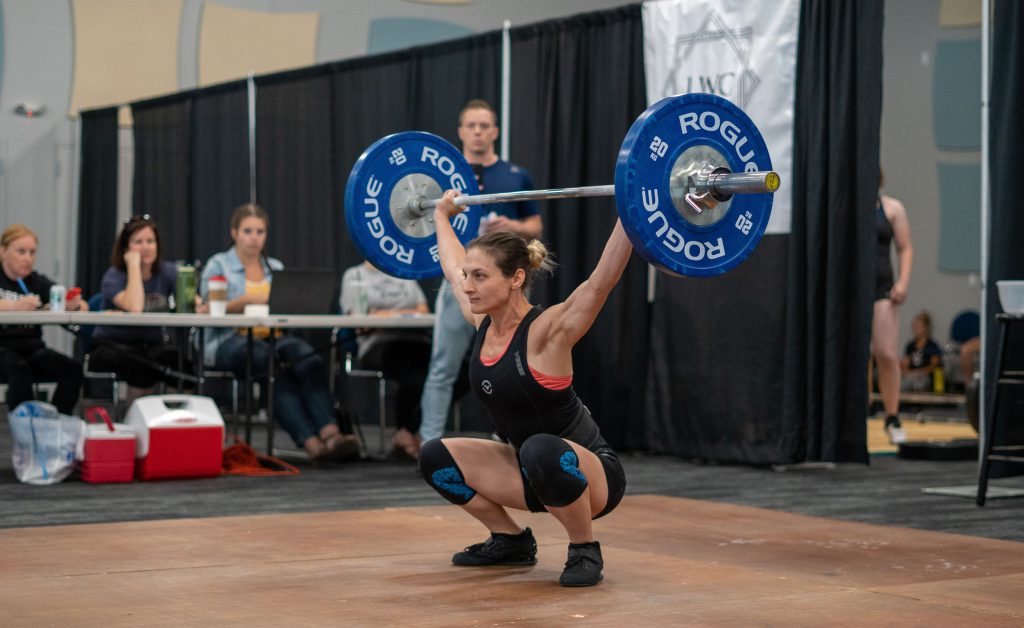
While attending CrossFit, Goodrich learned about Olympic weightlifting. The sport involves two lifts, the snatch and the clean-and-jerk, which both require the athlete to lift a weighted barbell above their head in either one or two motions.
The lifts are difficult and require time to develop appropriate technique, Goodrich said, which is the part she enjoys most. She began training for competitions in 2017 and has since set multiple Idaho state records for the sport in her weight division.
“When I started doing those lifts and movements, I just loved them,” said Goodrich. “They are so technical and it takes so much time to learn, but it’s really fun competing and I’ve done well, so why not continue?”
In 2017, she took home first-place in the 53 kilogram (approximately 116 pound) weight division, setting state records for the snatch by lifting 69 kilograms and 84 kilograms in the clean-and-jerk. She also set the record for the total of both events by lifting a combined weight of 153 kilograms, winning overall best female lifter at the 2017 Idaho State Weightlifting Championships.
After taking a break from competing to have her first child, Goodrich returned to weightlifting in May. She competed again in August, setting the Idaho state records in the 49 kilogram weight class for the snatch, clean-and-jerk and the total, lifting 62 kilograms for the snatch, 75 kilograms for the clean-and-jerk and a total of 153 kilograms.
Two days later Goodrich found out she was pregnant with her second child. However, not ready to slow down, she competed again in October at the 2019 Idaho State Weightlifting Championships, where she took home best female lifter for the second time.
“I didn’t hit the numbers I have in the past,” said Goodrich. “But I’m pregnant and still got best female lifter, so I’m happy with my results.”
Her goal is to one day compete in a national-level event. Goodrich said having children has only postponed that goal, not changed it. She has qualified to compete in nationals twice and plans to qualify again after having her second child.
“I’ll always be pushing toward that goal because I want to have something my kids can be proud of me for and to show them what can be accomplished with hard work.”
Idaho Guardsmen serve together in childhood town as commander, first sergeant
Story by Crystal Farris
Idaho Army National Guard
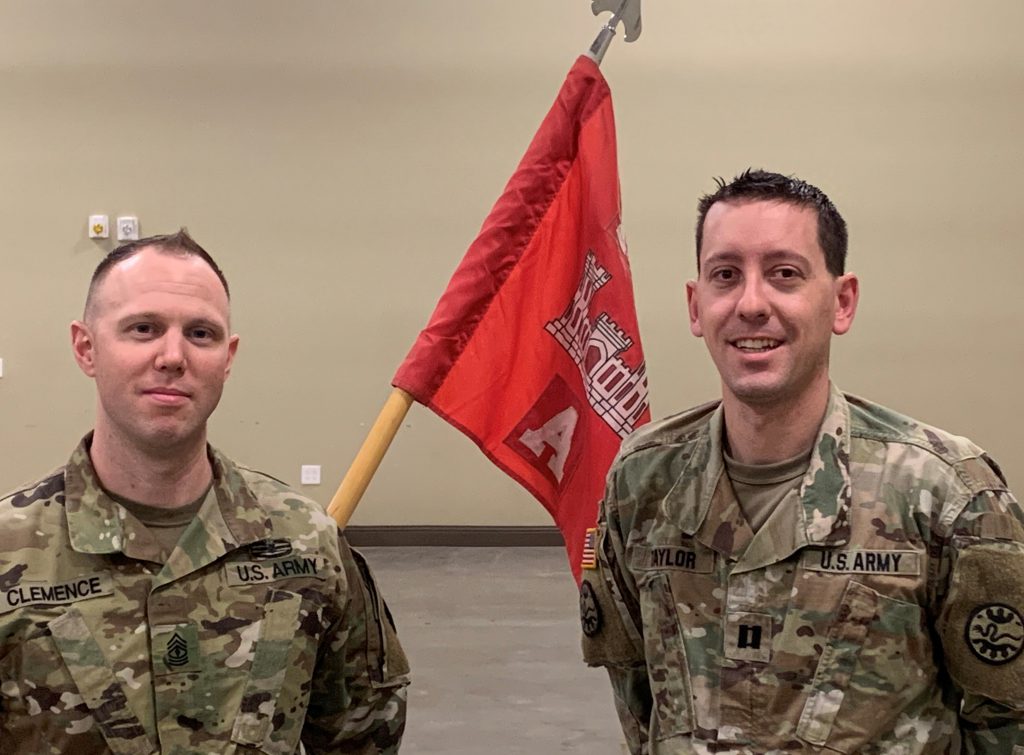
Idaho Army National Guard Soldiers Capt. Robert Taylor and 1st Sgt. Derek Clemence share a similar past; they grew up in the small town of Mountain Home, Idaho, and both shipped off to basic training shortly after graduating from Mountain Home High School in 2002.
Approximately 18 years later, both Guardsmen were reunited in their childhood town to serve as commander and first sergeant of A Company, 116th Brigade Engineer Battalion, headquartered in Mountain Home.
“It’s great to be part of a team so deeply rooted in the same town,” said Taylor. “That type of thing only happens in the National Guard and is what the Guard is all about; community, being tied to where you serve and serving with your neighbors.”
In October, Taylor took command of the company, which provides engineer support to the 116th Cavalry Brigade Combat Team. Clemence became the company’s first sergeant one month later.
“I was excited to find out that Capt. Taylor is the commander of A Company,” said Clemence. “The unit being in our old hometown makes me feel closer to the community and gives me the perspective that we are now assets to the community from which we came.”
While Taylor enlisted into the Idaho Army National Guard as a paralegal specialist the day before he began his senior year of high school, Clemence enlisted into the organization’s military police platoon two-years later.
Both Soldiers came face-to-face for the first time since high school while on a deployment to Iraq in 2004 and did not see each other again for 10 more years.
“I had no idea Clemence was still in the Guard until about three years ago when my old unit was doing night training,” said Taylor. “He was giving the mission safety brief. I remember thinking how great it was that a guy I went to high school with had become a sergeant first class and was giving me the brief for a mission I was about to go on. Now he is my first sergeant.”
Clemence served as a military police sergeant for 13 years before he transitioned as an engineer to the 116th Brigade Engineer Battalion in 2016. Coming from a long line of veterans, Clemence knew serving was something he wanted to do since childhood, he said.
“I remember cleaning my old house one day and finding a journal from my fifth-grade English class,” said Clemence. “My teacher had me write about different daily topics. One topic was on what I wanted to be when I grew up. I wrote that I wanted to join the military as my uncle did.”
Taylor, like Clemence, knew he wanted to follow in his family’s footsteps by joining the military. His mother served in the active Air Force for 20 years and retired while stationed at Mountain Home Air Force Base. Taylor joined the Guard rather than active duty as a means to pursue his military career while it paid for school.
“I joined the guard because I saw it as a way to attend law school and still pursue my military career,” said Taylor. “I was concerned that if I went on active duty right out of high school, I wouldn’t have the desire to go back to school later.”
After returning from deployment, Taylor commissioned as an engineer officer and earned an undergraduate in public relations from the University of Idaho. In 2013, he graduated law school and started a family law practice in Mountain Home.
Both Guardsmen will deploy together again in 2020 when the 116th Cavalry Brigade Combat Team mobilizes to Europe for Defender 2020 in support of the largest deployment of U.S. based forces to Europe for an exercise in the last 25 years.
New vehicle Vismods could transform Army training
Story by Crystal Farris
Idaho Army National Guard
The National Guard Bureau has partnered with a Hollywood special effects company to make future training more realistic for brigade combat teams during Exportable Combat Training Capability exercises.
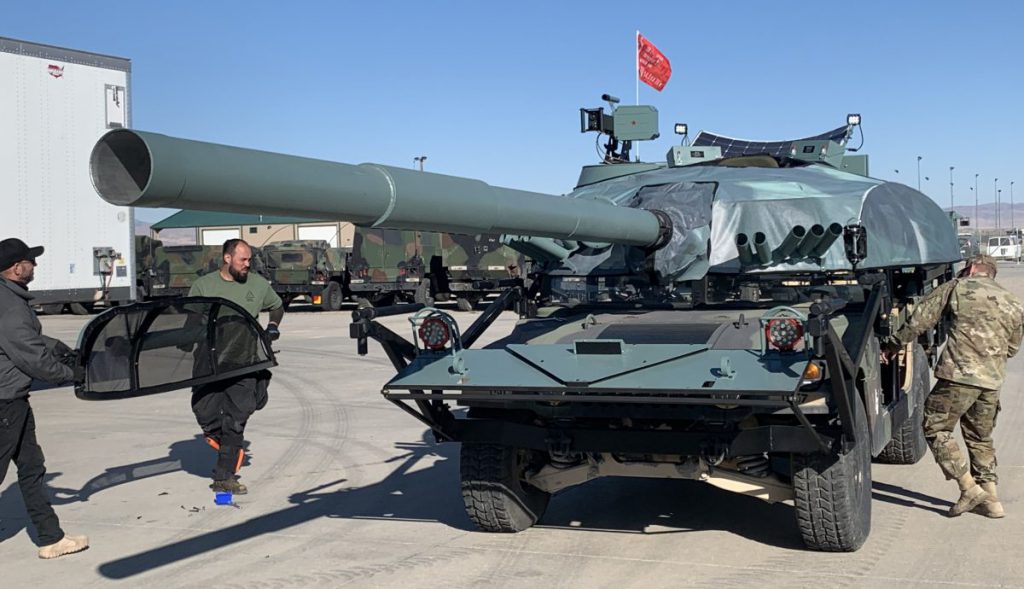
The improvements involve a new visual modification kit that will transform the Army’s M1097 HMMWV into simulated Russian T-72 Main Battle Tanks and BTR-90 Personnel Carriers.
While BCTs already use variations of visual modifications – plastic, fiberglass, and sheet metal – to replicate enemy vehicles, these new kits are the first of their kind, said Maj. Aaron Ammerman, XCTC program manager for the NGB.
“Taking a look at how VisMods are done across the Army, I think these are the best I’ve ever seen,” said Ammerman. “They will provide an exponentially more realistic threat signature for troops to train against as they do force-on-force exercises.”
In 2018, NGB contracted Westefx in an effort to improve the XCTC program and its 21-day combat training exercises that ready units for mobilization. The company has provided special effects for movies such as “James Bond”, “Taken” and “Men in Black II”. They have also participated in approximately 50 XCTC rotations by providing battlefield effects, props and equipment for the military over the last 10 years.
Westefx owner and lead designer Erick Brennan said the new VisMods will provide Soldiers with realistic identification and engagement training through their effective noise and visual signals.
“No enhanced battlefield training simulators can compare with the functionality, realism, durability and cost-effectiveness of this new VisMod vehicle,” said Brennan. “They are pretty amazing and we are really proud of them.”
The kits – each weighing approximately 1,700 pounds and fitting over the chassis of a Humvee – resemble the size and silhouette of the tank and personnel carrier but with an inflatable canvas-like frame.
Its gas-operated weapon systems simulate the firing of .50 Cal and 125mm main guns that can be configured to multiple integrated laser engagement systems. The MILES gear, along with the kit’s smoke generator, will enable Soldiers to track and simulate target acquisition.
“We will be able to train against a realistic enemy,” said Sgt. 1st Class Clinton Doramus, Idaho Army National Guard VisMod fleet manager. “These kits aren’t going to look and act like a Humvee. They are going to look and act like T-72s and BTR-90s.”
While exponentially more realistic than previous VisMod vehicles, these kits also provide a more cost -effective alternative to the military than using actual tanks and personnel carriers. The Humvee cost less and the Army has more of them.
“A Humvee costs approximately $30,000 plus another maybe $5,000 to maintain for the year, whereas an M1A1 tank costs a lot more,” said Doramus. “It’s initial and maintenance expenses that make these kits a lot more cost-effective to do on Humvees than tanks or Bradleys. Plus the Army doesn’t just have 60 spare tanks sitting around somewhere.”
Doramus and a team of Idaho Guardsmen, mostly comprised of engineers and mechanics, helped Westefx install 12 completed kits onto Humvees at the Idaho Army National Guard’s Orchard Combat Training Center. The team has spent more than a year assembling and maintaining the fleet of 60 Humvees allocated for installation. NGB and Westefx plan to continue production of 48 more kits over the next three years.
Two-day suicide intervention course teaches life-saving skills
Story by Crystal Farris
Idaho Army National Guard
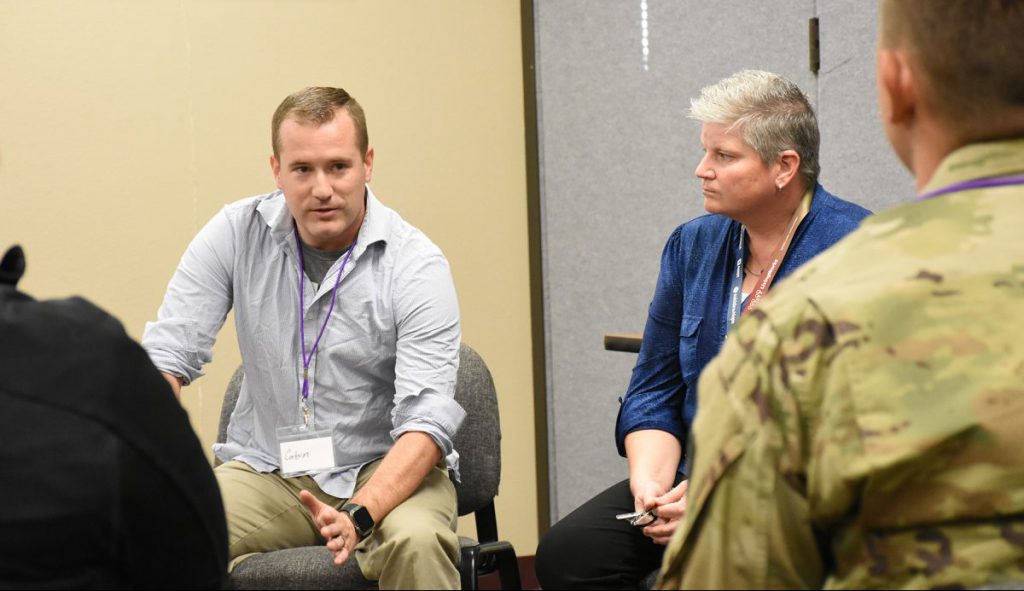
The Idaho National Guard hosted a two-day Applied Suicide Intervention Skills Training workshop at Gowen Field Oct. 24, for service members and employees.
A type of “suicide first-aid,” the course teaches participants to recognize individuals who are having suicidal thoughts and to work with them in creating a plan that supports their immediate safety.
“Having issues in your life does not mean they are going to end your career,” said Robert Smith, coordinator for the Idaho National Guard’s Resilience, Risk Reduction and Suicide Prevention, or R3SP, program. “Help-seeking behavior is actually a sign of strength. It is better for you to address those issues when they come up so you can get the help you need.”
Currently the Army’s ACE model teaches Soldiers to mitigate possible suicides by “asking” individuals who display suicidal tendencies if they are suicidal, “caring” for those who are, and “escorting” them to a source of professional help. ASIST takes that model a step further.
“The course educates individuals to go a step further by actually showing them what the ‘caring’ part of ACE is,” said Smith. “It also gets Soldiers and leaders more comfortable with ‘asking,’ because it’s such a difficult question to ask.”
Small-grouped open discussions offer participants an interactive environment to gain insight from other’s experiences and knowledge, in addition to familiarity with talking about suicide. The course has proven successful in Spc. Javier Wells’ experience.
Wells, a Soldier from the 1-148th Field Artillery Battalion, said he was able to assist a fellow Soldier less than a month after attending the course in April. The Soldier seemed distressed, Wells said, so he asked her if she felt suicidal. The Soldier said yes. He recalled pulling out an ASIST quick- reference tool that was stored in his wallet and immediately applied suicide first-aid.
“I wasn’t nervous at all and was grateful to have the skill set,” said Wells. “If it weren’t for ASIST I highly doubt I would’ve had that conversation. Now we are close friends and it feels incredible to have touched her life and be her support system.”
Along with learning how to apply suicide first-aid, participants also identify key elements of an effective suicide safety plan; gain an appreciation for improving and integrating suicide prevention resources within the community; discuss how personal and societal attitudes can affect views on suicide and intervention; and learn to recognize other important aspects of suicide prevention, including life-promotion and self-care.
Self-care can go a long way to help individuals prevent their own risky behavior, Smith said. Individuals can practice self-care by having an awareness of their issues and knowing when it may be necessary to seek help without worrying about possible negative consequences, he added.
“Trauma happens in life,” said Smith. “If we are resilient and have a good support system, such as individuals trained in ASIST, then we can get through those issues rather than letting them fester and grow.”
ASIST is one of various intervention resources offered through the Idaho National Guard’s R3SP program. The program focuses on giving targeted and comprehensive training in resiliency, substance abuse and suicide prevention.
Further information on the R3SP can be found at https://www.imd.idaho.gov/for-our-members/. Individuals seeking immediate assistance or having suicidal thoughts can contact the Idaho Suicide Prevention Hotline at (208) 398-4357. Counseling is also available upon request through military health professionals, the Yellow Ribbon, Family Programs and Chaplain Corps.